Exploring Quito

By Kathleen Kemsley, (c) 2021

To tour or not to tour, that is the question.  For independent travelers, planning a journey to a foreign country involves decisions.  The most important is, to what extent will you engage in the services of professional tour guides?  Organized tours guarantee that you’ll see the big ticket items, check them off your list.  The downside, of course, is that when some place draws you closer, you’re unable to linger because the guides urge the herd of tourists to keep moving.  The bus is about to leave.     

In Quito, my solution to the tour / no tour conundrum was to alternate days.  One day with a group, the next day on my own.  In this way, I got to visit several attractions in the surrounding countryside – traditional Otavalo, tropical Mindo, serene Papallacta Hot Springs, and stunning Cotapaxi volcano.  Yes, I was with a group – but it was a different group each day.  The groups were small, anywhere from two to seven people.  Headphones drowned out the droning sing-song narrative when I tired of listening to the guide.  All I really paid for on each trip was the transportation to the desired location.  Once there, I was free to walk away from the others, and explore on my own.

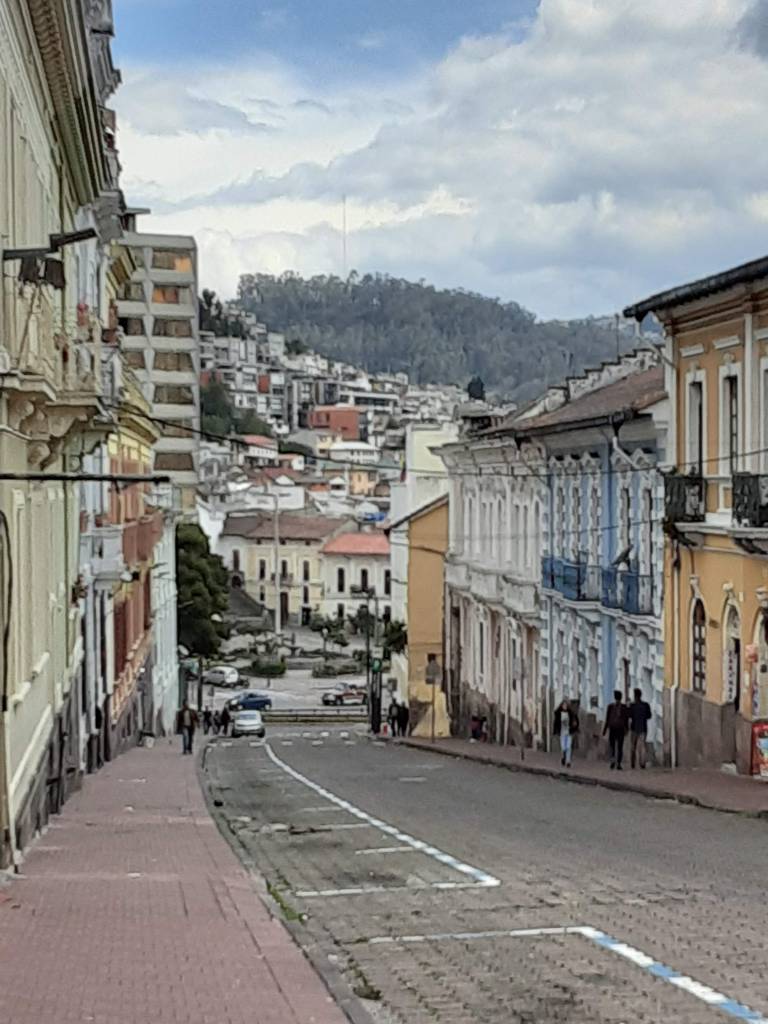
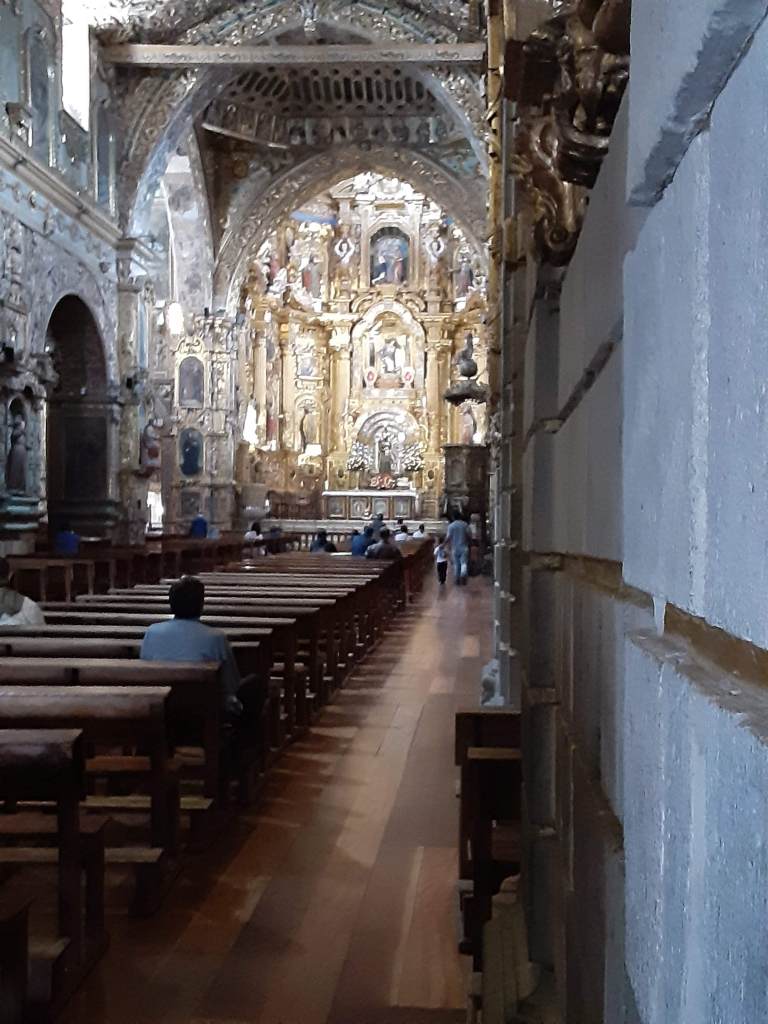
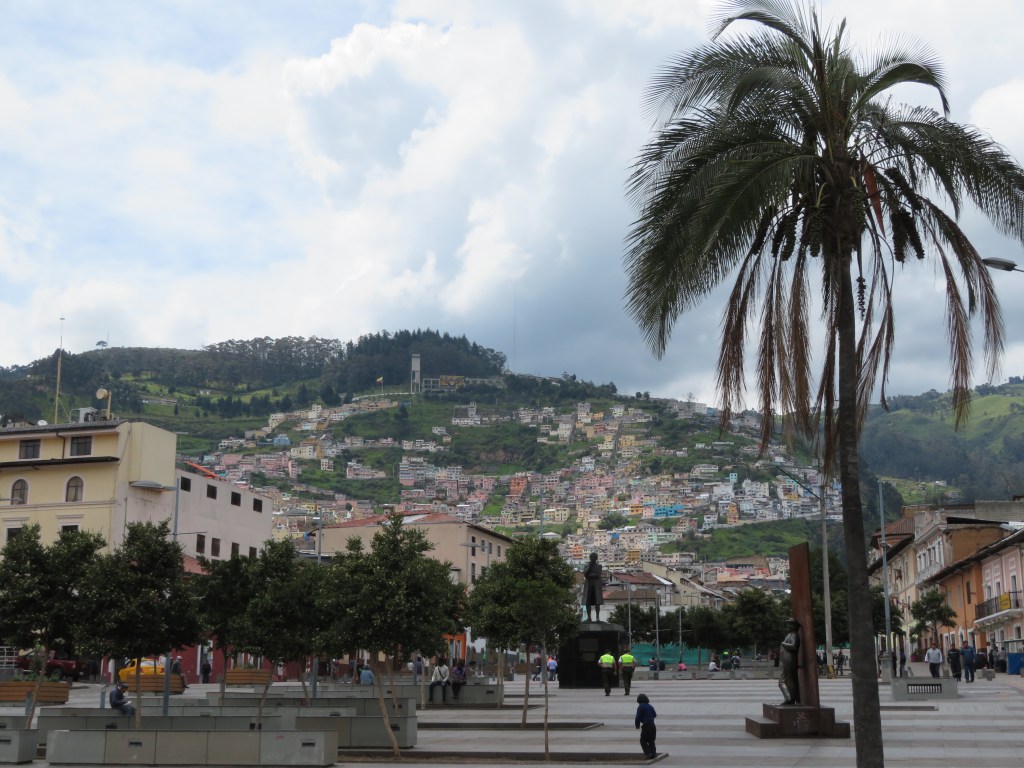
In between these jaunts outside the city, I reserved unplanned days to wander and explore Quito on my own.  One day, I rode a bus to Plaza Grande, then embarked on a walking tour of historical Old Town.  Along the way, I detoured off course to duck into a museum, where I studied a pictorial display about the devastating terremoto (earthquake) that flattened the city and killed 70,000 people in 1868.  I snuck into a church service for a couple of stealth photos of the ornate 17th century interior.  And I sat at a sidewalk restaurant in the plaza, watching life unfold for the local people: traditionally dressed Andean women selling food or souvenirs, shoe-shine guys touting their business, school children giggling as their teacher herded them into the Palace of the Governor, and old men gossiping as they sat on wooden benches under the trees.

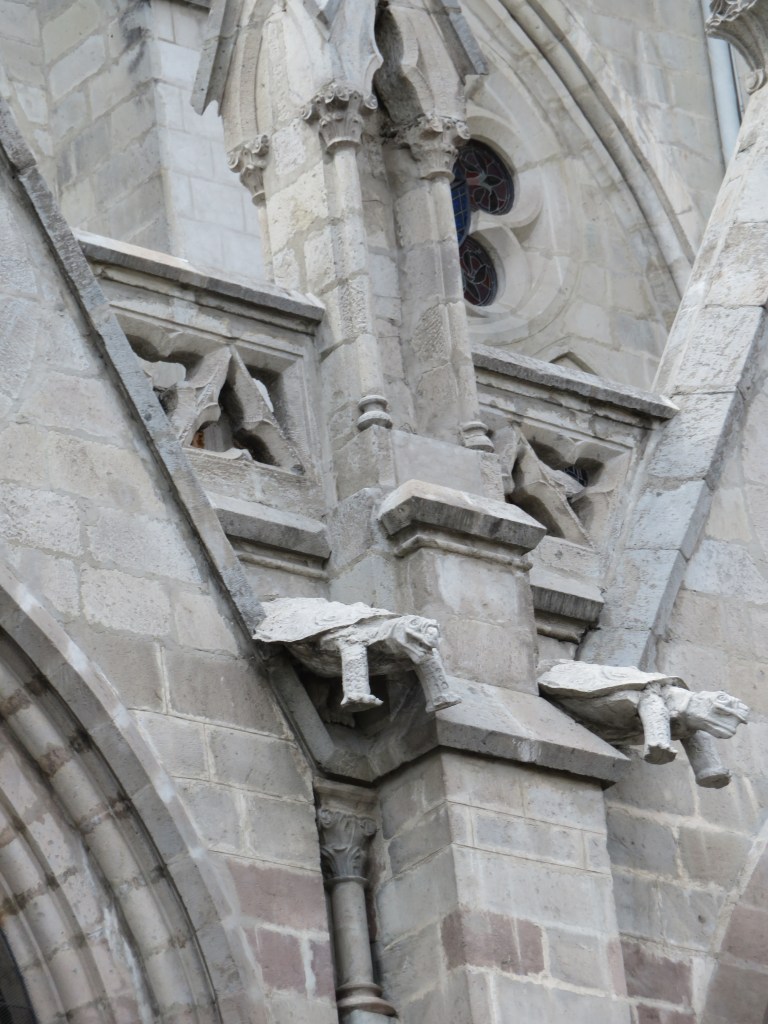
Once in awhile I glanced surreptitiously at my guidebook, but remained conscious of not appearing to be a lost tourist.  Up and down I walked the steep narrow streets, rubbing shoulders with pedestrians who moved twice as fast as me, unbothered by the 9,000 foot elevation of Quito.  After a long jaunt downhill on Venezuela Street, I reached the Basilica de Voto National, a massive church built over several decades starting in 1892. Instead of gargoyles, figures of turtles and iguanas protruded from the building’s façade, providing a uniquely Ecuadorian slant on the church’s Gothic theme.
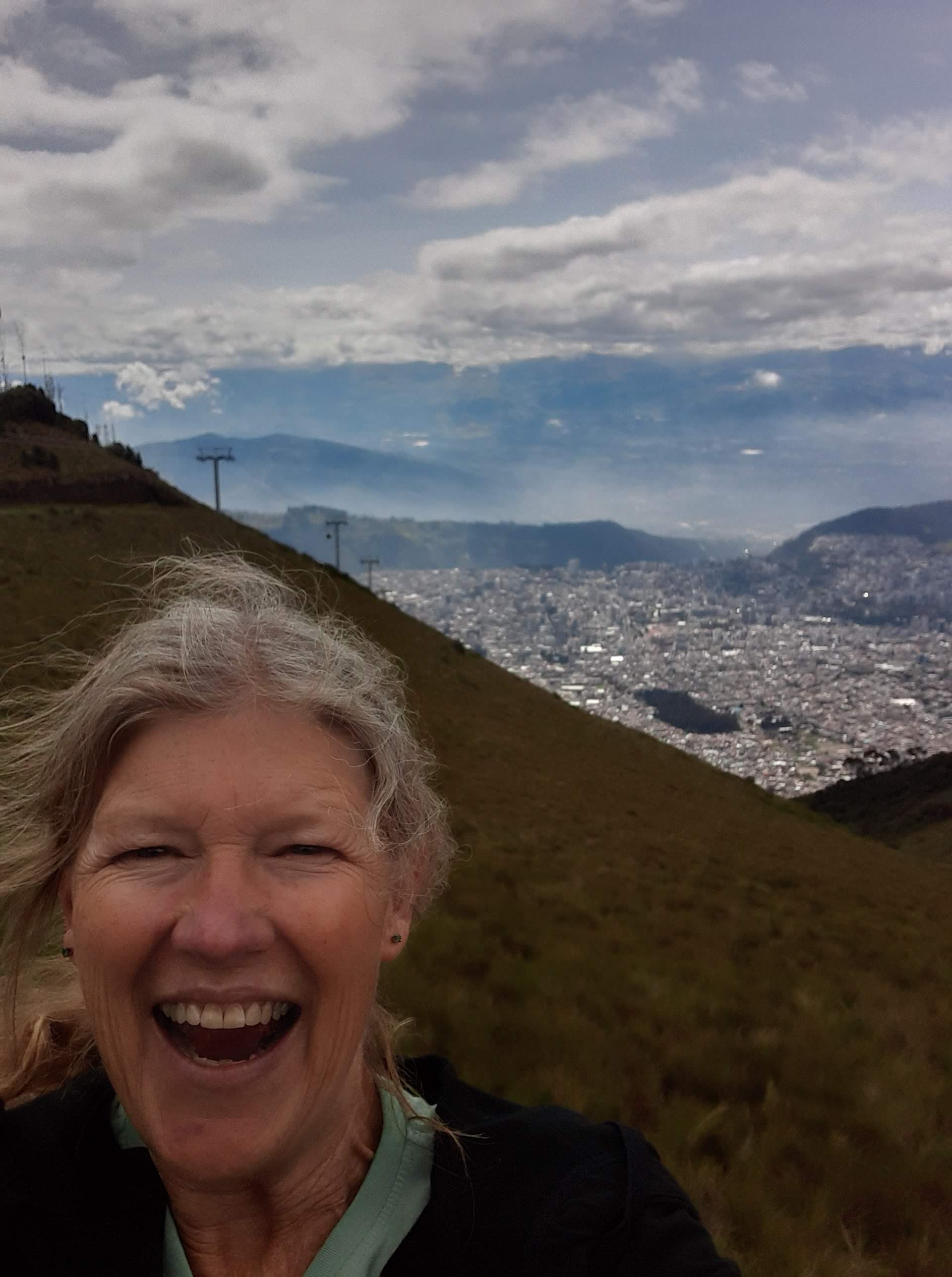
Another day, I took a taxi to the northwest side of the city to reach the famous TeleferiQo, an aerial tram ride which takes people to a viewpoint called Cruz Loma above the city at 12,000 ft.  While standing in line, I met Jose, a local man who wanted to practice his English, and encouraged me to answer him in Spanish.  Thus we passed the 30 minute wait for the cable car communicating like a couple of three-year-olds.  Mangled grammar and lots of hand waving and laughter.  Once we rode the tram to the top, he took off for a long hike to Volcano Pichincha, while I chose an easier loop walk past a corral of horses for rent, a swing that sailed out over the cliff, and a platform where tourists could take a selfie with the entire city of Quito spread out below.   

Returning to the city, I moved from the hostel to a nicer hotel one block off the Parque Ejido at the center of town.  My new digs, the Hotel Lef, was intended to be my headquarters for about a week in downtown Quito.  You can never really tell by looking in a guidebook or a website, just what a hotel will be like.  Is the neighborhood safe?  Is there anywhere to eat?  In the case of Hotel Lef, I lucked out, as it turned out to be extremely clean, quiet and friendly.  The owner spoke no English, but thanks to the Google Translate app, and my halting Spanish, we managed to communicate.  He even used his personal vehicle one day to run me across town to meet a bus for a day trip to Volcano Cotapaxi. 
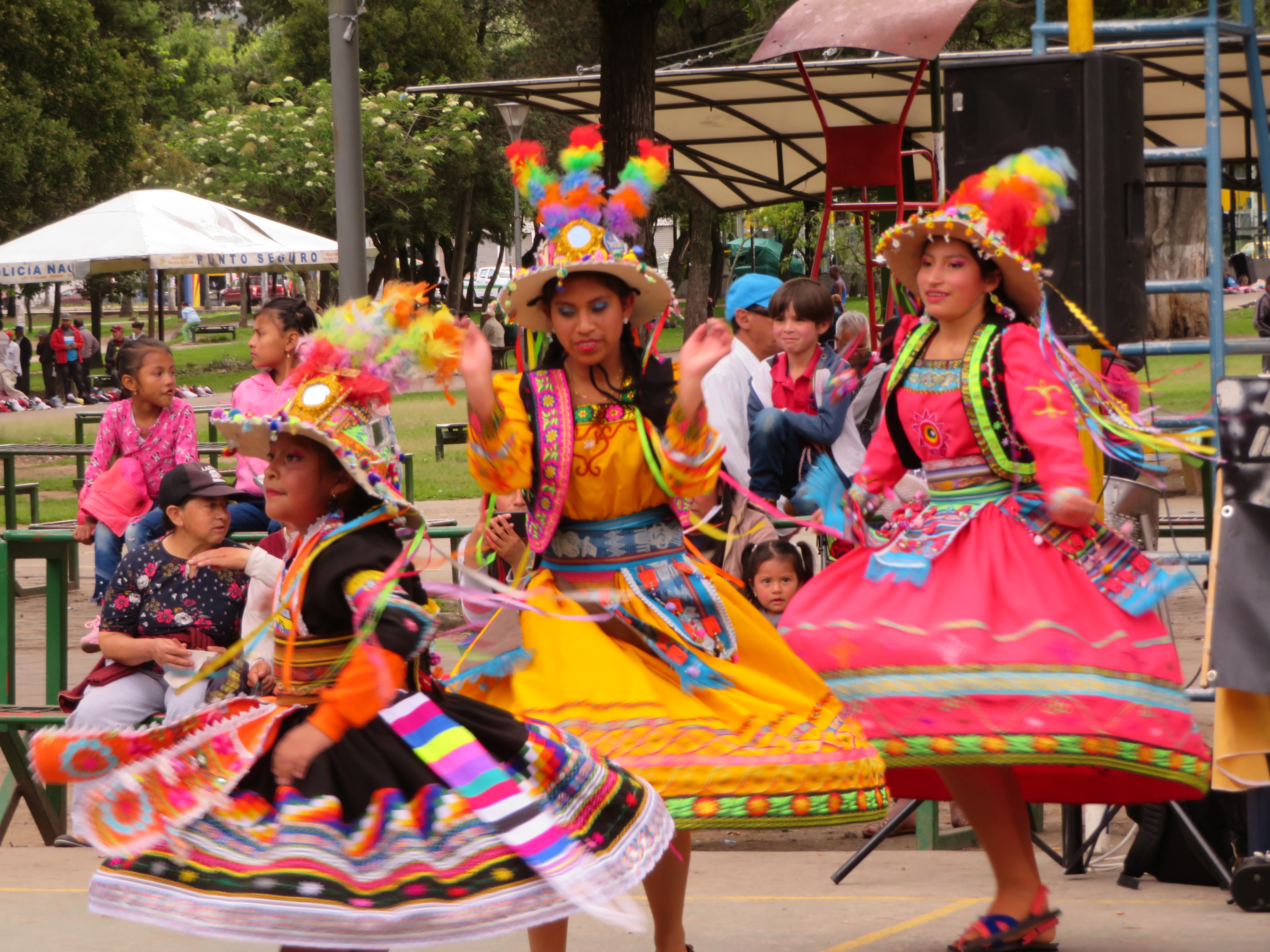
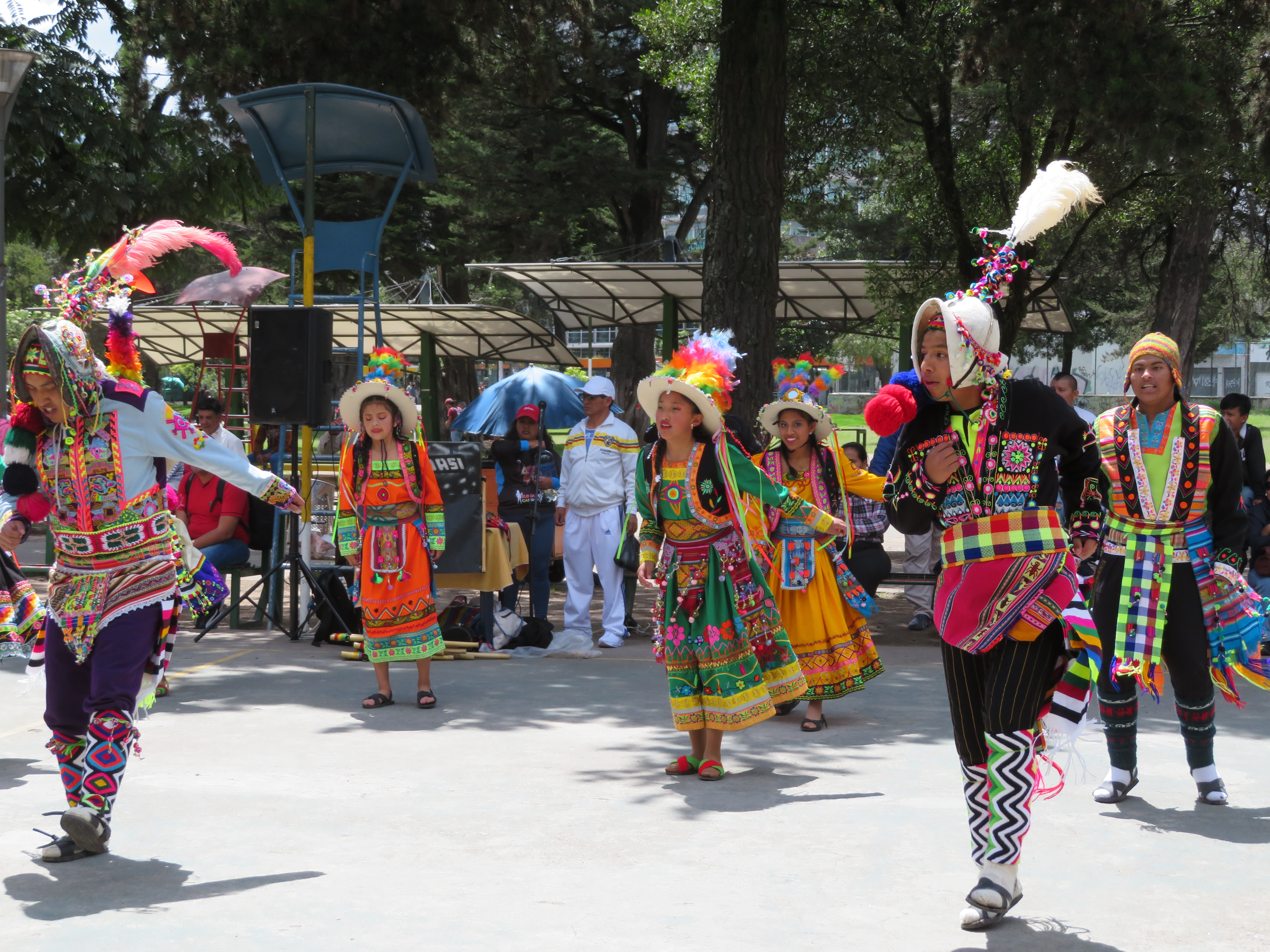
Once settled in, I walked to the park.  Since it was Sunday, hundreds of city residents had flocked to the park for a family day.  I walked past hastily erected food booths, studying other people’s plates before deciding on a cheap traditional meal of barbecued chicken, rice, corn, and a huge fruit cup, all for about $1.50.  Andean music drifted across the grass, so after lunch I went to find it.  On a platform near the bathrooms, a dance performance by students of the Intihuasi Dance School was underway.  Dressed in colorful costumes, children as young as seven completed complex steps.  Older couples whirled and spun to traditional pan flute music.  Their exuberance was dizzying and intoxicating.  At the end, they passed a hat through the crowd of onlookers for donations.  I happily threw in a couple dollars.  
Early the next morning, I left my hotel before dawn, clad in running shorts, and covered the distance of one block to Parque Ejido.  In the gathering light, I ran circles around the outside edge of the park, but I was not alone.  Other joggers joined me; also walkers, some with dogs on leashes, followed the perimeter trail.  I passed one section of the park where several homeless people were sleeping in cardboard tents.  No one looked up, and I avoided cutting my eyes into their territory, demarcated with stacked cement blocks and pieces of wood.  Around the far side of the park, vendors had set up carts, offering bowls of traditional rice-based breakfast stew.  Well-dressed young professionals hurried to waiting busses, and the traffic thickened as I rounded the park for the fourth time.  Proud to be able to run (albeit slowly) at 9,000 feet, I enjoyed fitting in with the locals who exercised in the heart of Quito. 

Research before I left home had provided me with the location of an English-speaking chapter of a spiritual group of which I was a long-time member.  When the day arrived, I caught a taxi across town to attend their morning meeting.  Eighteen people eventually showed up – “on Ecuador time,” a few minutes late – and the meeting proceeded to last until noon.  I met Mike, a physician from Ohio; Josh, a computer programmer from Toronto, Canada; Mimi, a teacher who lived in Quito; and Patrick, a retired pilot from York, England. 

After the meeting, we piled into cars and drove to Plaza Foch for a lunch of Indian food and an animated conversation.  Then, Patrick invited me to accompany him and a couple of the others to an outdoor coffee shop on the other side of the plaza, where we sat all afternoon sipping coffee and playing dominoes.  They used three-sided dominoes with numbers from 0 to 5 on each side, which was a variant I had never seen before.  I passed several more hours laughing with my new friends, telling stories about Ecuador, and trying unsuccessfully to outsmart them at this simple but deceptively challenging game. 
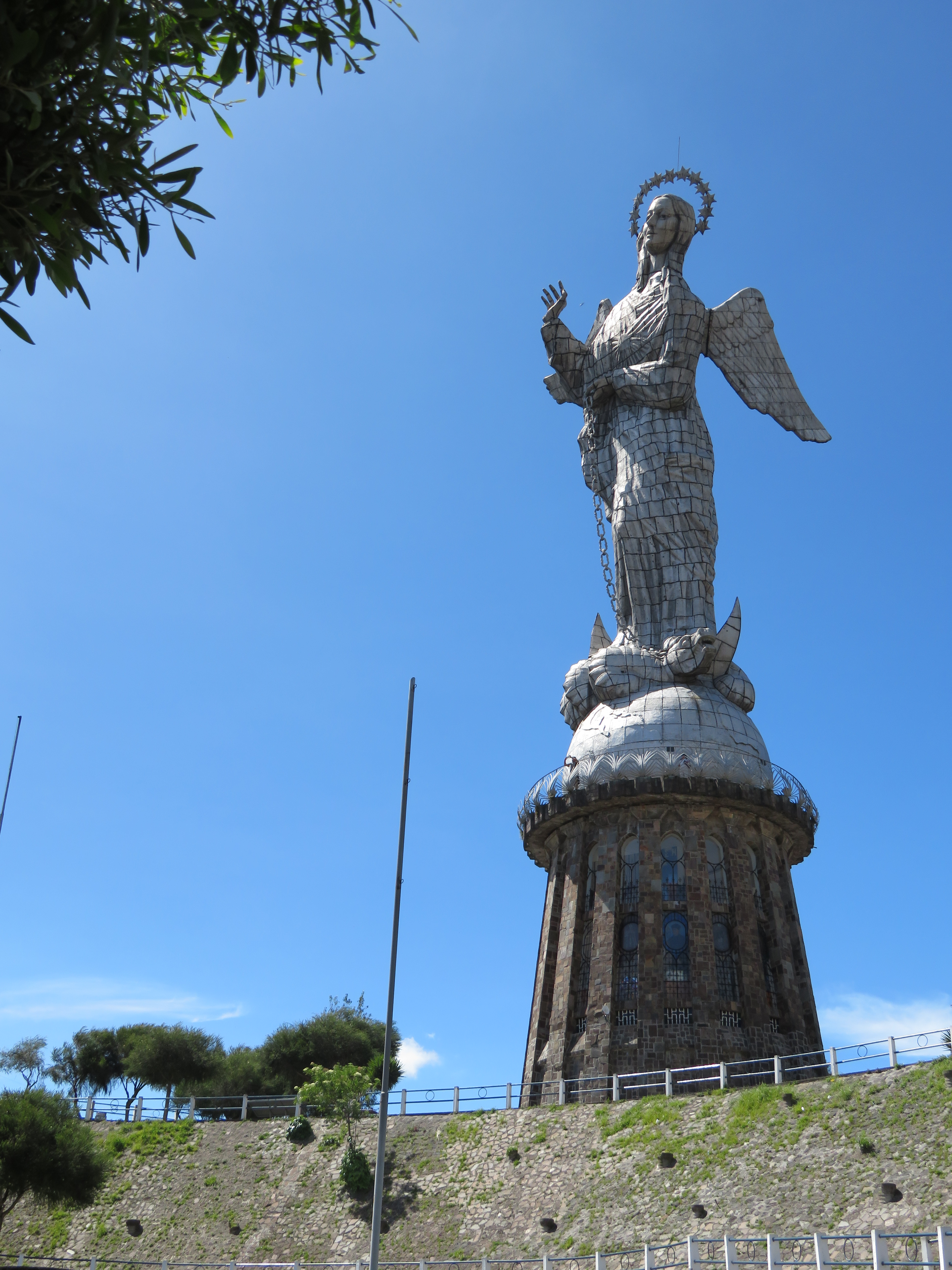
On another day I wanted to get to the botanical gardens in Carolina Park.  The easiest option seemed to be hopping onto the red “Quito Bus” which provided jump-on, jump-off access to points of interest in the city.  I rode right through Old Town (having already walked my way through it a few days before), and jumped off at the Virgin of Quito Lookout when the bus made a stop there.  The Virgin, a 130 foot tall aluminum mosaic statue, waved a cool hand at the city. Views from her base north across the sprawling city rimmed by volcanoes were breathtaking.    
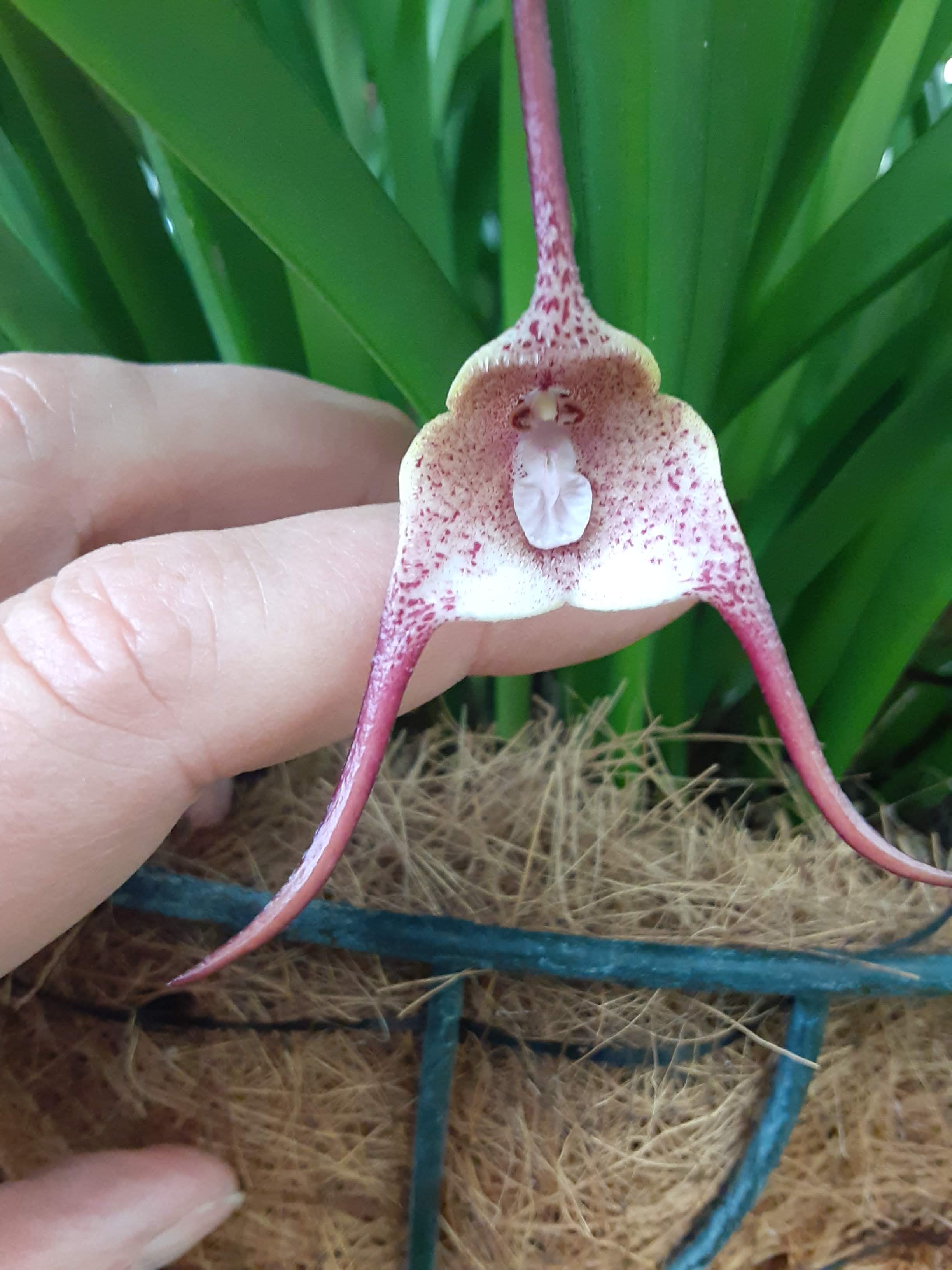
Back on the red bus, I rode past the historic (and pricey) Hotel Quito, through the financial district, and finally to Carolina Park.  A huge green oasis in the middle of the city, the park contained bike paths, soccer fields, and a lake where paddleboats were available for rent.  Inside the botanical garden, I walked through sections showcasing the various native habitats encompassed in Ecuador: high altitude grasslands, tropical Amazonian headwaters, palm groves, cloud forest, wetlands, coastal jungles, and desert cactus gardens.  Like Ecuador itself, the botanic gardens fit a lot of variety into a small space.  Inside a greenhouse, I found a spectacular display of at least a hundred different varieties of orchid.  My favorite, the aptly named Dracula orchid, sported fangs and what looked like blood splatter.  
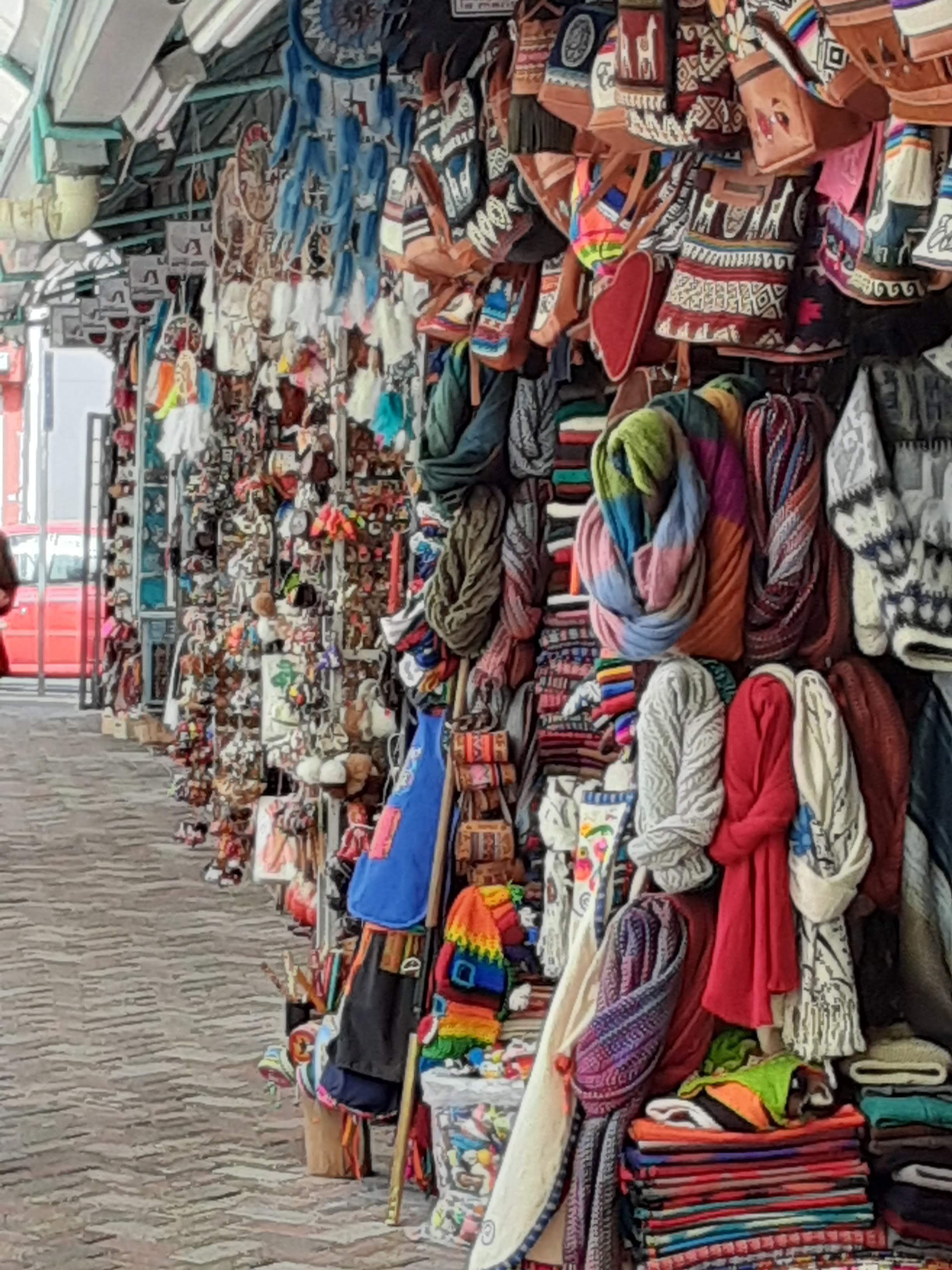
A couple hours later, I caught the next red bus which delivered me (in a roundabout way) back to the Plaza Foch.  I walked through the sprawling mercado maze spread out for several blocks on the way back to my hotel.  The vendors all had similar arts and crafts to sell.  I walked at random, and stopped at the booths of a couple of very friendly but not pushy sellers to look more closely at their wares.  I ended up buying a couple pieces of silver jewelry, a painting, a purse, and a carved gourd.  Though I really didn’t need any of the items, I felt moved to contribute a little to the economy of artisans in Quito. 

After each of these busy days immersed up to my ears in the city of Quito, I was grateful to have a nice quiet room with a comfortable bed to which to retreat.  The Hotel Lef was a great refuge in a central location from which to explore this fascinating and exotic city. 
Uruguay Part 1

Let’s go to Uruguay!  Says no one, ever. But in January 2017, four of us took the Buquebus (pronounced Bookie Boose) ferry across from Buenos Aires to Uruguay for a few days of exploration.  One of our party, Jon, had spent some of his teenage years during the 1960s in Colonia Sacramento, staying with his dad.  What was Jon’s dad doing in Uruguay?  The answer was hazy, something to do with either the U.S. Agency for International Development, or possibly the C.I.A.  Half joking, Jon said that “the revolution started six months after Dad left each country.”

In Uruguay, Jon’s dad married a local woman and had a couple of kids.  Teenage Jon was not well supervised while there; he ran wild, engaging in typical teenage shenanigans.  When he got kicked out of his dad’s house, he returned to the United States and had never been back to Uruguay – until now. 

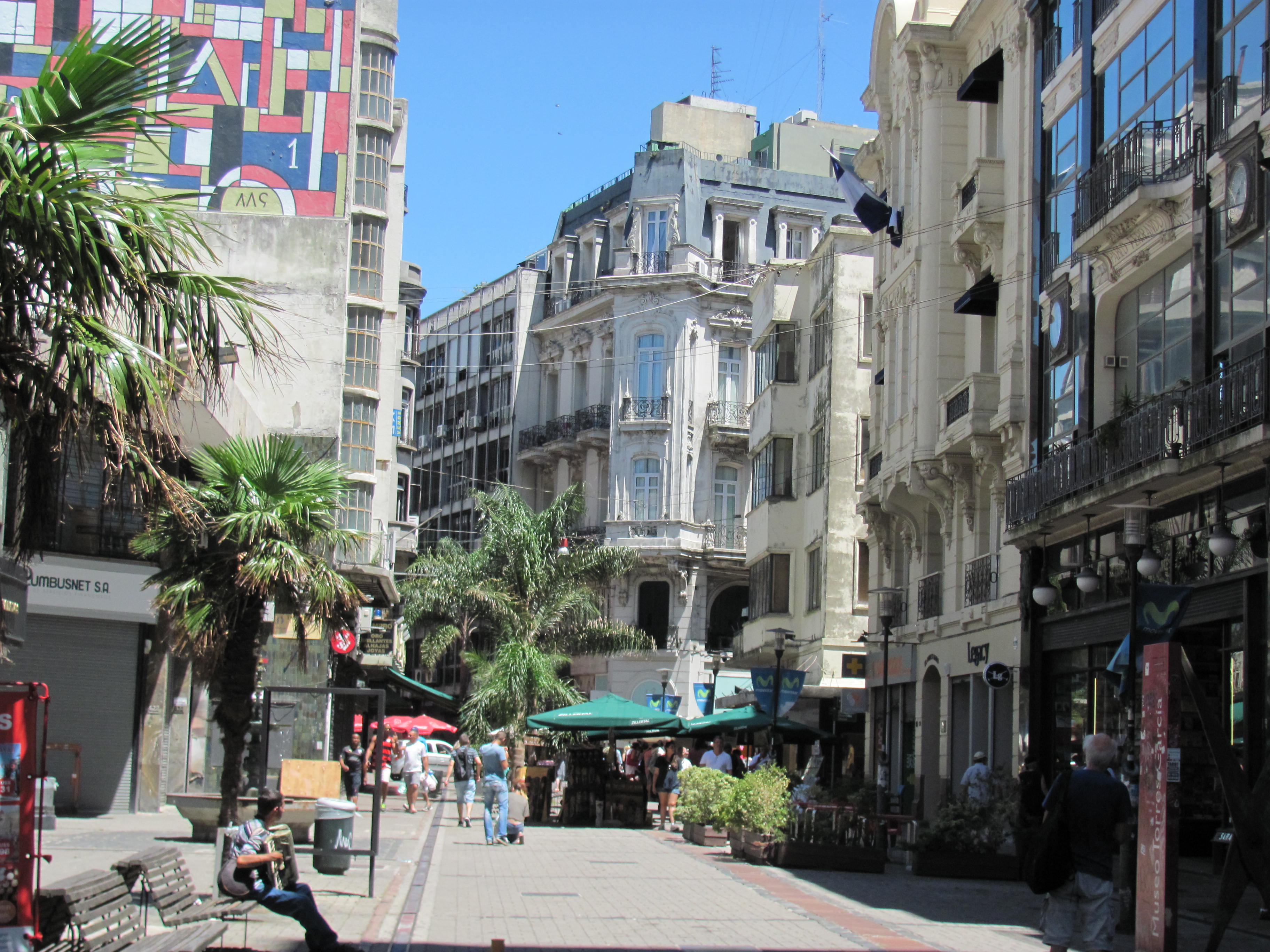
We crammed into a tiny economica rental car and drove from the ferry dock in Colonia to the end of the road in Uruguay.  It’s not a very big country.  On a map, it’s a grape wedged in between a giant cauliflower (Brazil) and a zucchini (Argentina).  We stopped over for two days in the nation’s capital, Montevideo, where Jon’s half-sister, Karen, lived.  The two of them barely knew each other, as their dad left Uruguay when Karen was five, moving on to another wife and family in Korea.  But Karen cheerfully showed us around the city, narrating some of its history in surprisingly good English, and walked us through an outdoor mercado where we bought some handcrafted jewelry and tee shirts. 

Karen suggested a parrilla (grilled meat) restaurant for dinner.  Dinner was served late in Uruguay – like, way late, 9:00 pm, or later.  I thought I would starve to death before they served us.  Then, as we sat at a picnic table, the waiter brought a lazy susan piled high with all kinds of barbecue – beef cheeks, kidney, blood sausage, spare ribs, and well-done sirloin.  Exotic eating is supposed to be part of the fun of foreign travel, but the organ meats were a struggle to swallow, so I filled up instead on the side dishes of grilled vegetables.  After dinner, we walked to an ice cream parlor on the Rambla (waterfront path) where a double scoop of chocolate gelato rewarded me. 

The next morning at 5:00 I went for a run along the Rambla.  A lovely orange sunrise over the South Atlantic was witnessed only by me and a couple homeless guys curled on benches next to the water.  The rest of the city was sound asleep, having stayed up past midnight the night before.     

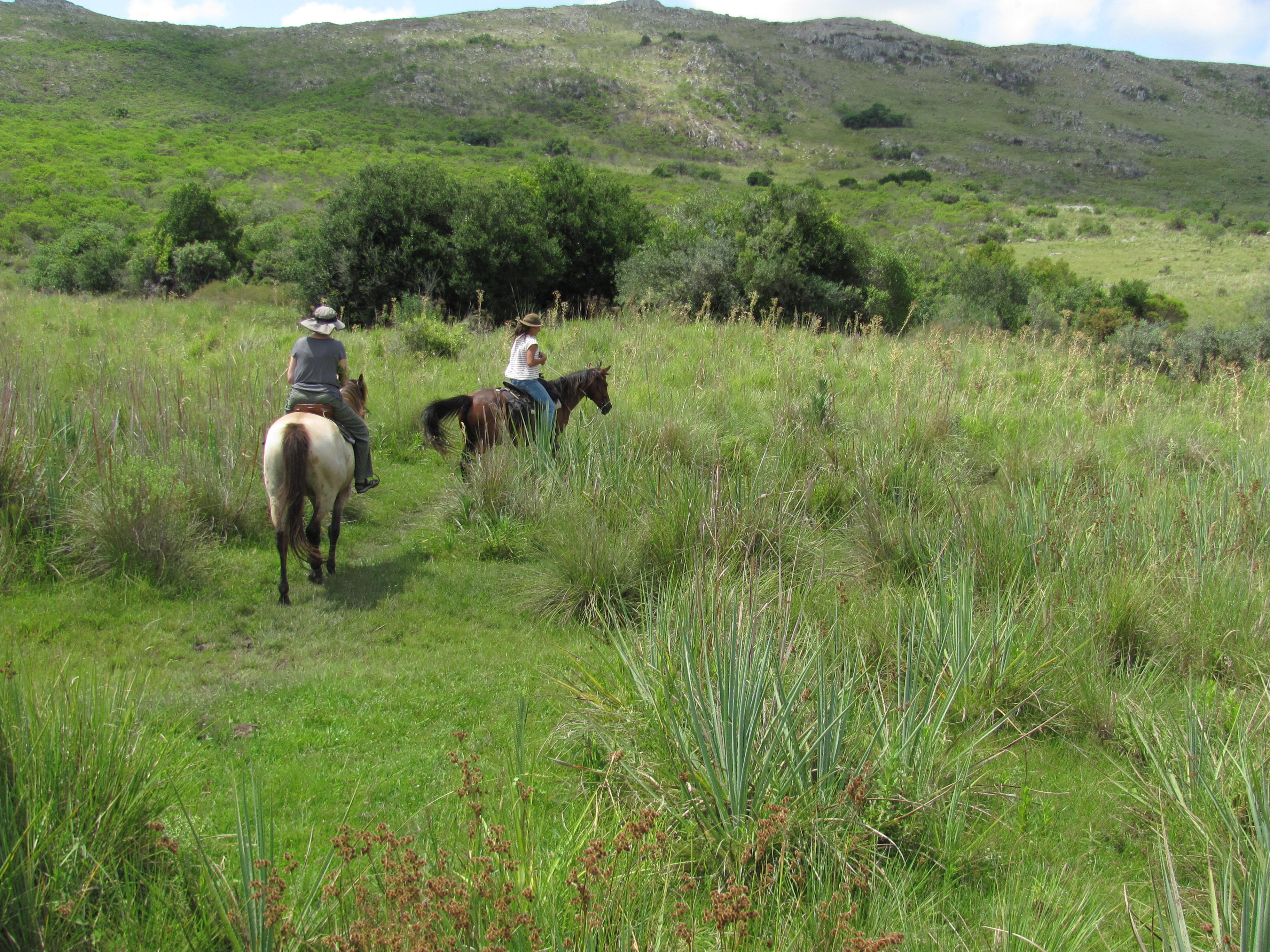
Departing the urban area, we drove through countryside as green as Ireland.  Cattle grazed, and fields of corn and alfalfa, groves of apple trees, and grape vineyards lined the roadway.  A couple hours later, we departed the highway at the town of Rocha.  Six miles up a dirt road in the Rocha Mountains (which were really hills, not mountains, to this Rocky Mountain dweller – elevation of only 1400 feet) we arrived at an organic estancia (working ranch) called Caballos de Luz – Horses of Light.     

We passed two days on the farm, riding horses across the rocky hills and nearly starving on vegetarian fare.   The couple who ran the place, Lucy from Austria and Santiago from Brazil, had bonded over their shared love of horses, and spent the past nine years living on 400 acres off the grid.  Lucy told us the small settlement in the region had begun as a commune, but in recent years everyone sort of broke away from each other, and now it was more of a neighborhood. 

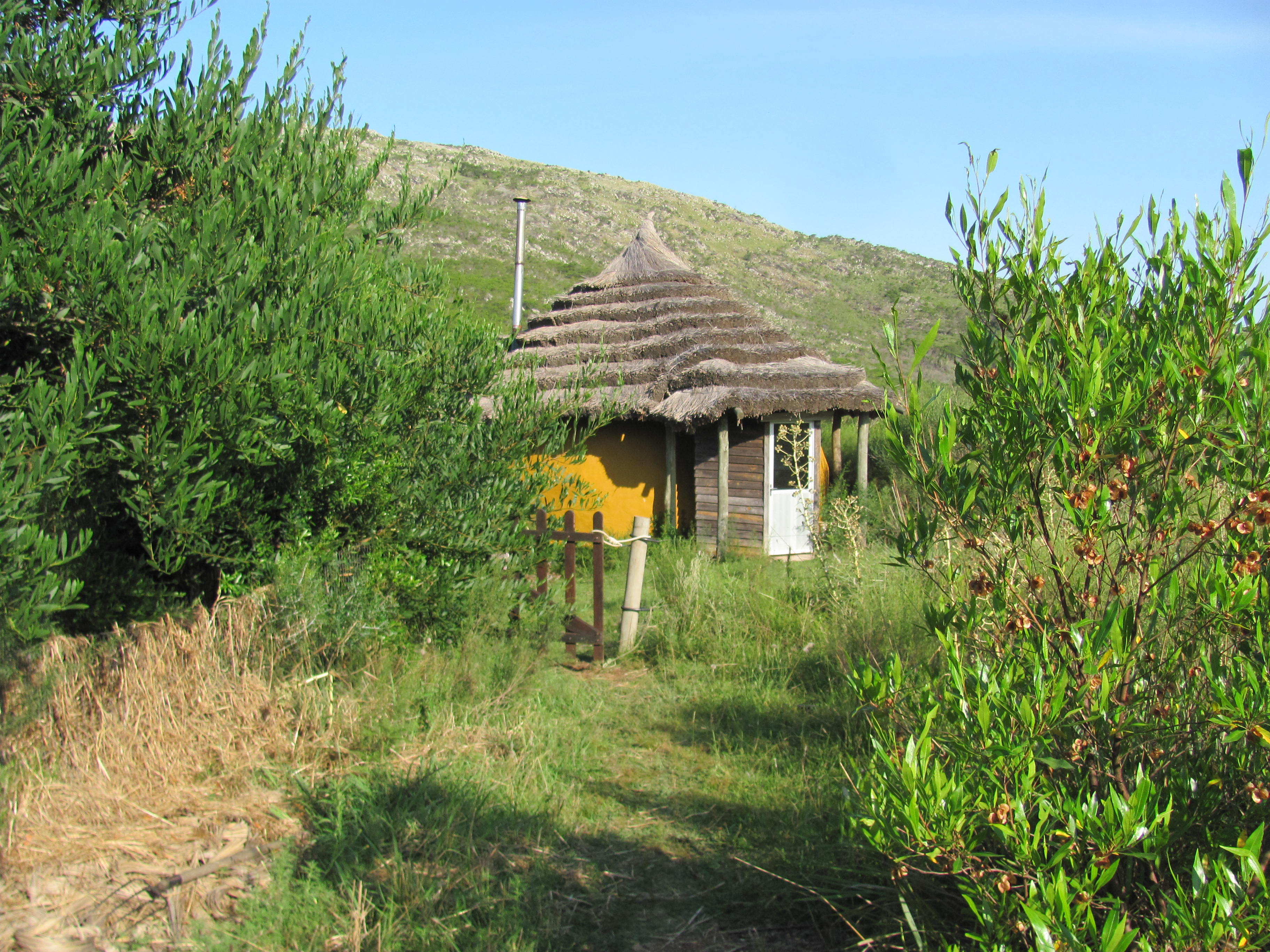
They owned a dozen horses, plus they boarded horses for their neighbors, and hosted occasional small groups of travelers.  Growing much of their own food, they utilized solar power and a propane stove.  The huts we stayed in had thatched roofs and no air conditioning.  I walked out onto the back porch of my hut, spreading some clothes to dry, and stepped on a rotten board.  I nearly fell through as it broke off.  One board – overlooked!  I made a mental note to mention it to Santiago, as maintenance obviously proved tough to keep up with in the hinterlands of Uruguay. 

Down a path from my hut was a composting toilet for communal use.  Of course, it was home to a million flies.  I went in to use it and was startled by a frog which jumped neatly out of my way.  As soon as I stepped away, the frog hopped back onto the toilet seat.  The lid was up.  In less than five minutes, I watched the frog expertly catch three flies.  I had to admire his clever adaptation to resources at hand.  He had found the perfect gig on the toilet seat. 

The food they served us was bland, but undoubtably quite healthy.  Salad, breaded eggplant, goat cheese and a loaf of bread with a crust so hard it could have doubled as a football.  The salad dressing was some weird peanut concoction.  No bacon, no potato chips, no chocolate.  The one standout dish was home grown tomatoes in balsamic vinaigrette.  Now I could see why both Lucy and Santiago managed to stay as thin as string beans.  After dinner, in my hut, I secretly munched a bag of pretzels, some dried fruit, and several handfuls of trail mix.  And felt like I might survive until we got to another parrilla restaurant. 

Beyond the huts and down the hill, past the garden, ran what they called a river – creek was more accurate – complete with a swimming hole deep enough for immersion.  Several palm trees leaned over the cool, clear water. A couple flat rocks on shore provided a seat next to, as Lucy described it, the world’s smallest white sand beach. 

Besides dipping in the river and taking hour-long horseback rides into the hills, there was not a lot for a guest to do on the ranch.  I was glad that I had brought a good book to read in the hammock that hung between two trees in the shady front yard. 

During a morning run, I spotted a tiny deer (the size of a dog) disappearing into the tangled brush of an arroyo.  The deer was no doubt heading for the river, the only water for miles around.  Farther up the dirt road, a one-room schoolhouse sported a sign in the yard that translated to, “Pray for Rain.” 

Dry, dusty and hot, at the height of the South American summer, the ranch existed outside the press of civilization.  It was obviously a lot of work, with limited electricity and no hot water or indoor plumbing.  But it was quiet, except for an occasional horse whinny.  To Lucy and Santiago, craving solitude and freedom, Caballos de Luz Ranch was a slice of paradise. 

My stay provided a much-needed break from the stress of travel in a foreign land.  For those couple days, suspended away from civilization, I felt a glimpse of paradise as well.   The only thing was, I was still hungry.  For a stuffed-full carne asada burrito, dripping with cheese and grease, I was willing to keep moving.    

Cape Palmerston

By Kathleen Kemsley, (c) 2020

A friend recently asked me if I ever felt afraid when I camped alone.  The question drew my memory immediately to a place where I felt absolutely isolated.  Isolated, but not fearful.  And as it turned out, not alone either, for there were many wild creatures who made Cape Palmerston their home. 

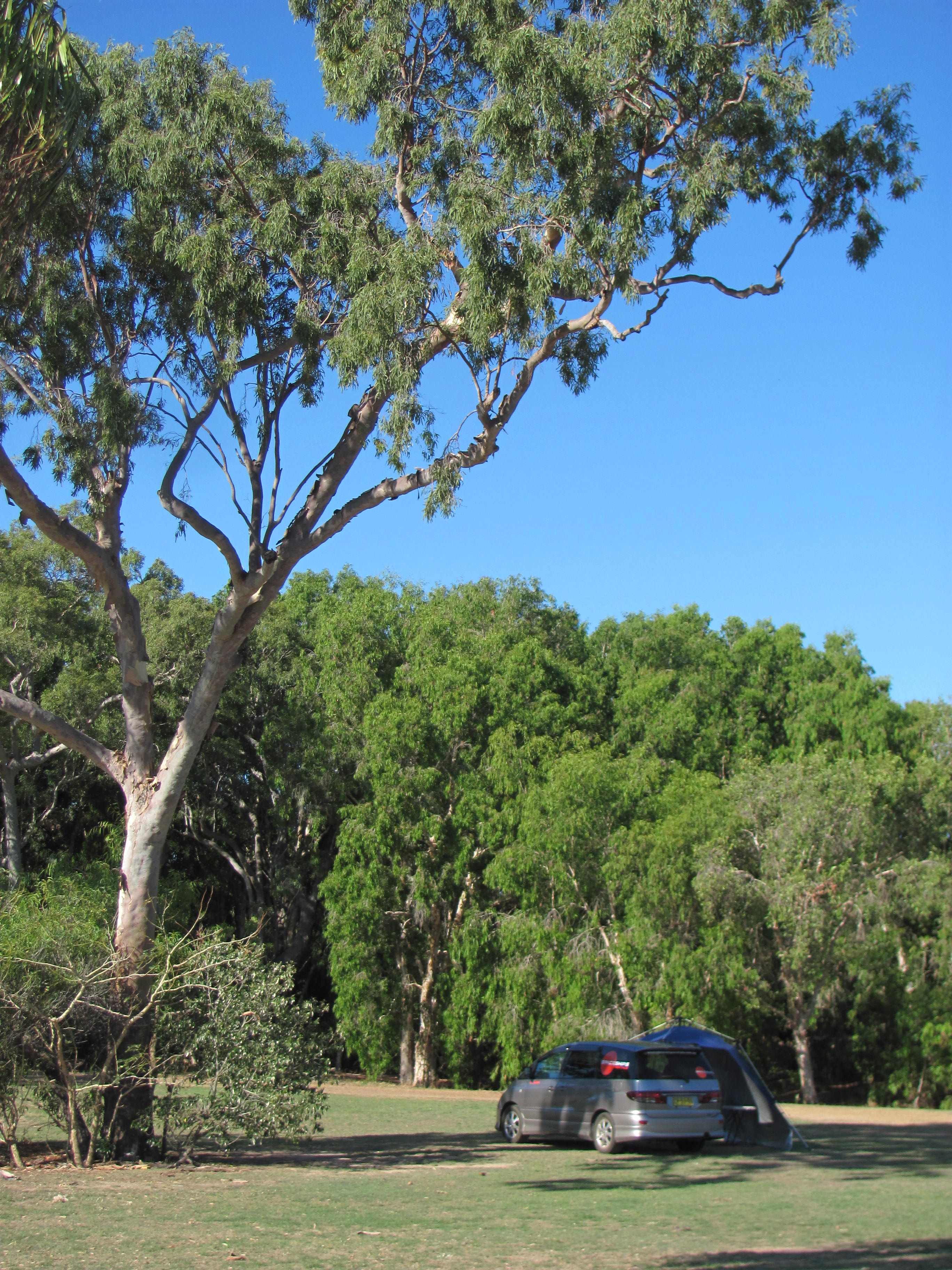
Along the undeveloped east coast of Queensland, some 40 miles south of Mackey, I found my way from Ilbilbie to the Cape Palmerston Holiday Park.  I was hoping for a good night’s rest on my way to the Whitsunday Islands.  When I pulled in to the Holiday Park, the office was vacant.  I stood out front for a few minutes, noticing that there were no other campers parked on the sprawling grounds.  Were they even open?  I had already driven six hours, so did not want to think about searching out a different campsite farther up the road.

After a few minutes a man rode up on a four-wheeler to greet me.  “Are you open for camping?” I asked. 

“Oh yes, we’re open all year,” he said.  “Not too many people right now, on account of the coral spawn.”

“The what?” I had no idea what he was talking about.

“Coral spawn.  Coral is an animal, you see.  They release eggs and sperm once a year, depending on the moon and the water temperature.  Happens here in October, around the full moon.  It’s an underwater blizzard that is critical for coral reproduction.  Said to be an incredible phenomenon.  But the sad truth is, coral spawn also stinks to high heaven.”

“Sounds interesting,” I said.  After I paid for my campsite, he told me to park wherever I wanted.    

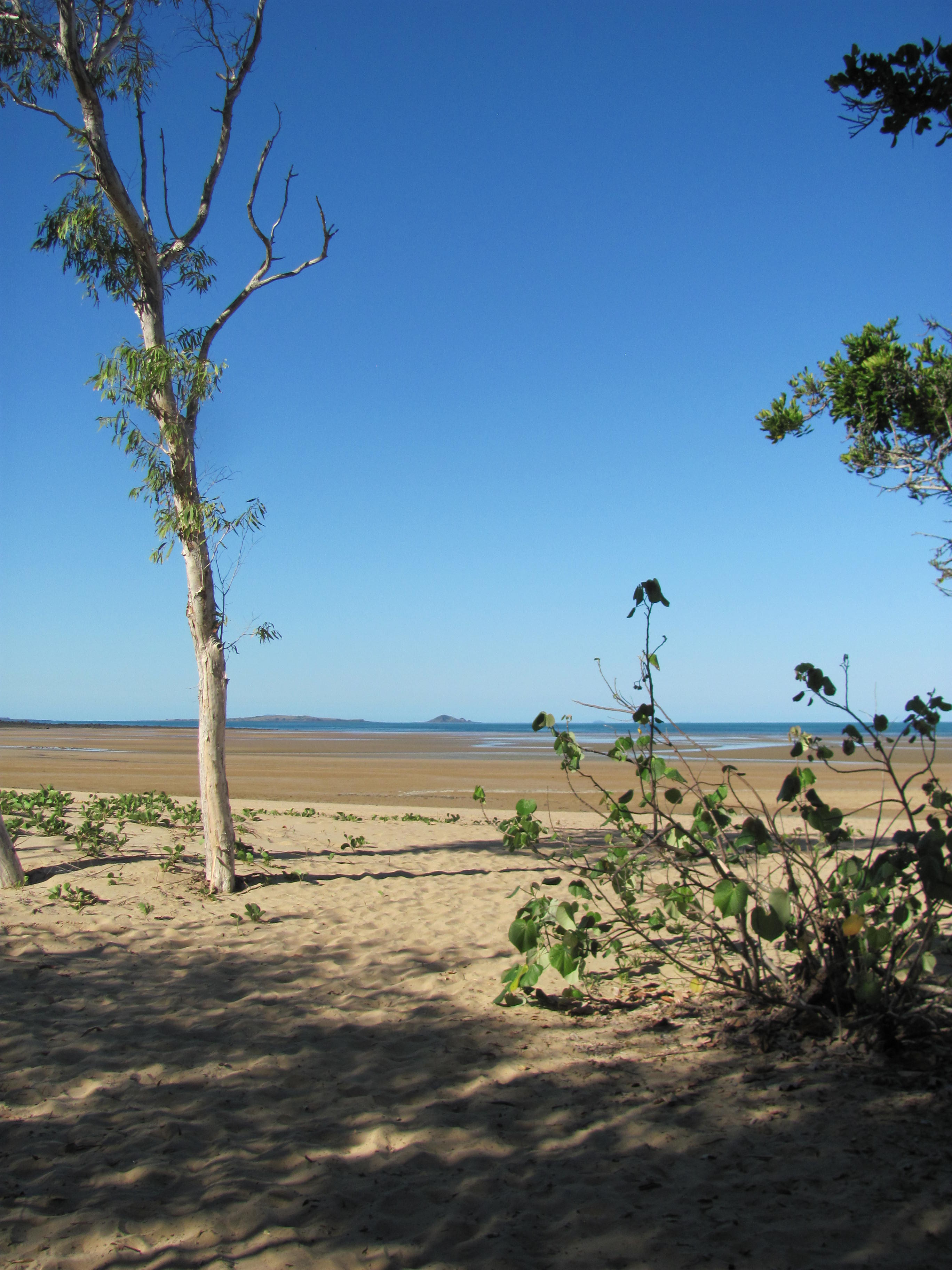
Needing to stretch my legs, I followed a faint trail through a dense forest.  As soon as I broke out of the trees at the coast, I smelled the coral spawn.  Beyond the sandy bluff, ankle high water covered some mud flats for at least a half mile out before the ocean began.  In the distance I could see milky surf, and indeed it did stink.  As far as scenic beaches or clear warm water, Cape Palmerston was a bust.

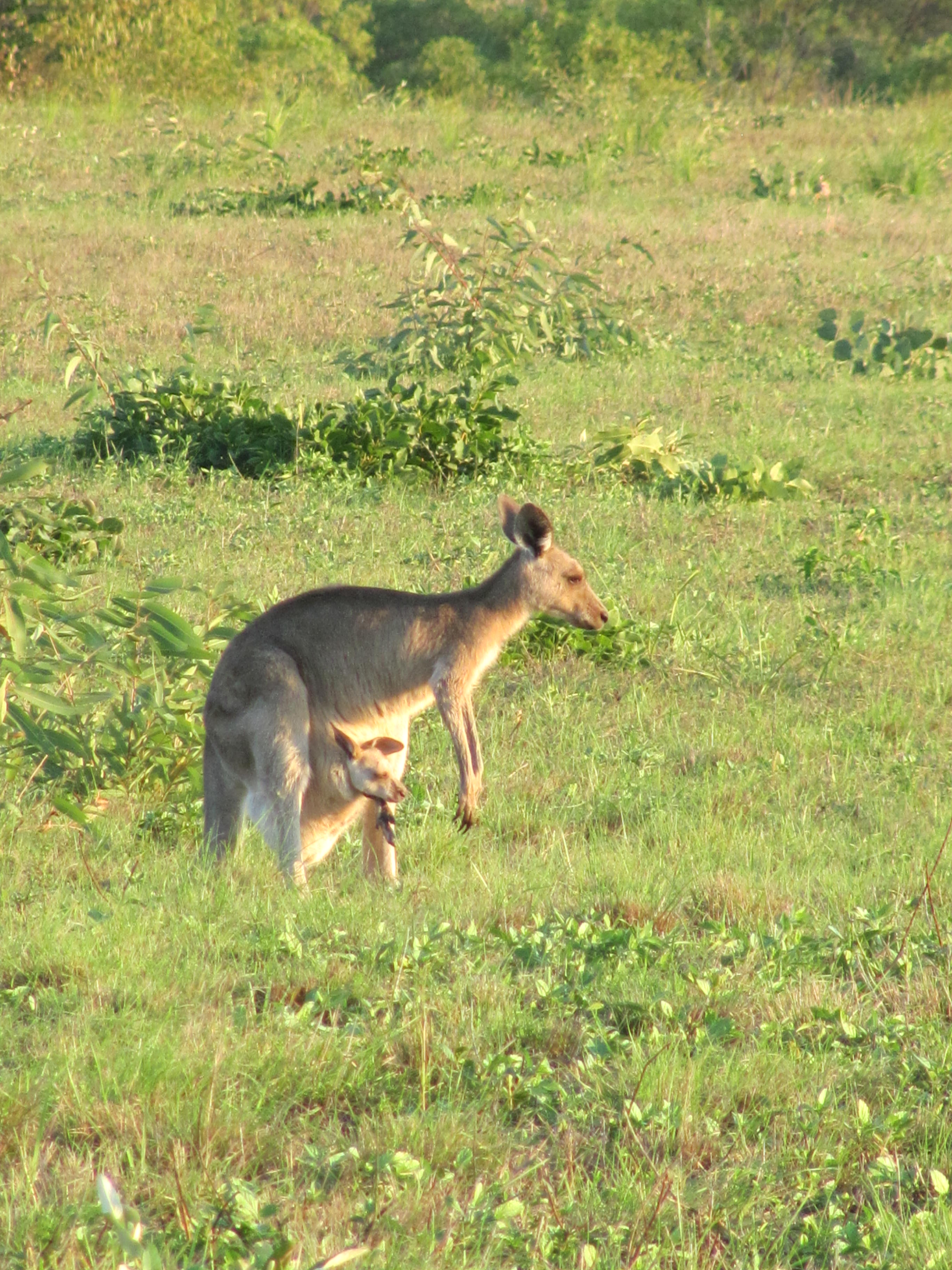
But in true bad news, good news fashion, when I returned to the campground, I discovered the upside of this deserted spot….it teemed with wildlife.  Movement caught my eye at the edge of the camping area. Drawing closer, I saw a knee-high creature that resembled a miniature kangaroo.  It had to be a wallaby!  I walked toward it, tugging at my camera, but the shy animal sensed my presence and hopped away. 

Into the silence, a strange bird called from the forest.  “Ooooo-ha-ha-ha,” it screamed.  Peering through tangled tree branches, I spotted the telltale chunky black beak of a Kookaburra, the iconic symbol of Australia.  I tried to imitate the laugh back to my vocal companion.  It humored me by calling a response. 

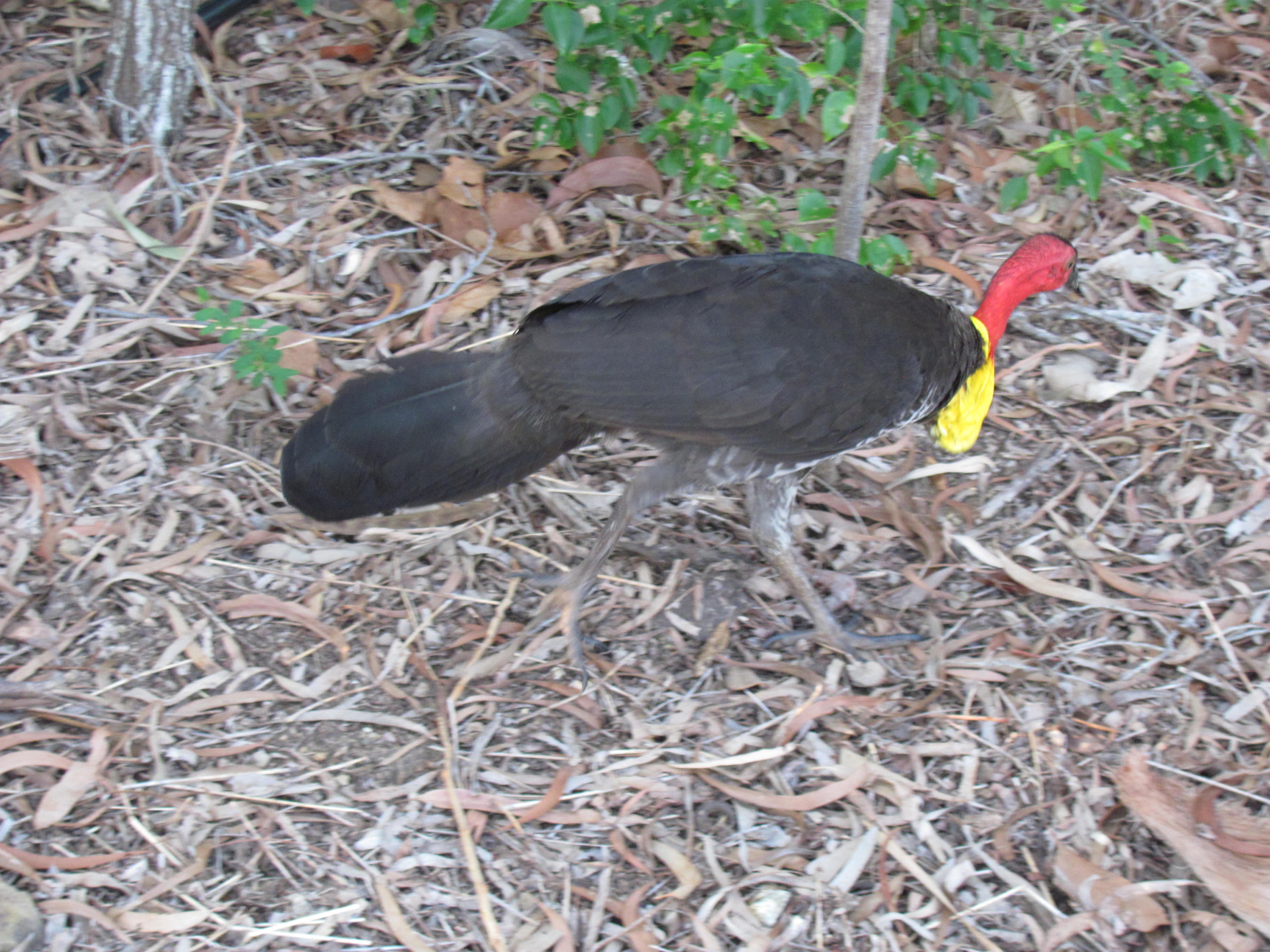
Farther down the hill in the forest, a flash of red caught my attention.  When I investigated, there appeared a large bird with a red head and yellow neck, standing nonchalantly on the ground.  It showed no fear as I approached closer to photograph it.  Later, when I had an internet connection, I identified it as an Australian Brushturkey, also known as Gweela. 

As the sun sank lower in the sky, I slowly walked toward the long grass beyond the edge of the campground, preparing to photograph the sunset.  Suddenly, in front of me, a group of wild kangaroos rose from beneath the shade trees and fanned out to look for dinner. 

Standing perfectly still, I watched six females, several with joeys in their pockets, travel gracefully through the field.  One large male, nearly six feet tall, stood behind them, glancing toward me to determine whether I was a threat to his harem.  I stayed silent.  After a few minutes, he dropped his guard and helped himself to some grass.    

The sky flared orange before darkness fell.  Returning to my camper, I made a sandwich for dinner and ate it sitting in a lawn chair.  As the moon rose, I tilted my head back to stare at an unfamiliar sky.  The Southern Cross was obvious, but I did not know names for the other constellations.  With no one to ask, I made their names up: Kangaroo, Wallaby, Gweela, Kookaburra. 

No other noisy campers broke the vast silence of the night.  I felt alone in Queensland – alone but not lonely, or fearful.  The local residents and the vast night sky kept me company.  In the camper van I slept a deep, dreamless sleep.

Two Sides of Cuba

By Kathleen Kemsley (c) 2021

Cuba, only 90 miles from Florida, felt like it was on the other side of the world from the ultra-modern United States. Or on a different planet.  There was no McDonalds, no Starbucks, no advertising billboards.  No internet, no smart phones.  The women dressed up in high heels and last year’s fashions if they had them.  But the men, wearing shabby black pants, stood on the sidewalk early in the morning talking in small groups about politics.  They didn’t have cable TV.  Most didn’t have cars or even bicycles. 

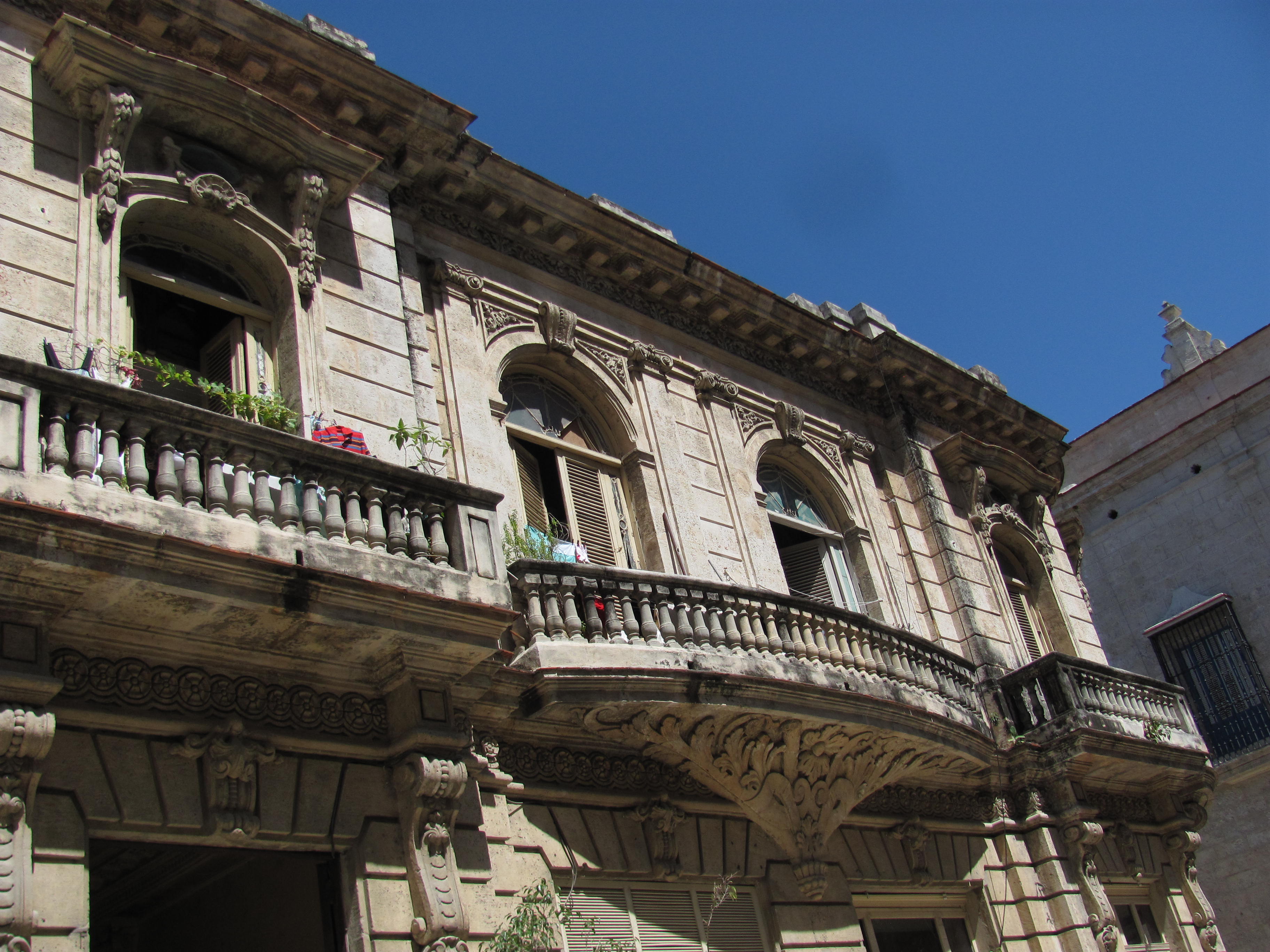
Dogs ran loose on the streets, cleaning up any rotten food or scraps they could find.  Cats too ran free, keeping the rodent population low.  No one had a front yard or back yard.  The buildings in the neighborhood where we stayed in Havana had belonged to rich people in the 1950s: wealthy foreigners or the Cubans who had become wealthy in their service.  After those folks were thrown out of the country in 1959, the government redistributed their houses to families.  Free.  The catch was, a house had to be passed on to the kids.  People couldn’t buy or sell them (because they belonged to the government). 

There were, therefore, a couple of unintended results: (a) the families, now into their third generation since the revolution, were crammed into the houses like sardines; and (b) there was very little pride of ownership. Facades crumbled, paint peeled, fences rusted and gates broke.  Sidewalks cracked and heaved to the point of threatening danger to walkers.  Nothing was being maintained because, why should they?  The government was the owner, not the resident.  

The exception was those homes that had in recent years been turned into B&B’s such as the one where my small group of travelers stayed. The family lived on the top floor.  The lower floor, consisting of 5 bedrooms, a dining room, and a small living room, was for guests.  Our quarters were large, well furnished, and air conditioned, with a sparkling tiled bathroom twice the size of my bathroom at home.  On the terrace, they served us a full breakfast of scrambled eggs, toast, fruit, coffee, and juice, while in the house, the host family ate beans and tortillas.

In Havana we were guided by Rosia, 27, a woman who worked for the government and provided the “official” information about the city and its history, often reading off a printed sheet of “facts.”  She explained that there were two types of peso in Cuba.  Cuban Pesos were rationed to everyone equally regardless of their occupation.  Doctors earned the same as trash collectors.  These pesos were used to purchase staples such as beans, rice, milk, and cheese.  Only Convertible Pesos could be spent on luxuries such as gas, cell phones, and new clothes.  To earn Convertible Pesos, the government allowed people to practice small-scale capitalism, trading goods to tourists, with individual profits carefully accounted for and taxed. 

We went first to the cathedral area, where 1950s cars hauled around tourists.  The engines had been replaced with Russian-made diesel engines and thus kept running long after their original parts wore out.  Since gas cost $5.00/gallon, very few local people had money for a car, other than those who hired them out as taxis. 

Black women dressed in colorful gaudy dresses to simulate Caribbean dance hall floozies of yesteryear, smoking cigars and acting forward with men.  Visitors had to pay them to take a picture.  Other hustlers included a three-piece band that walked up to tourist groups and started blaring “Guantanamera” and then demanding payment; boys on three-wheeled cycles who would pedal overweight tourists across the square; and vendors by the statues whose card tables were piled with books about the revolution. 

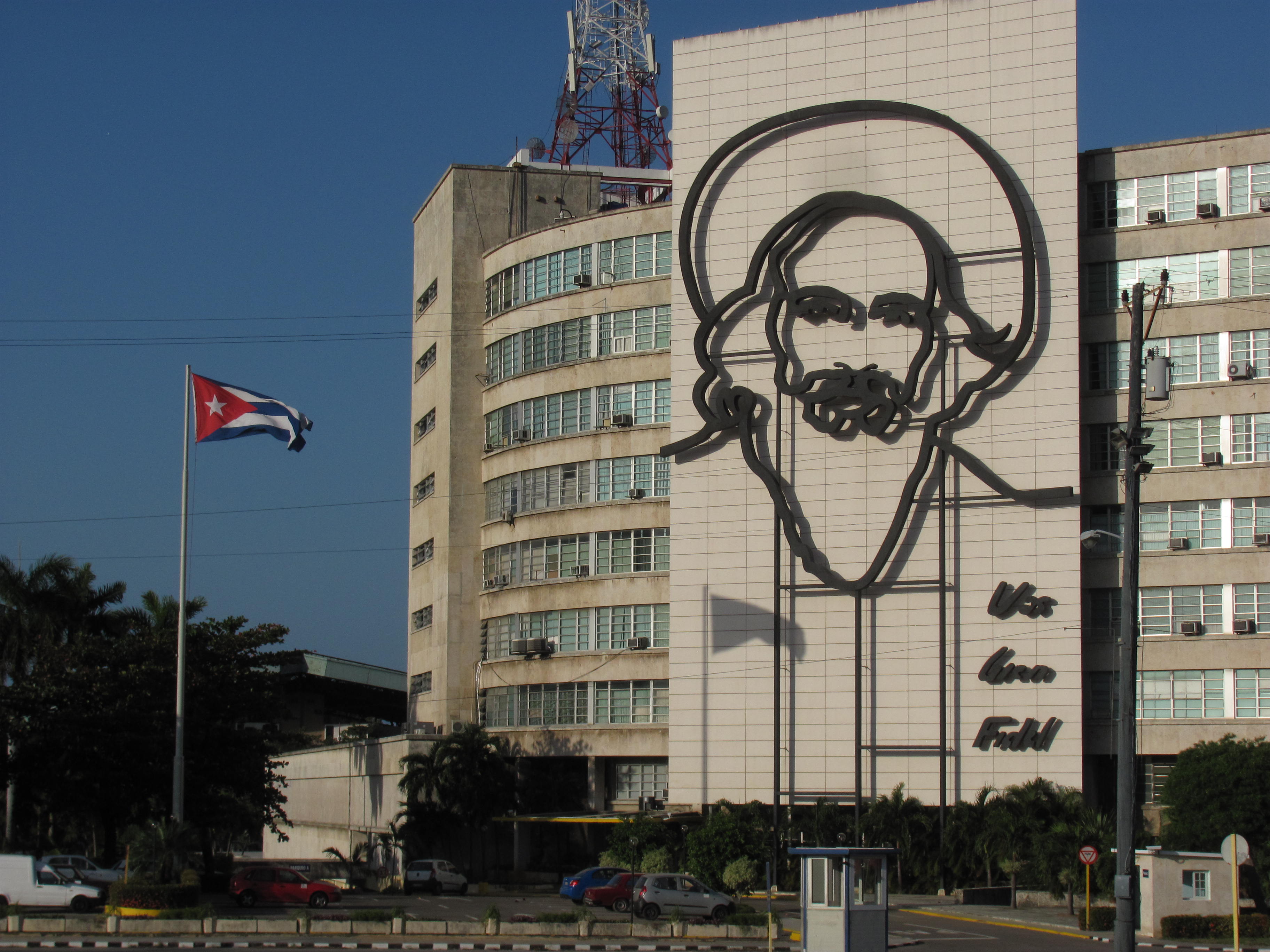
Next we were led by the government mouthpiece, Rosia, past a couple tall buildings with giant metal sculpture images of Che and Fidel on their fronts.  Then it was on to an urban park featuring a serene river, with overhanging trees, that was totally trashed.  Again, no pride of ownership. 

Along the way, I asked Rosia whether Havana had any crazy, alcoholic, or homeless people.  ”Very few,” she said.  “The party takes care of everyone, houses everyone, there are none who don’t have somewhere to live.”  The way she said it, sing-song, made her sound like she was quoting directly from a communism pamphlet.  Discussing it later, my friend and I agreed that she was either outright lying, or she had her head in the sand.

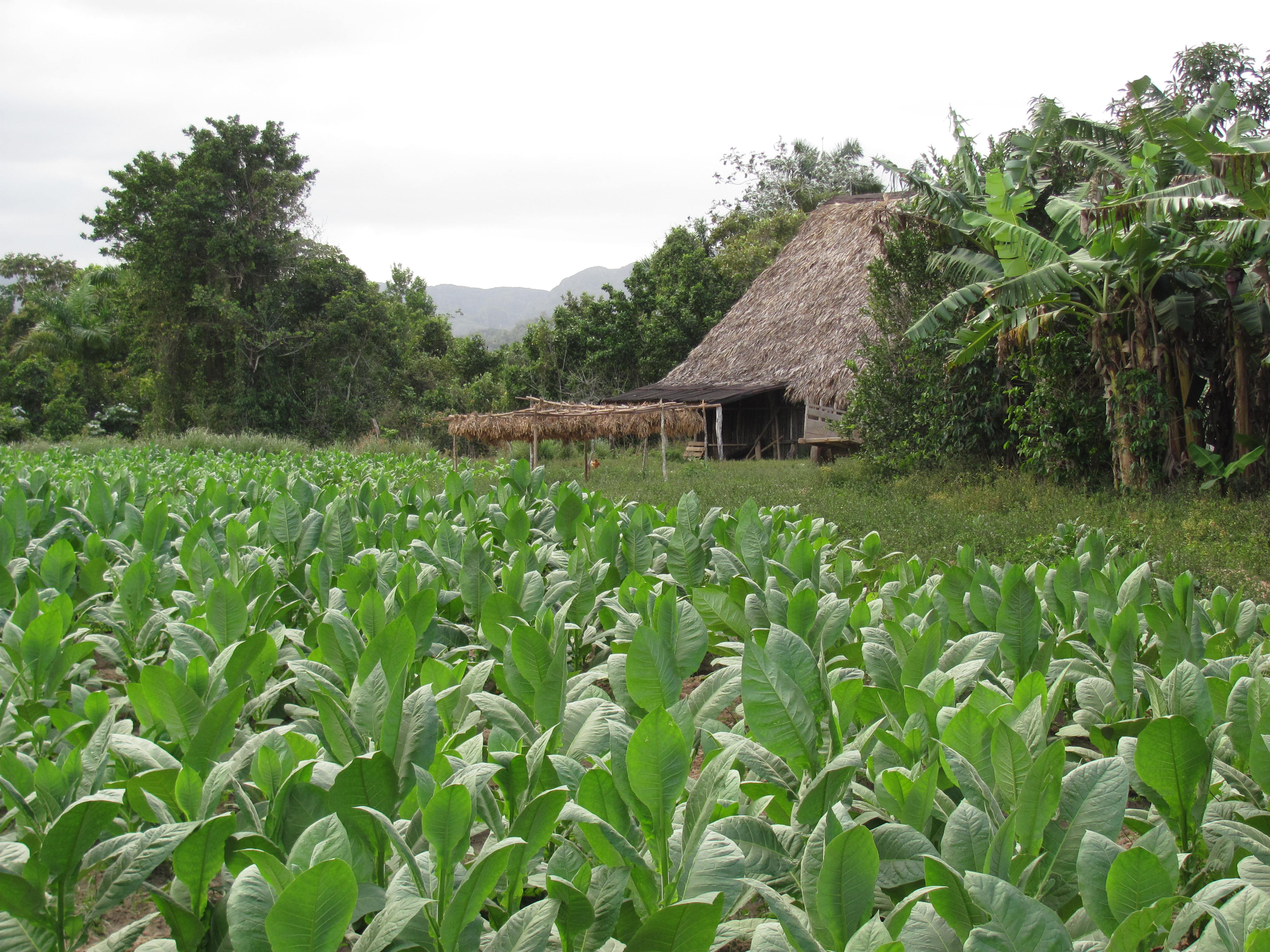
We drove a couple hours west of the city the next day to visit the Vinales Valley, a fertile dale lined by dramatic limestone cliffs. There they mostly grew tobacco, along with family-sized (non-commercial) supplies of vegetables, fruits, coffee, chickens, pigs, horses, goats, and sugar cane for making rum.  We went to a cigar and rum house.  One of the owners, whom I thought of as Mr. Guapo, demonstrated how to roll a cigar.  He was swarthy and good looking, with a devil-may-care wicked smile and a laugh on his lips.  The women swooned, and several of them were persuaded to buy a cigar that they probably would never smoke.     

I rode back to Havana in the front seat of a taxi with another Mr. Guapo, a taxi driver named William.  He spoke almost no English, and some of the other women thought he was crude and played his music too loud.  But I indulged in a little flirtation, knowing that it was all a game to Mr. Guapo.      

We departed Havana the next morning bound for Playa Larga.  It took most of the day to get there, due to stopping to search for a rare hummingbird in some guy’s back yard.  I walked through the beach town the next morning, past many small houses that have all been hopefully converted to B & B’s, but looked sadly vacant of tourists. 

Along the road, we stopped at a museum in Giron, where the Bay of Pigs invasion was memorialized with a Russian tank and plane.  They’re very proud to proclaim that they repelled the attempts of the USA back in 1961 overthrow the communist government.  But across the street, at little stands next to the bathrooms, locals sold earrings, baskets, and ceramic figurines.  So much for the revolution and power to the people.  All they really wanted lately was a way to make some extra pesos to spend on new clothes and beer.   

Then it was on to the end of the road in Trinidad.  Late in the evening, I collapsed into a clean bed at Casa Colonial Torrado, vintage 1830 and very nicely preserved.  The next morning, we went to the local artisan market.  There more vendors hawked trinkets.  “Look Lady, you like?” they called plaintively.

I loved the vintage remnants of a bygone era in Cuba.  But the persistence with which destitute residents tried to scrape together a few extra pesos was hard to resist.  Yes, I paid too much for an enamel bracelet.  But perhaps, for those fifty convertible pesos, someone’s daughter might get a new pair of shoes.