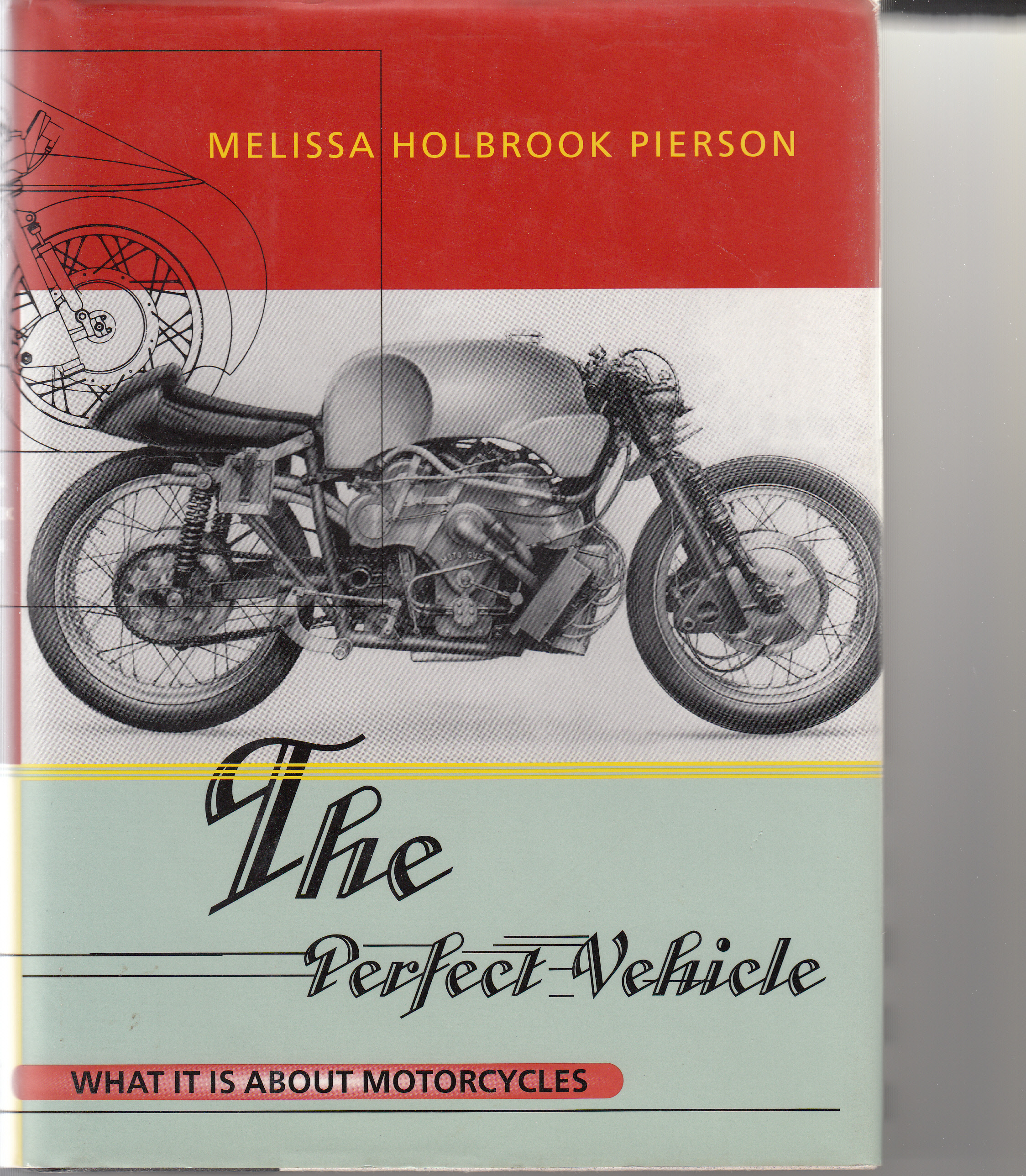
Book Review: The Perfect Vehicle, by Melissa Holbrook Pierson

© 1997 by Kathleen Kemsley, first published in Women On Wheels Magazine, January 1998.   

The Perfect Vehicle (W.W. Norton & Company, 1997, $24.00) is a book about motorcycling that defies categorization.  It is not a travel book, like Ted Simon’s classic Jupiter’s Travels, although it does contain descriptions of the author’s rides on the Blue Ridge Parkway, the New Jersey Turnpike, and in several European countries.  And while the book covers the history of motorcycle racing and women who ride, it is not a historical document of the Hear Me Roar breed.  Perhaps the closest comparison to this book is Robert Pirsig’s part-philosophy, part-travelogue classic, Zen and the Art of Motorcycle Maintenance.  But The Perfect Vehicle resists fitting neatly into any particular genre of motorcycling books; it must be read to be understood.

The author, a Brooklyn woman who is married to a non-riding man, owns a white Moto-Guzzi Lario.  Like most Moto-Guzzi owners, she is completely in love with the somewhat quirky Italian model, although her comments about other motorcycle brands are surprisingly complimentary.  She got started on Moto-Guzzis the way many of us women were attracted to our first motorcycle: her boyfriend rode one.

Out of necessity, Pierson makes friends with men who can work on the Guzzi, which breaks down frequently.  Eventually, she learns how to do most of the repairs herself.

Pierson rides for the first several years with groups of men or with a boyfriend.  Finally, after what seemed to me to take way too long, she signs up for a women-only riding class and discovers the sisterhood among women who ride.  She also gradually gets up the courage to ride solo, relishing the alone time on her bike, where there may be “people all around, in a car in the next lane not five feet away, but they can’t get you…You are spared the burden of words.”  Her reflections about the combination of giddy freedom and abject fear inspired by these solo rides struck a chord with me.

The misguided, strange, and occasionally truly mean comments the sight of a woman on her own motorcycle inspires is fodder for many of the anecdotes Pierson relates throughout the book.  She describes one incident where a couple of men approach Pierson’s male riding partner, John, and ask him how he likes the Lario, completely ignoring her even though he tells them that is her bike, not his.  “Amusing as these episodes were, they and others like them have nonetheless prompted a more sober realization: Apparently the sight of a woman on a motorcycle so profoundly disturbs the way things are that even the eyes are not to be trusted.  In turn, I have to shake myself and ask what year this is.”

To her credit, Pierson does not shy away from examining the dangers of riding motorcycles.  Though she has never herself been in a serious accident, the fear of an accident or a mechanical breakdown is never far from the forefront of her mind.  “Danger is really the wind that passes on either side of a motorcycle,” she writes.  “You may go for long periods of time without feeling it, hours and days and weeks of nothing but routine and happy riding, then it chooses one minute to remind you not to forget it’s there… Sometimes motorcyclists themselves try to deny it, as they do when they wear shorts or bare heads, as if a specially assigned guardian angel drew an impenetrable shield around them.  Or they claim never to have felt fear, only joy; they can certainly get testy, some of them, if you mention the word, as if saying it brings it on.  But somewhere, they all know it.  And they know it is in part why they do it; the mastery of danger, or the feeling of it.”:  As someone who has experienced the pain and terror of a serious motorcycle wreck, and yet couldn’t wait to get back on the bike and ride again, I appreciated Pierson’s unflinching examination of the fears that go hand-in-hand with the joys for riding a motorcycle.

The Perfect Vehicle would have perhaps benefitted from an index,Perfect_Veh or at least from chapter titles which summarized the subject of each.  The book jumps around, describing the visual and mechanical appeal of a Moto-Guzzi on one page and leaping into the details of a group ride in Belgium on the next.  But then, if I had known precisely where to turn to read about the history of women riding long-distance, I might have skipped over some of the most lyrical and interesting passages in the book.

Unlike several other motorcycling books, such as The Investment Biker by Jim Rogers, Pierson includes the personal, and sometimes embarrassing, details of her life.  I did not have to wonder, for example, why her relationship with Franz, a Moto-Guzzi shop owner, broke up.  She writes of her own inner landscape, complete with inconsistencies and irrational fears, as easily as she chronicles the history of the Moto-Guzzi Company.  This willingness to open her heart for examination by everyone who reads her book is admirable.  With Jim Rogers, we never get a clue what kind of mood he was in when he crossed Siberia.  With Melissa Pierson, the moods she describes provide the window into understanding why she loves to ride.

Colorado’s Hidden Canyonlands

(c) 2012 By Kathleen Kemsley, first published in Rider Magazine, June 2012

Colorado is best known for its lofty peaks, and rightly so.  Fourteeners, peaks reaching at least 14,000 feet elevation, number 53 in this not-flat state.  A lesser known side of Colorado is its canyons.  On the west slope of the Rocky Mountain Range, sliding toward Utah, are several remarkable canyons.  I set out on a sunny August day to explore these hidden chasms carved into red and black rocks.

To get to the Colorado canyon country, I coasted downhill from Red Mountain Pass on the Million Dollar Highway.  The first rough grey canyon burst out of the rugged mountains near Ouray.  The Uncompaghre River tore through ancient Precambrian bedrock and flowed north toward the Gunnison River.  I followed the river’s rushing route through Montrose, then turned east for eleven curving miles up into Black Canyon of the Gunnison National Park.

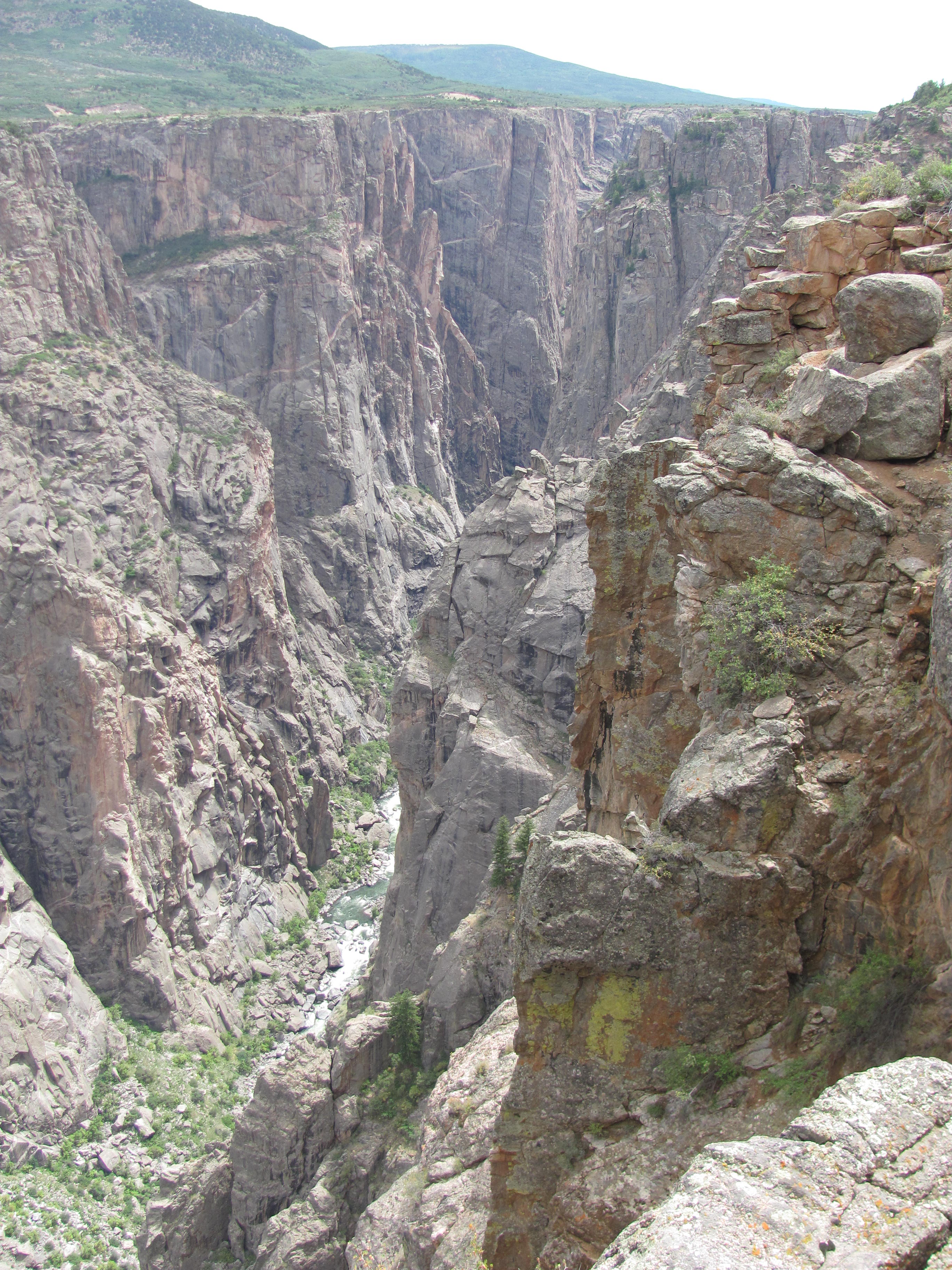
The approach did not prepare me for the Black Canyon.  Pulling in to a turnout inside the park, IIMG_0006 stepped to the railing, looked down and gasped involuntarily.  Sheer cliffs dropped vertically for 2700 feet.  I wondered if U2 had been at the Black Canyon when they wrote their lyrics: “Hello hello, I’m at a place called Vertigo.”  I literally had to grab onto the handrail to keep from pitching forward.

After following a pleasant winding park road out to its end, I rode down the East Portal Road, five miles long at a 16% grade, which led to the bottom of the Black Canyon.  Down at the canyon’s floor, the Gunnison River described a paradise of still water running deep below the dam.  A tiny campground beckoned, but it was too early in the day to camp.  Besides, I had learned at the Visitor Center that poison ivy grew lushly along the river, which spelled trouble in paradise for me.  The BMW agreeably powered me back up the grade to the canyon rim and I resumed my journey north.

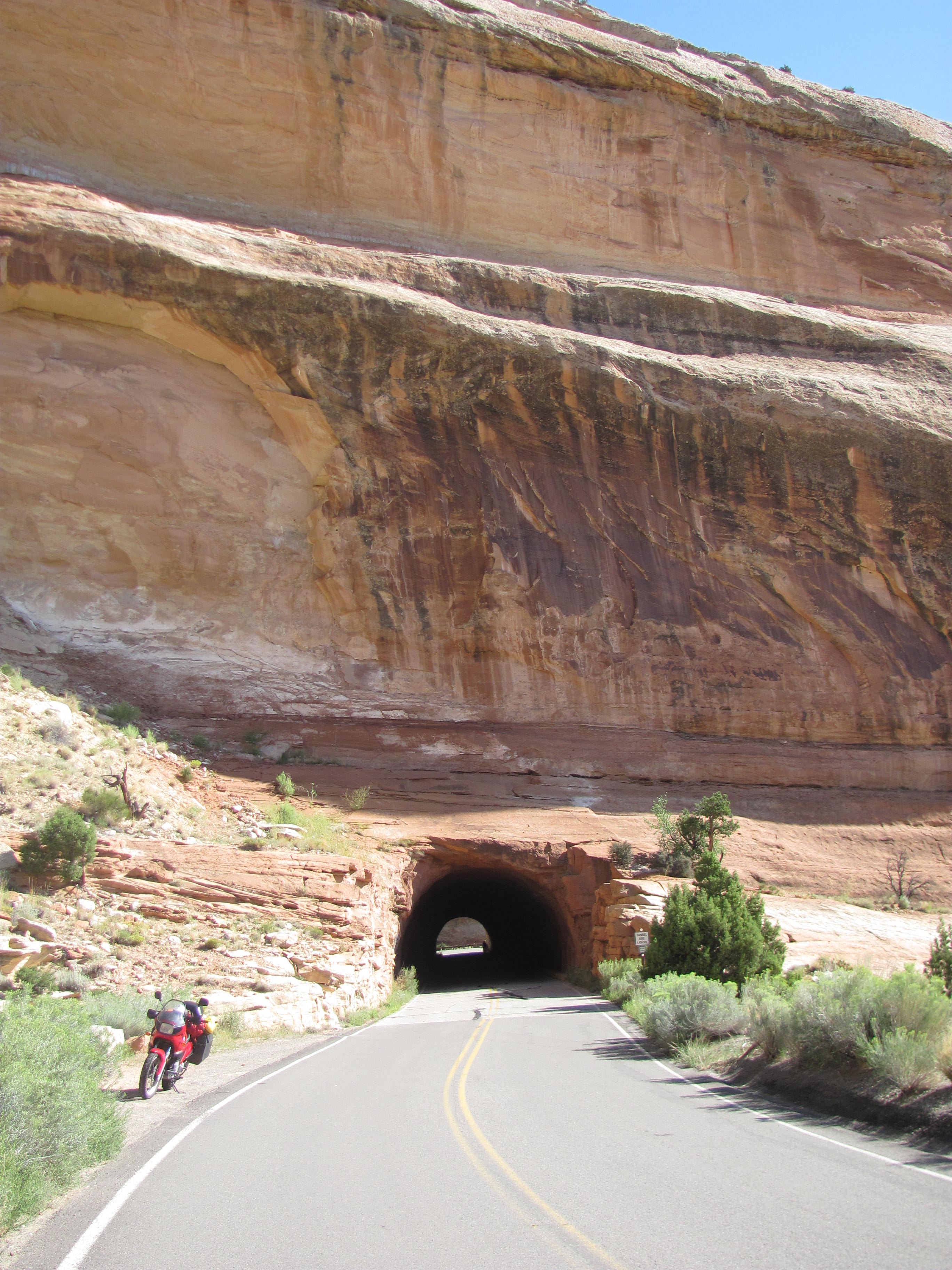
Broad agricultural valleys and small towns dotted the route from Montrose through Olathe andIMG_0064 Delta to Grand Junction.  There I crossed the Colorado River and rode up into Colorado National Monument, a preserve of red sandstone and shale eroded into graceful formations.  The road through the monument was twenty miles of nonstop twisties, with another dazzling view around every corner.  Arriving at the campground an hour before sunset, I paused while setting up the tent to watch virga slanting over the Book Cliffs, and canyon rocks flaming red in the sunset.

The next morning I backtracked through Grand Junction to reach the Unaweep-Tabegauche Scenic Byway.  This sliver of blacktop runs for 90 miles over remote Uncompahgre Divide.  Two creeks named simply East and West drain the region.  Near West Creek, in the middle of nowhere, I stopped to look at a ruined structure in the shadow of towering canyon walls.  “Driggs Mansion” was part of an early 1900s effort to homestead and irrigate the isolated parcel.  The long-abandoned stone building waits patiently for the elements to slowly reclaim it.

Without warning around a curve in the road, a fancy resort appeared.  The Gateway Canyon Resort boasted luxury lodging, fine dining, adventure tours, a spa, a car museum, mountain bike and hiking trails, and special events such as music festivals and artists’ retreats.  Briefly I considered venturing onto its manicured grounds, but in my grubby riding clothes and twelve year old motorcycle, I felt out of place. From a distance, it appeared that its location, along the bank of the Dolores River overlooking the Uncompahgre Plateau, was first class.

After Gateway, the scenic byway ran southeast alongside the twisting, turning course of the IMG_0089Dolores River through increasingly stunning red rock canyons.  The only traffic on the road was other motorcyclists; I waved at a dozen of them while swooping through long delicious curves.

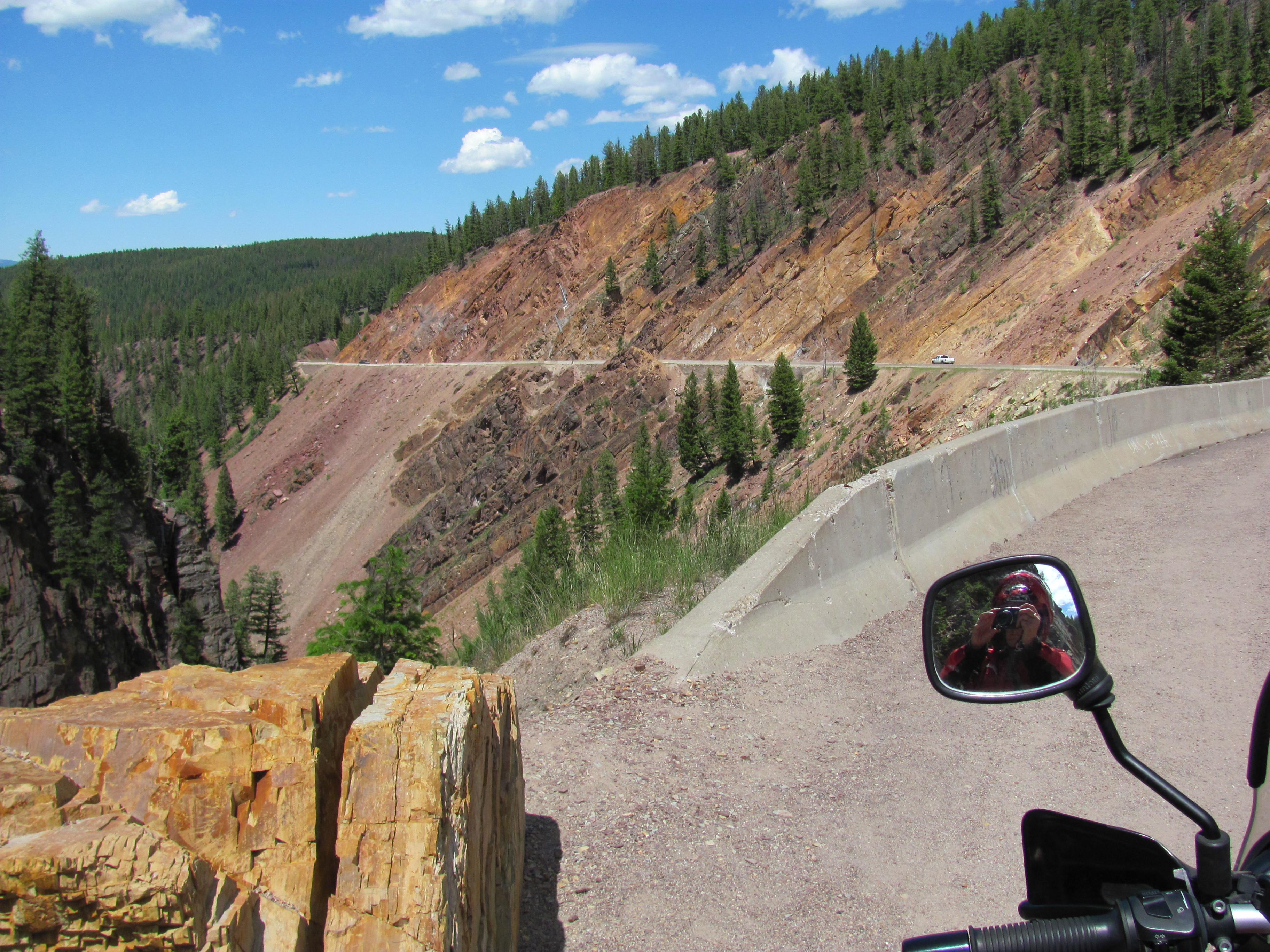
I stopped again at a remarkable historical site farther down the Dolores River canyon.  Peering over the edge of the canyon, I spotted the wooden framework affixed to the smooth red canyon wall with no visible means of support.

Exactly how did this gravity-defying flume get there?  Little is known about the specifics, but the flume was built as part of a failed attempt to turn a profit placer mining along the Dolores River.  Sections of the skillfully designed flume still cling to the rock to this day, mute testimony to the ingenuity of humans on the trail of gold.

IMG_0103At the end of the Scenic Byway, I turned west, to check out one more of western Colorado’s canyons.  Paradox Valley lay about 25 miles of seldom-used blacktop west of Naturita.  I had to know: what is the Paradox?

Turned out the answer was geological.  Instead of running from one end of the valley to the other, the Dolores River bisected the valley and exited to the west into the rugged La Sal mountains.  There was a logical explanation which involved ancient anticlines, uplift and erosion.  Still, it was an Escher-worthy jarring visual, to see the river’s path cross-cut across the valley.

I left the Paradox Valley the same way the Dolores River did, and rode through a fierce rainstorm over the mountains into Utah.  For the next couple days I rode the red rock country of Arches and Canyonlands.  But as I departed those famous parks with their crowds, I found myself longing to return to the remote, beautiful and less known western slope of the Rocky Mountains, Colorado’s hidden canyonlands.

Durango Zone 2012 Fire Summary

By Kathleen Kemsley, Published by San Juan National Forest, December 2012

The 2012 fire season in Durango Zone was the busiest in ten years.  A less than average snowpack in the San Juan Mountains melted off some six weeks early in the spring, so conditions started out dry.  The first fire of the year, East Fork, burned 25 acres in early April at an elevation of 8500 feet on the Pagosa District.  This was a precursor of the extreme fire season to come.

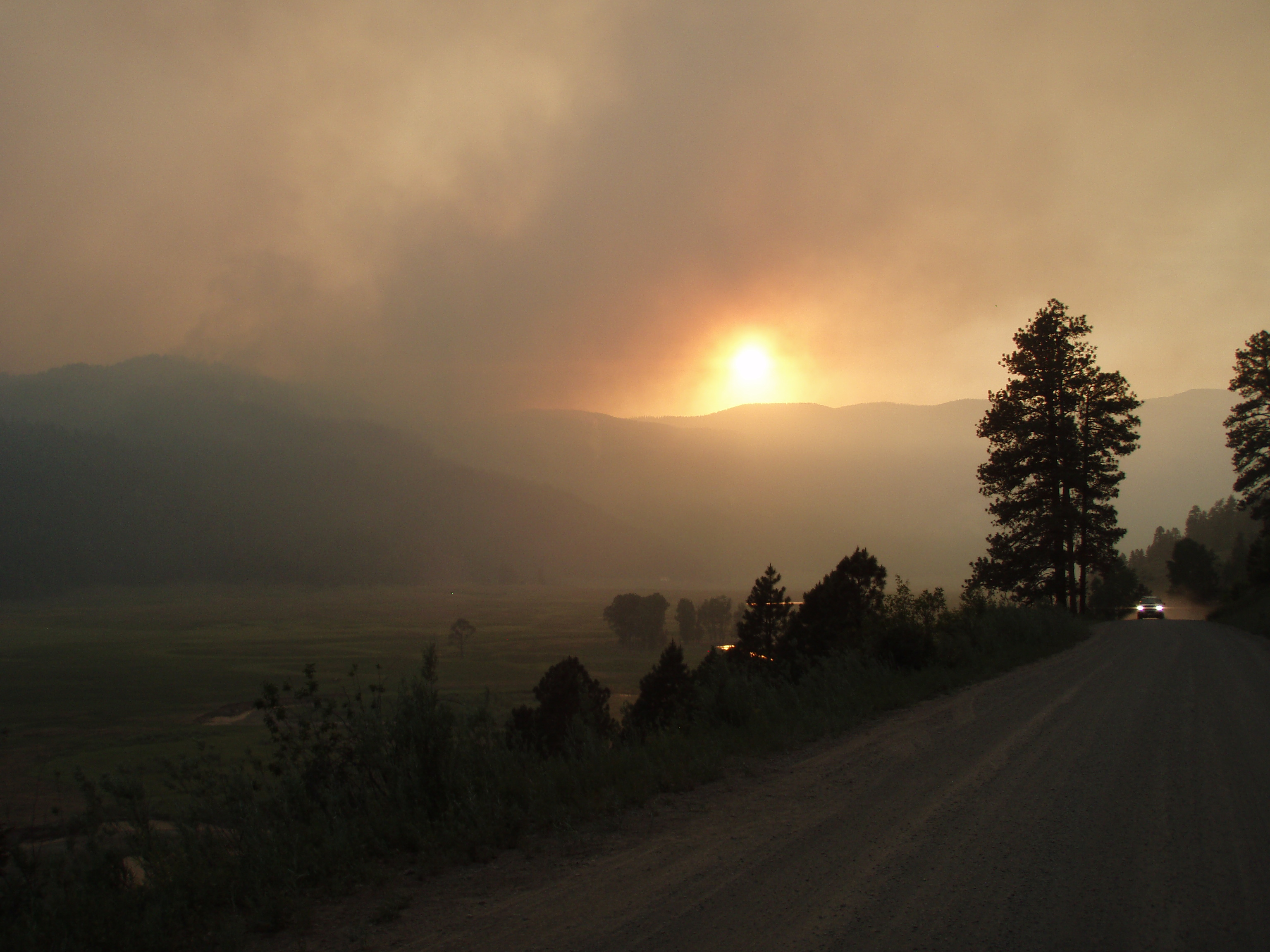
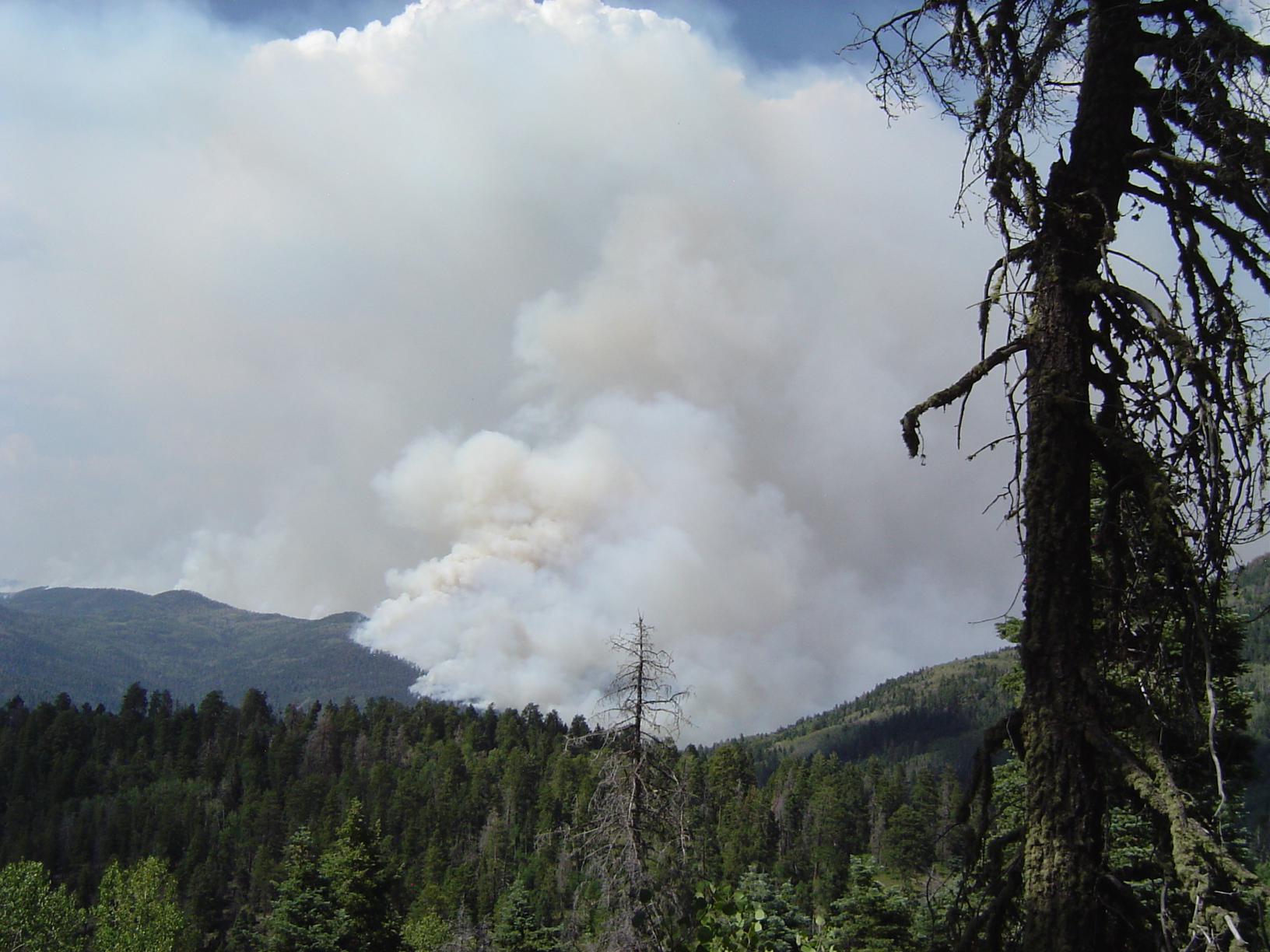
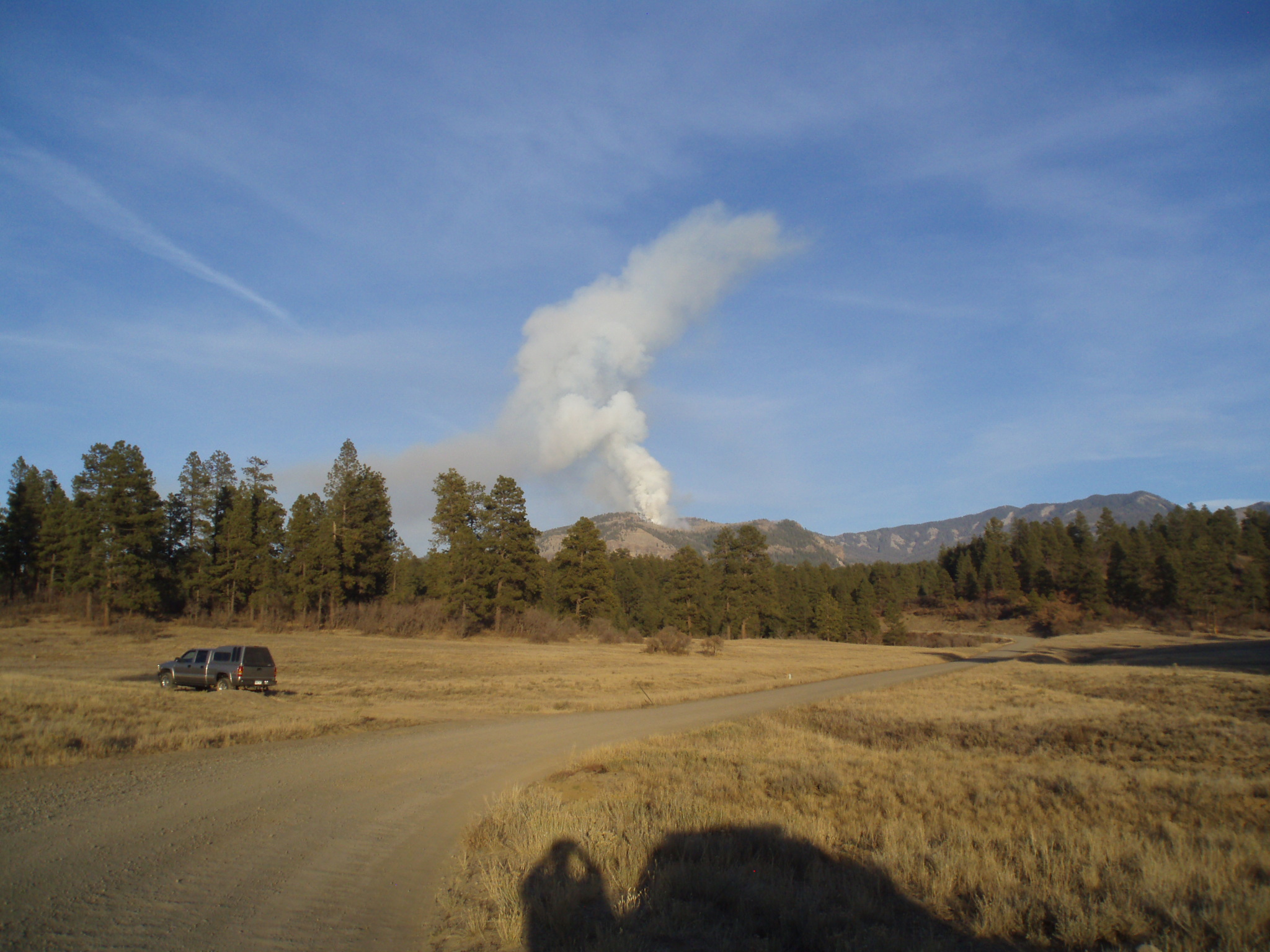
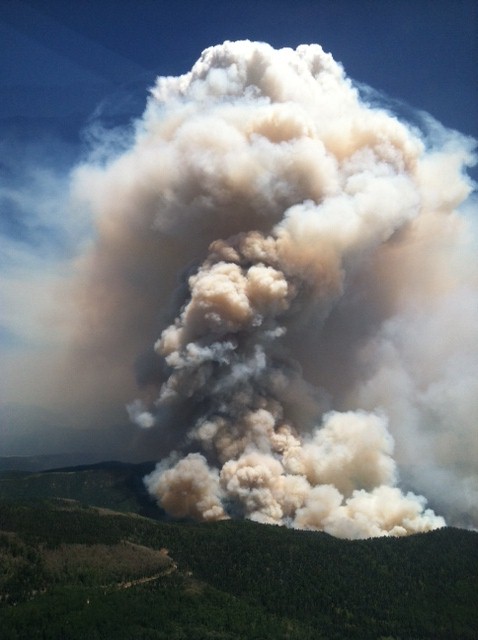
OLYMPUS DIGITAL CAMERAA lightning storm moved through the Durango region on May 12, quite unusual for that time of year.  Seven fires popped up in the zone, including one near Little Sand Creek north of Pagosa Springs.  The Little Sand fire was reported to be burning in an inaccessible area of the Piedra drainage in heavy dead and down timber.  Wildfire Decision Support System (WFDSS) analysis led to a decision by resource managers to monitor and manage the fire rather than fully suppressing it.  After a week, it was still only ten acres in size.  Then on May 22 it began to move and grow.  Before the summer was over, Little Sand hosted a Type 2 team, two Type 3 teams, and a National Incident Management (NIMO) team.  It reached a size of 24,133 acres, making it the largest fire on the San Juan National Forest since 2002.

June was a month of record dryness.  Both the Burning Index and the Energy Release Component stayed above the 97th percentile across the zone.  Fire LittleSand2restrictions were put in place.  A human-caused fire on June 22 began on BLM land and quickly moved onto private land in Montezuma County.  The Weber fire grew over 700 acres on the first day.  Over 100 homes were immediately threatened and evacuations began.  A Type 2 team was ordered.  Rapid response from aircraft, crews, and engines kept structure losses to one outbuilding, but the fire burned 10,100 acres just north of Mancos before it was controlled a month later.  The next day, the State Line fire started near Bondad Hill on La Plata County and Southern Ute land.  The Type 3 team deployed to that fire and held it to 350 acres, again narrowly avoiding destruction of several nearby residences.

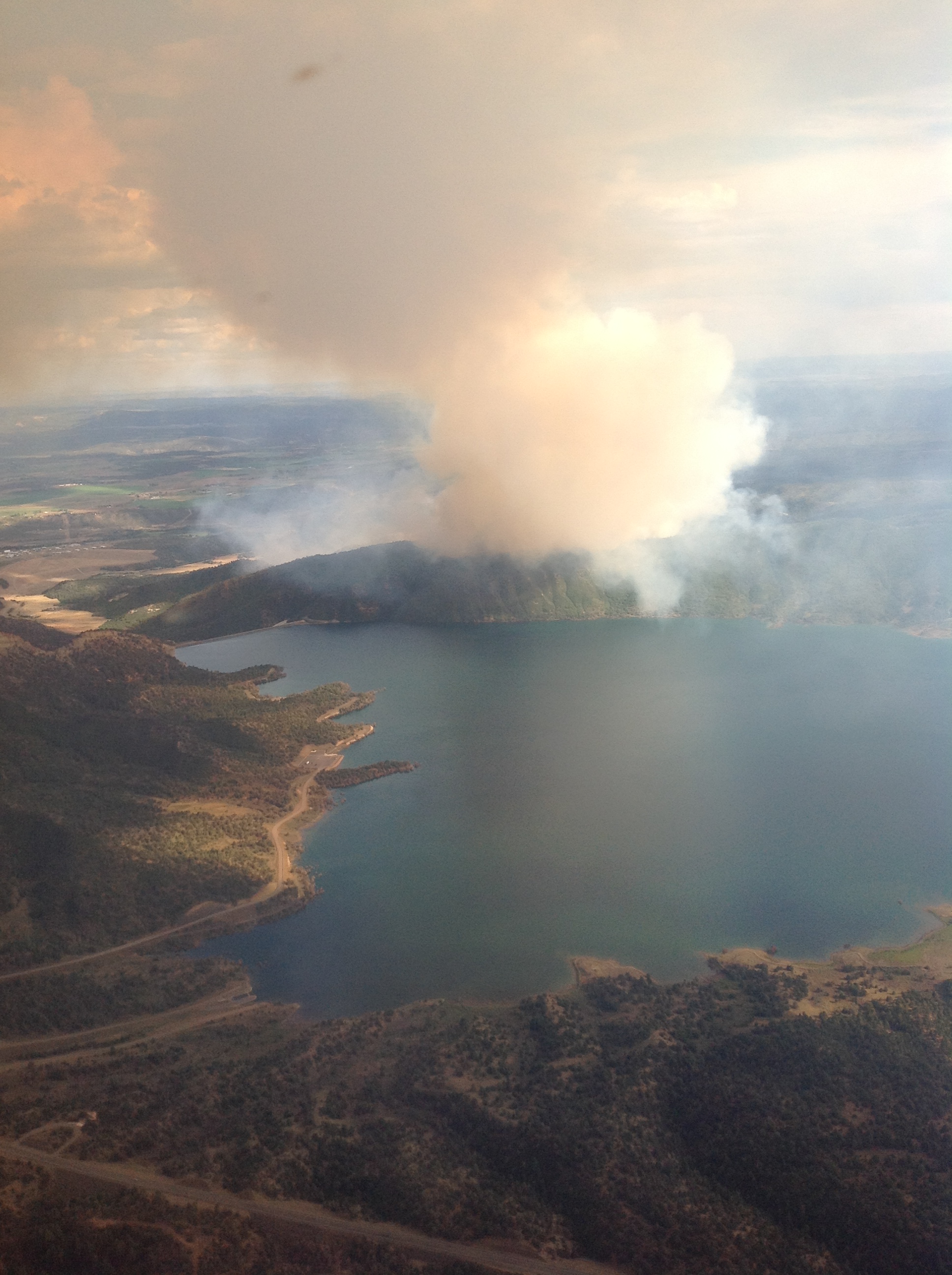
Lightning ignited numerous new fires in late June.  Quick response by resourcesAirpark1 diverted from Little Sand and Weber kept these fires from growing to hundreds of acres.  Finally, some rain arrived along with the lightning to slow down the spread of fires.  However, precipitation was spotty, as evidenced by the Air Park fire on Southern Ute lands which took everyone by surprise in late July.  This lightning fire near Nighthorse Reservoir burned in an area that had been missed by the summer rains.  It quickly spread to 500 acres, threatening 150 residences and 20 oil and gas wells.

August lightning ignited several extended attack fires from 5 to 40 acres in the Ute Burns1-2012-08-19_Mountain region, as well as one more large fire, Burns, which charred 170 acres on Archuleta County.  Finally the intermittent monsoon rains dampened enough of the zone to slow ignitions, and many of the zone resources headed north to Idaho, Montana, and northern California to assist on project fires up there.

By mid-August, Durango Dispatch had been in service 24 hours a day, 7 days a week, for nearly three months straight.  Both Expanded Dispatch and Buying Teams operated continuously out of the Sonoran Rooms of the Public Lands Center.  Between the Initial Attack operation and Expanded Dispatch, some 50 dispatchers came in from all over the country to help staff and support the ongoing fire activity.  It was not until early September that all the excess dispatch personnel were demobilized.  Things appeared to calm down, but that was not the end of the story.  The 2012 fire season still had one more big trick up its sleeve.

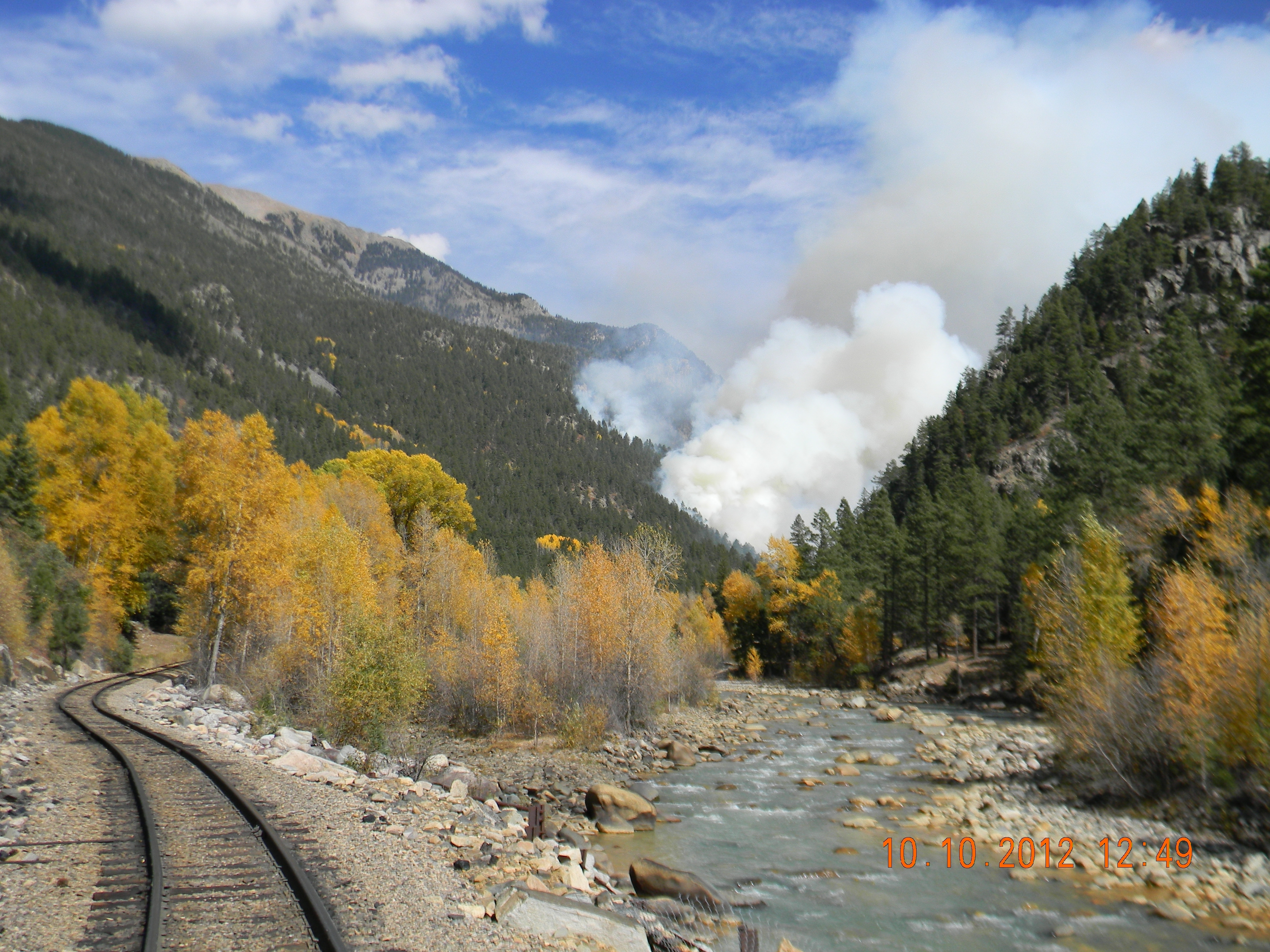
On October 12, the zone received over 9,000 lightning strikes, again an anomaly for that time of year.  Between October 5 and November 4, a total of 40 fires Goblin1were reported in the zone.  Four of the fall fires went large.   The biggest of these topped 1400 acres.  Expanded Dispatch and the Buying Team re-convened; local Type 3 teams were deployed to both Vallecito and Roatcap.  Extended attack also lasted for several days on the lightning-caused Little East and Cinnamon Bear fires, as well as the railroad-caused Goblin.  The zone ordered engines, crews, helicopters and air tankers to suppress these fires.  No one in Durango can remember ever fighting fires to that extent or magnitude, so late in the year.

OLYMPUS DIGITAL CAMERABalmy temperatures marked the entire month of November, and there was zero snow pack in the mountains below 9,000 feet at Thanksgiving.  As of mid-December, two large fires on the San Juan still smoldered, not having received enough precipitation to be called out.

Overall 2012 was a successful year for one so busy.  New Division Supervisors, Task Force Leaders, Type 3 Incident Commanders, and Initial Attack Dispatchers became qualified, while other firefighters opened task books toLittleSand3 begin working on higher qualifications.  The Durango Zone partner agencies hosted over 100 engines and 25 crews from as far away as Alaska, West Virginia, and Pennsylvania.   At one point in late June, five air attack ships, four single engine air tankers, and ten helicopters were simultaneously working fires in the zone.  For all this activity, only a handful of minor incidents were reported.  It is commendable that everyone kept safety in the forefront during a year that was extremely busy not only here but everywhere in the Rocky Mountain geographic area.

Spirit Coyote

© 2015 By Kathleen Kemsley, never previously published

My friend Margi and I decided to take a winter vacation in Yellowstone this year.  Always in the past I had traveled to tropical climates for vacations in January.  But these trips had been withIMG_0013 my husband, Brian, who passed away last fall.  So I wanted to do something completely different, start a new tradition, break the mold.

I met Margi in Alaska in 1985, and we have remained close all these years.  She’s the kind of friend I might not see for a year or more, and then we sit down at her kitchen table and talk like we had just seen each other yesterday.  She now lives in Helena, Montana, so I traveled there on a cold January day to begin the excursion to the park.

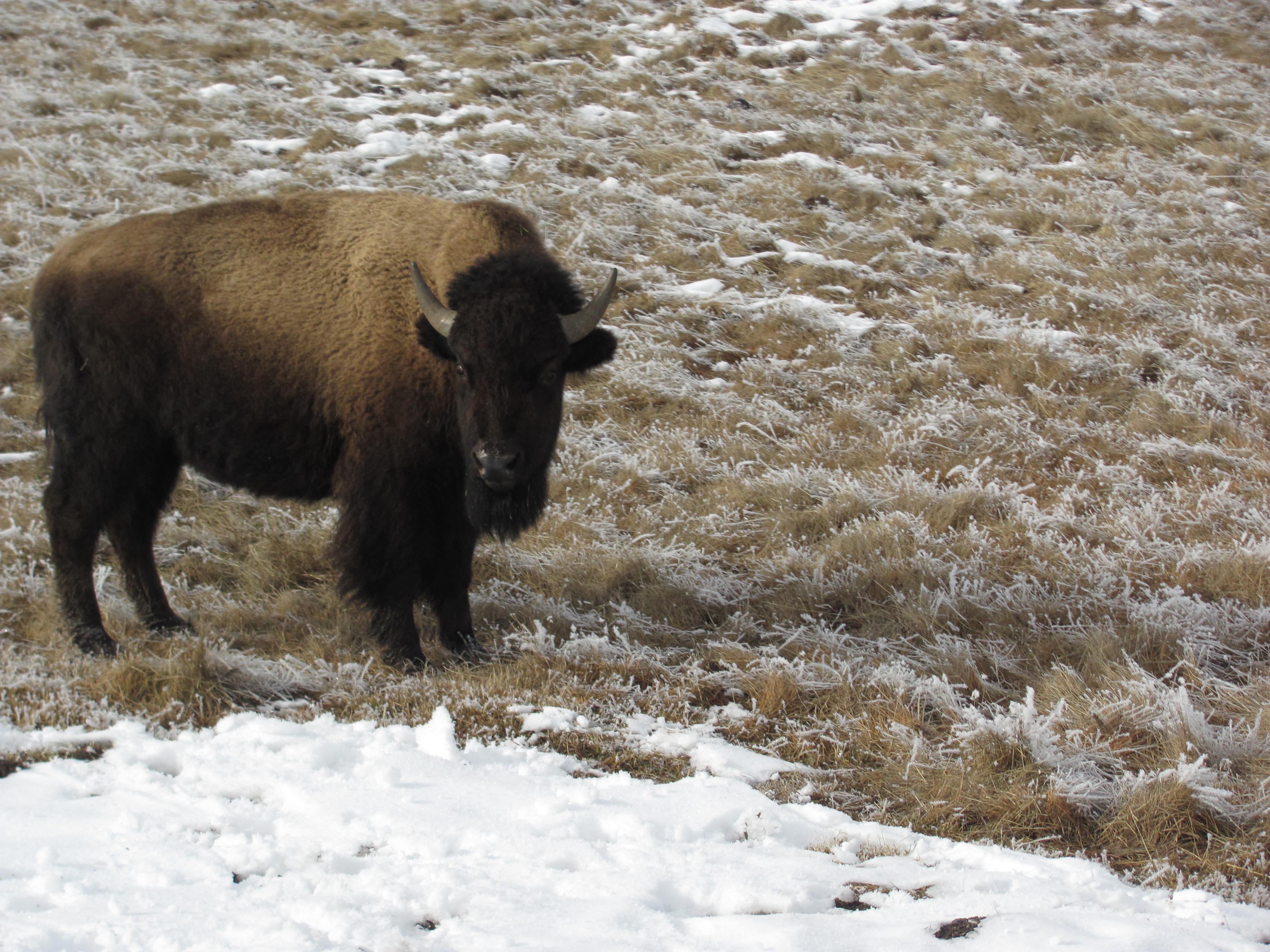
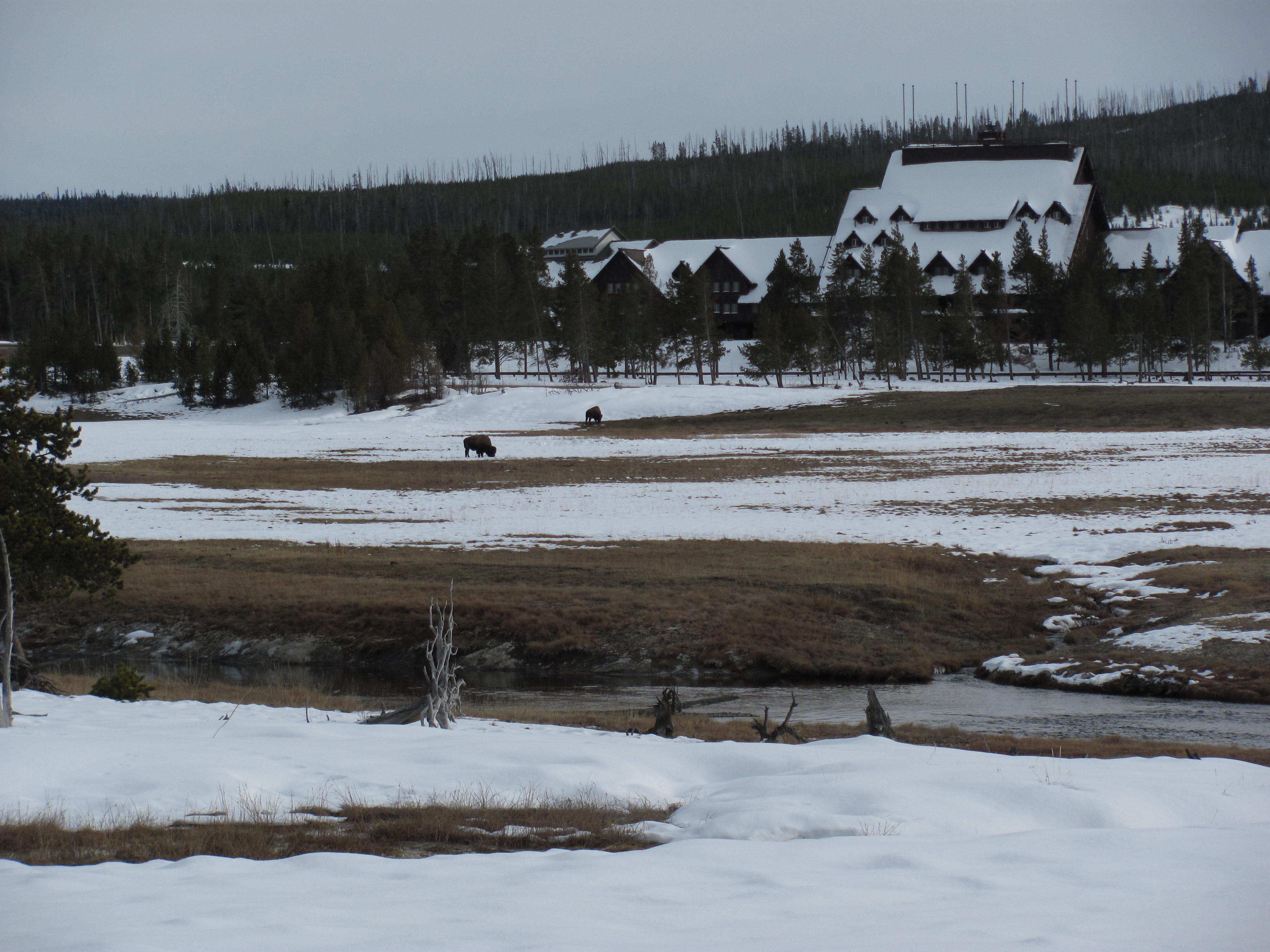
The ground was bare of snow south of Livingston.  We saw plenty of big mammals – elk and bison – near the north entrance to Yellowstone.  The creatures looked well-fed for the time of year.  There appeared to be plenty of grass and shrubs for them to munch on near the IMG_0035Yellowstone River.

We stopped to buy “supplies” in Gardiner.  Translation: chocolate.  Some $27 later we had M&Ms, hand-dipped chocolates, truffles, mint buttons, jelly bellies, almond bark, and caramel turtles enough to hold us for a few days as we ventured into the heart of the Yellowstone wilderness.

We spent the first night at the grand old Mammoth Hot Springs Hotel.  In the dining room, I blurted out to our young waiter that I had worked there, doing the same job he was doing, back in 1977 and 1978.  He looked vaguely confused; those years were most likely before he was born.  But I had to tell him, because someone told the same thing to me when I was a waitress.  This old gal said she had worked there in the early 1950s.  And on back the history goes, back to 1938 or so when the place was built.  I liked the continuity.

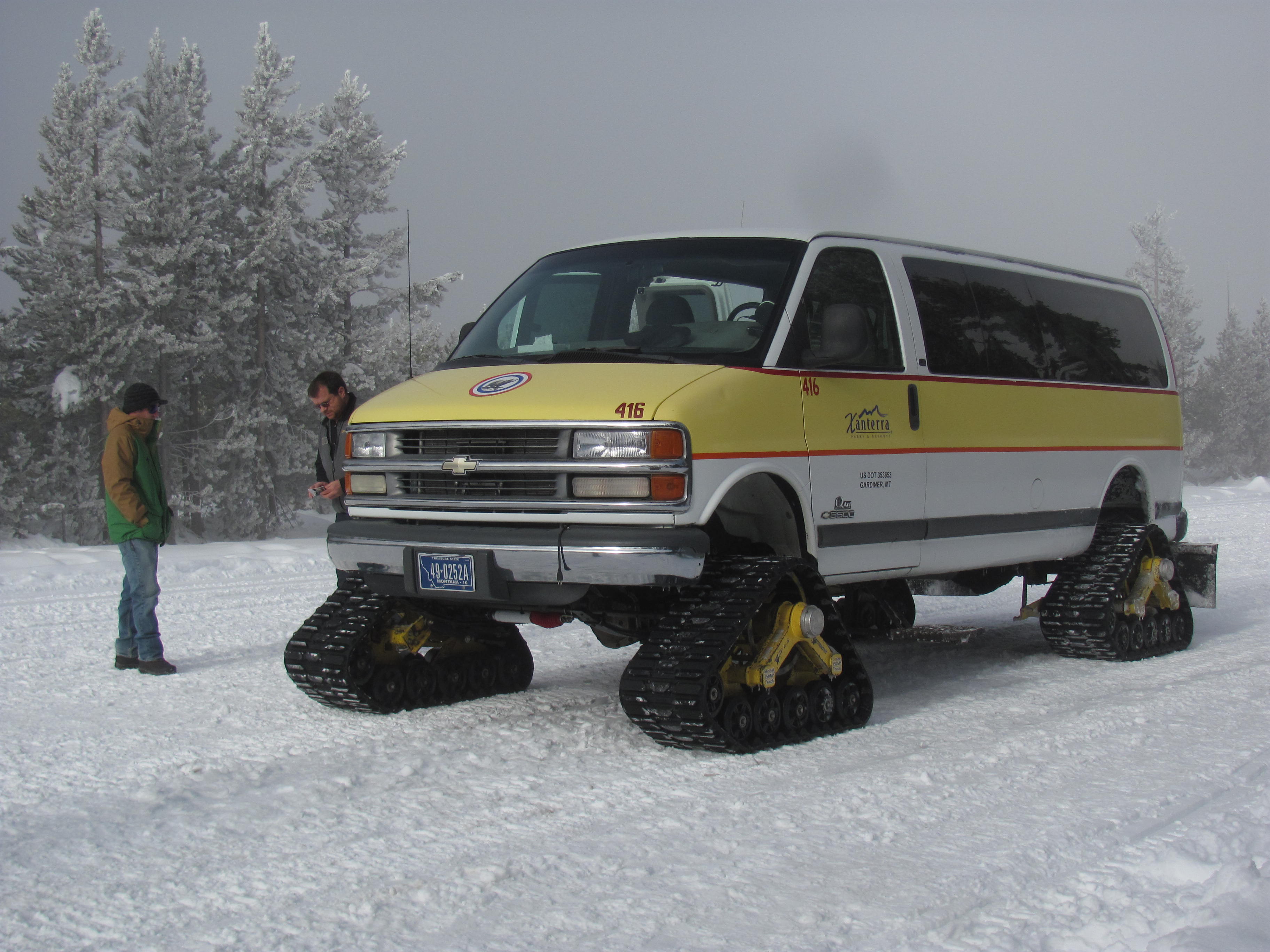
IMG_0020Our snow coach departed early the next morning for Old Faithful.  The trek took more than five hours, due to planned stops to photograph geysers and waterfalls, along with unplanned stops whenever we saw wildlife (red foxes, bison, and a bald eagle).  We also stopped just before Madison to help pull out a snow mobiler who had run off the road and was precariously balanced on a steep cliff with rushing water and rocks below.

Happy to find deep snow at Old Faithful, we settled into our “rustic cabin” behind the Snow Lodge, then rented some Yaak Trax footgear to fit over our boots.  We tramped all over the Upper Geyser Basin on iced-over boardwalks, pausing to watch gurgling mud pots and bubbling fountains of hot water lined with brightly colored algae.

At one point, I might have put some of my husband’s ashes in a certain hot-spring-fed waterwayIMG_0111 when no one was looking.  Or I might not have.  At any rate, nobody except Margi saw anything, and I trust her to keep mum.  We agreed that Brian would have enjoyed the idea of floating in the current of a warm river on an eight-degree day.

Later on, we sat near the Giant Geyser and talked for a long time about Brian.  Margi knew him well, but she didn’t know what the last few months of his life had been like.  Seeing him through the end stages of terminal illness, including hospice and enough morphine to kill a horse, had been traumatic for me.  I admitted my resentments and talked about my fears.  I also talked about the happy times and the funny things that interspersed with the difficult days of watching the cancer do him in.  As we talked, a small, unnamed geyser bubbled and spurted gently nearby.

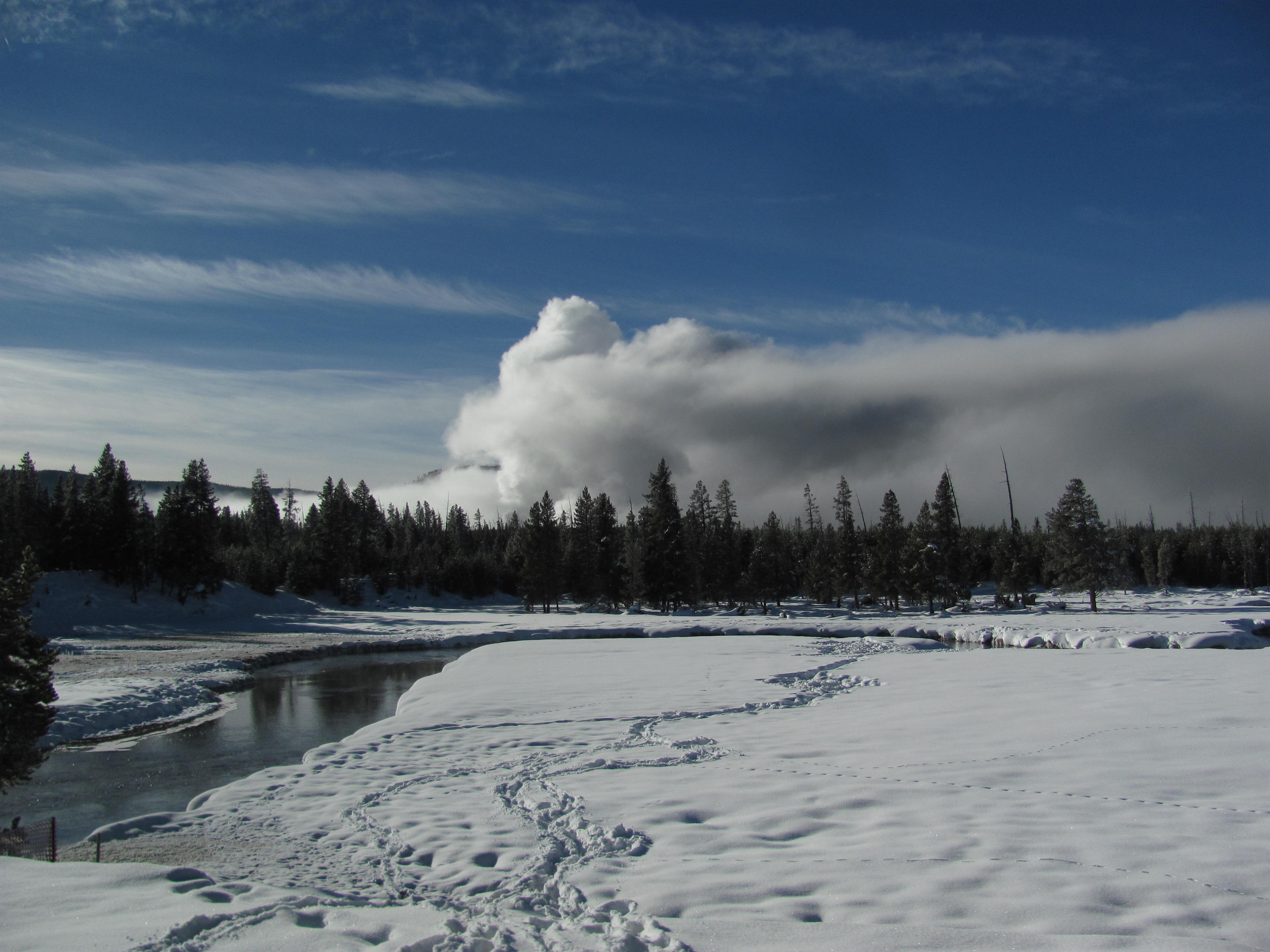
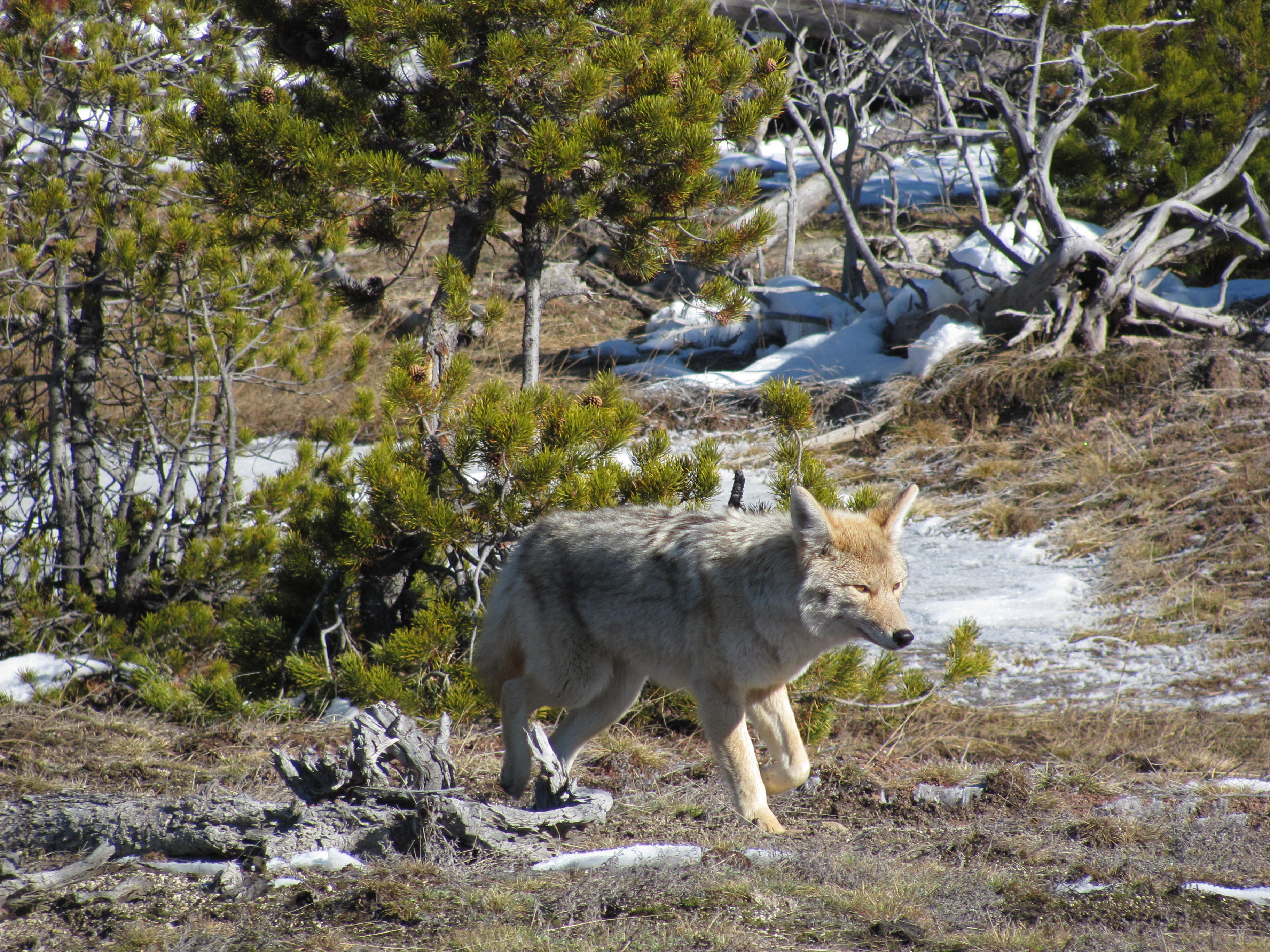
Finally, I finished telling what I needed to tell.  As we sat in companionable silence, some IMG_0107movement caught the corner of my eye.  Looking over toward Grand Geyser, I spotted a well-fed, healthy looking coyote.  Without a shred of shyness or fear, he loped directly toward us until he was less than 30 feet away.  For a moment he stopped and looked directly into my eyes.  Reflected back I saw the self-confidence of a creature living in the present.

Purposefully, the coyote moved off toward the Firehole River.  He appeared to be on a mission.  But as he disappeared, he left me with a feeling that Brian’s spirit had also been nearby.  Brian had always felt an affinity with coyotes; he had for many years worn a silver coyote pin on his hat.

I looked at Margi and she smiled, confirming what I had seen.  “That was Brian’s spirit coyote,” she said.  “We can’t know where Brian went when he left his body.  But the coyote came to give you the message that, wherever he is, he’s OK.”

IMG_0048Oh Yellowstone, I thought as I watched Old Faithful Geyser erupt in the distance, you are my favorite place in the whole world.  And you haven’t disappointed me.  You produced Brian’s Spirit Coyote in the snowbound, magical world of the Upper Geyser Basin.  And you helped, more than anything else has helped, to settle me, and to begin the process of acceptance.  You let me know that Brian has successfully moved on to a better place.

Wisdom, Opportunity, Treasure

(c) 2011 By Kathleen Kemsley, first published in Rider Magazine, July 2011

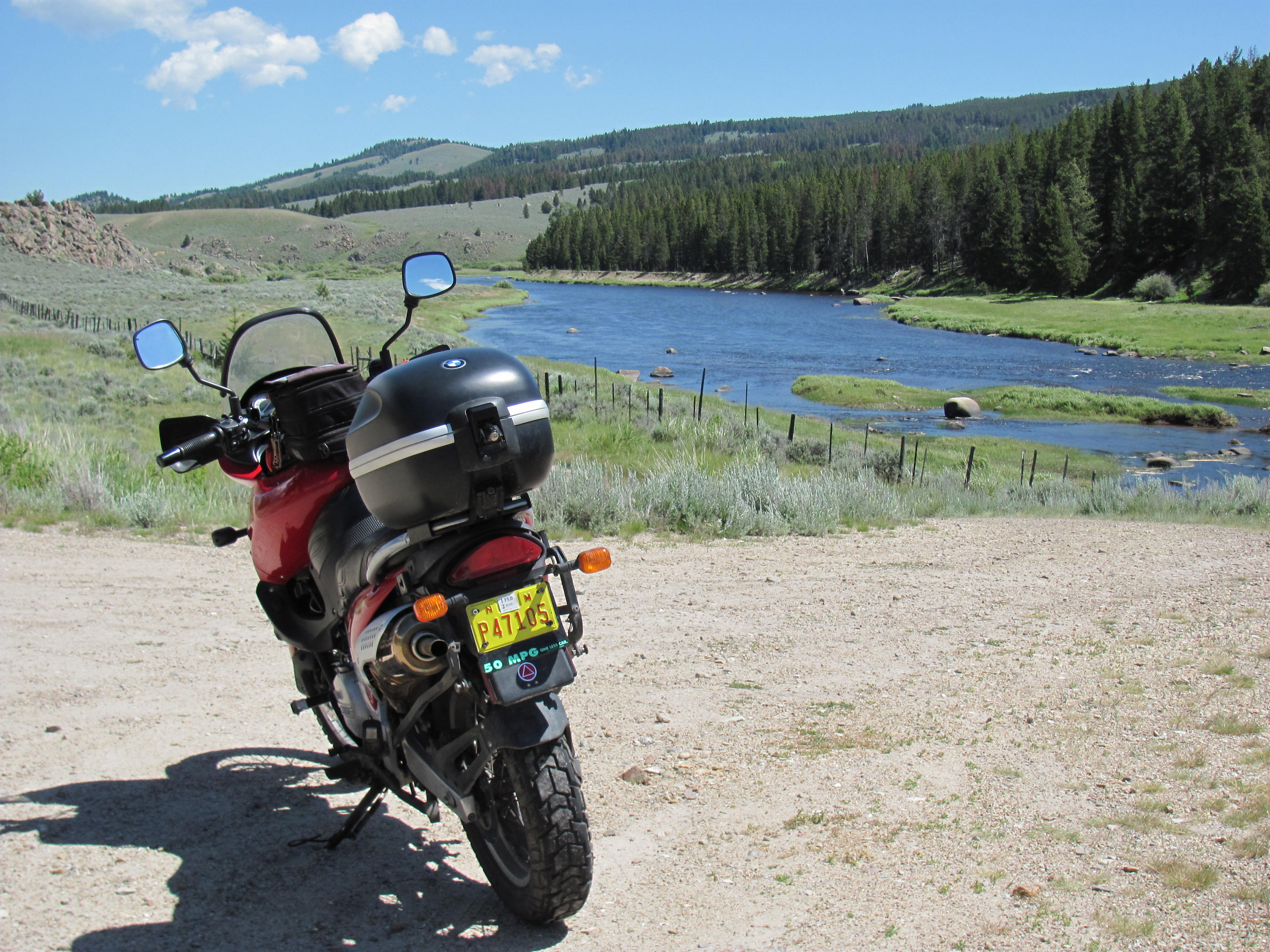
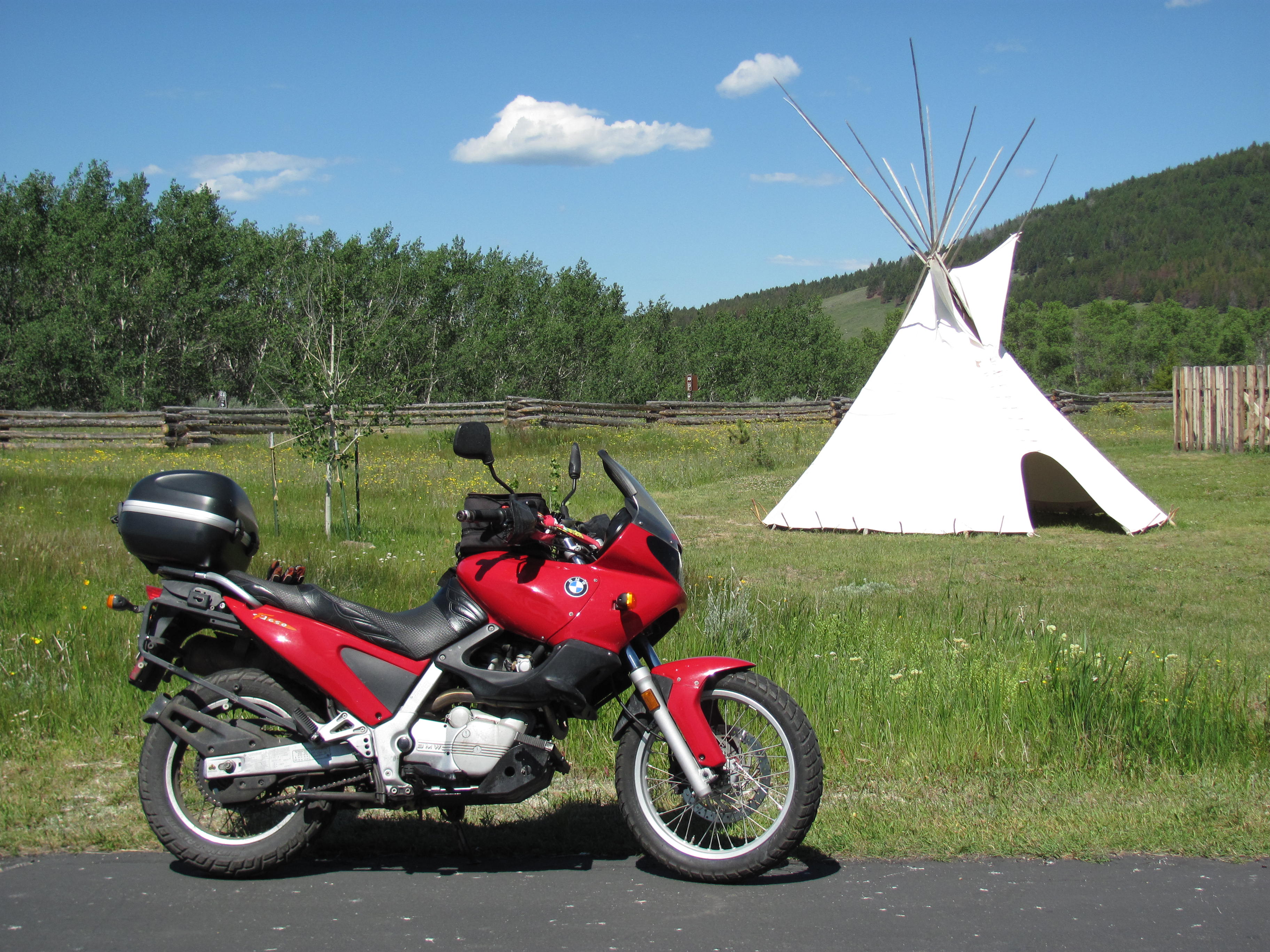
Three wishes I made, three places I sought on a warm and breezy summer day in western IMG_0236Montana.  Riding south through the Bitterroot Valley, my red BMW glided past Hamilton and Darby, picturesque towns along the river. But I scarcely slowed down, focused as I was on Wisdom, the first destination of this ambitious loop ride.

Near the Idaho state line, I turned left to ride over a pass named after the great Nez Perce warrior, Chief Joseph, and coasted downhill on Highway 43 toward Wisdom.  Presently, I pulled in to the Big Hole National Battlefield.  Through displays at the Visitor Center and along a self-guided trail near the actual battlefield, I absorbed the story of a group of 850 Nez Perce Indians who eluded white soldiers in 1877, fleeing from eastern Oregon across Idaho and the Bitterroot mountains to this location along the Big Hole River.  Believing they were far ahead of their pursuers, the group paused to rest here.  But unknown to the Indians, a second military group had joined the chase.

IMG_0223The soldiers attacked before dawn.  The Nez Perce fought fiercely, and many were killed on both sides.  The diminished Nez Perce group eventually escaped the area and continued their retreat, through Yellowstone and north toward the Canadian border.  There, finally, Chief Joseph uttered those now-famous words of surrender: “I am tired of fighting… My heart is sick and sad.  From where the sun now stands, I will fight no more forever.”

Ten miles in a straight line from the Big Hole National Battlefield, I reached Wisdom, Montana.  The town (and the river that flows past it) was reportedly named by Lewis and Clark for one of the virtues of President Thomas Jefferson.  Wisdom River was later renamed Big Hole River, but the town kept its original name.  It was a typical rural Montana burg, big on scenery, big on sky, but short on services.  A bar, a gas station, and a trading post: that’s about all there was to Wisdom.

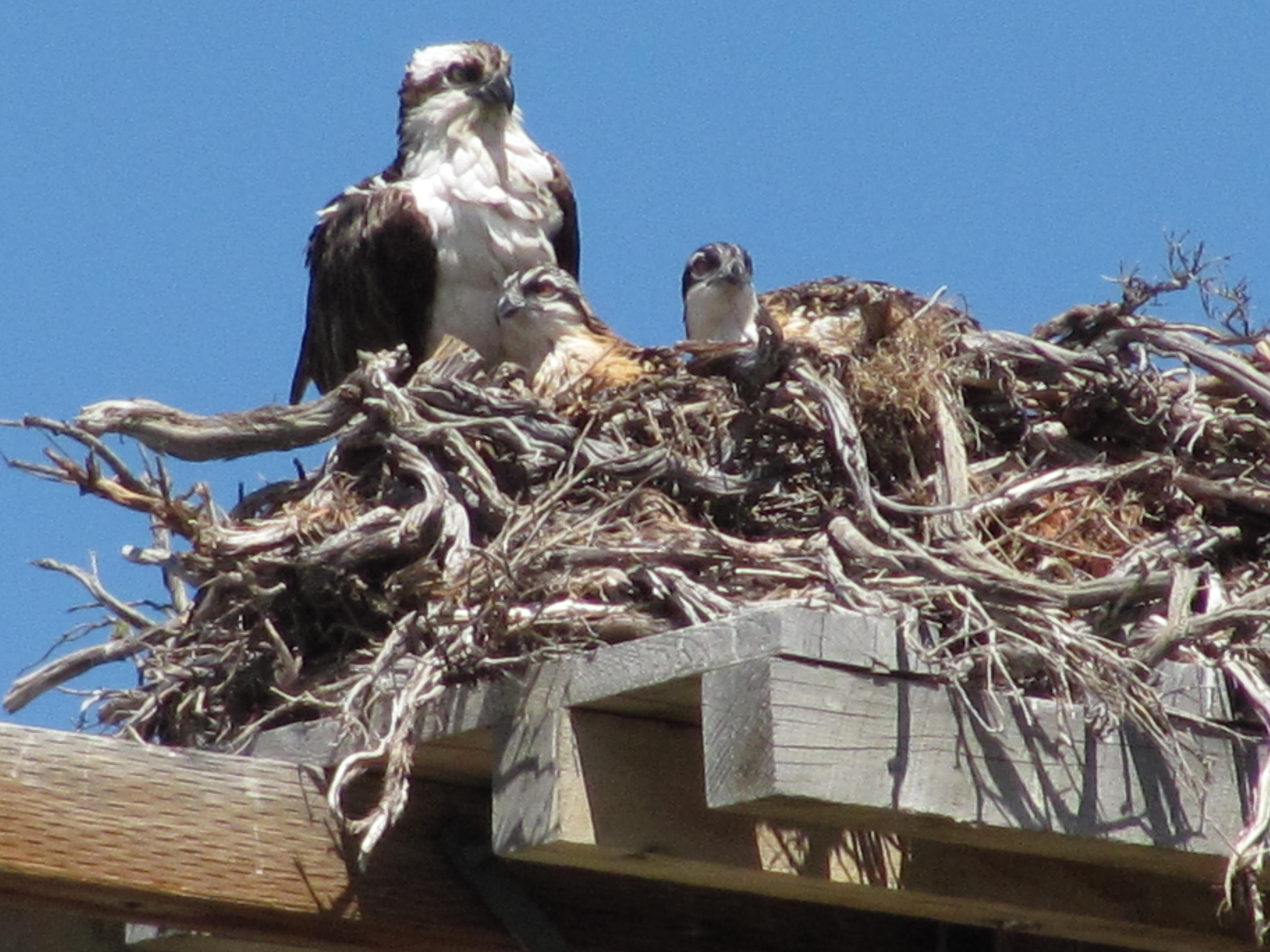
I turned north and followed the river through some breathtakingly beautiful country.  The Big IMG_0234Hole River is said to be one of the top blue-ribbon trout streams in America.  Though I saw no fish jumping, I stopped along the way to look at an osprey in the nest with two half-grown chicks, and a badger waddling from the river’s edge to a brushy bank.  Plenty of sweeping curves, as the road followed the gentle undulations of the Big Hole, made this leg of the ride pure pleasure.

I veered away from the Big Hole River at Highway 274, in pursuit of my second wish: Opportunity.  The route snaking over a pass between Grassy and Sugarloaf mountains was paved, but barely.  I slowed my speed by half, the better to see and avoid cavernous potholes in the asphalt.

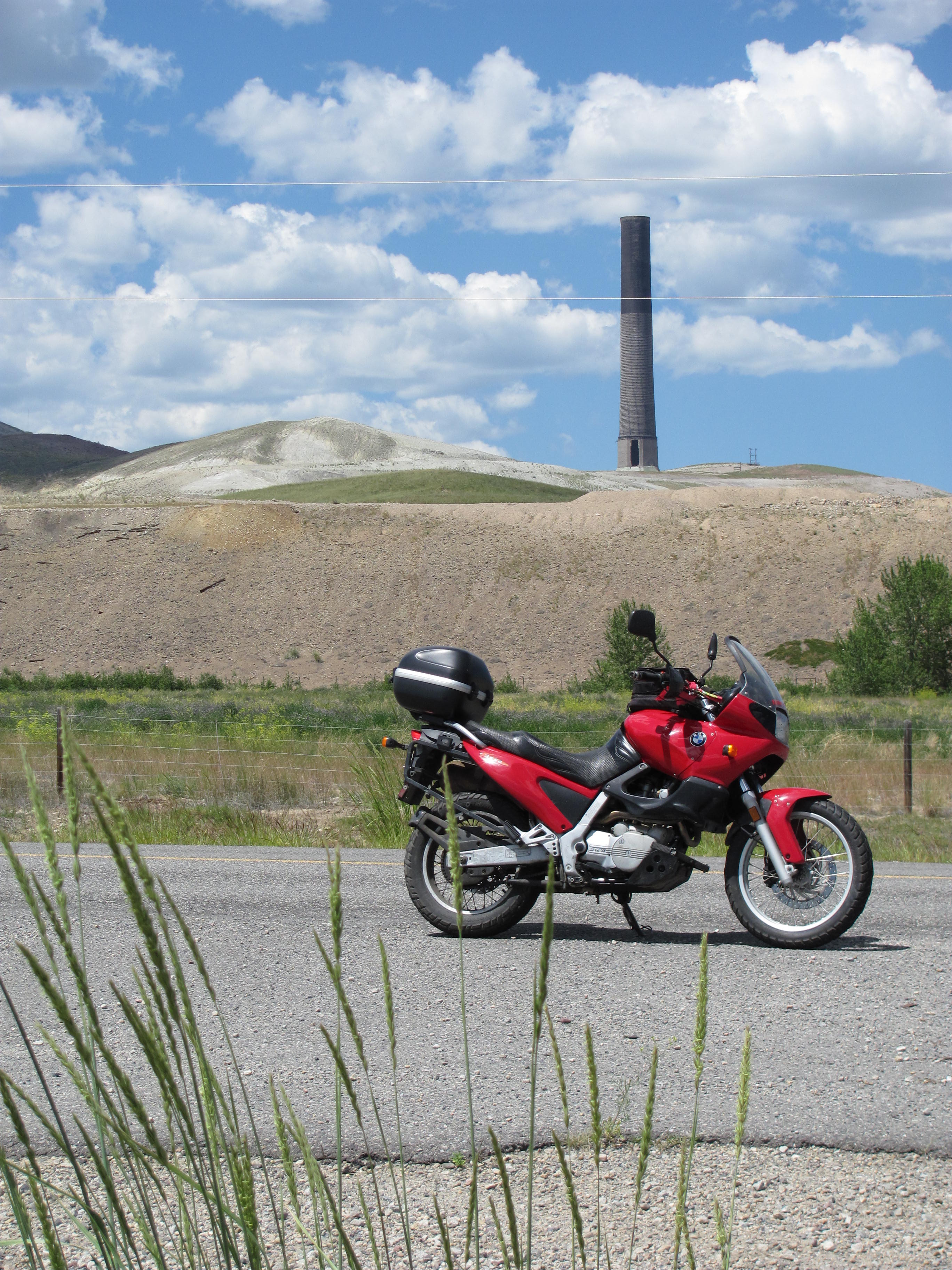
IMG_0248Presently I reached a landmark famously visible for miles around: the Anaconda Smelter Stack, largest freestanding masonry structure in the world.  Built in 1883, the nonferrous copper smelter processed ore from the mines in nearby Butte for nearly a century.  The “company town” of Anaconda grew up around it, but a smaller town nearby pulled me down the road a few miles farther.

Opportunity, Montana was founded in 1910 by one of the Anaconda Copper Company bigwigs, to allow employees to raise families in a rural setting.  Each home came with a ten-acre plot; a streetcar provided transportation into town for the handful of people who moved out there.

I turned off the main highway and rode through Opportunity, trying to grasp it.  A volunteer fire department building and a tiny community center seemed deserted, and I was not able to locate any businesses, or even a post office.  As I wound around its several unnamed streets, I got the distinct impression that very few people ever have reason to venture into Opportunity.

Now I was ready to go after my third wish: Treasure.  Montana’s nickname is the Treasure State, and I knew right where to find some. IMG_0254

The road out of Anaconda climbed up into the Pintlar Mountains past Lake George, a reservoir that provides summer boating and winter ice fishing for local residents.  After a steep drop down some switchbacks at the head of the dam, the road flattened out and funneled me into Philipsburg.

This town began its life as a mining town in the 1870s.  The treasures sought back then included silver, gold, copper, and manganese.  Today, along its main street, colorful flags wave and flower baskets hang from doorways of beautifully restored buildings.  The shops offer gifts, second-hand clothes, and artwork, but I always make a beeline for the Sapphire Gallery first.  Inside, the family-owned business offers a stunning variety of sapphires mined from nearby Rock Creek.  The glittering stones come in every shade of the rainbow; I personally am partial to the yellow ones.

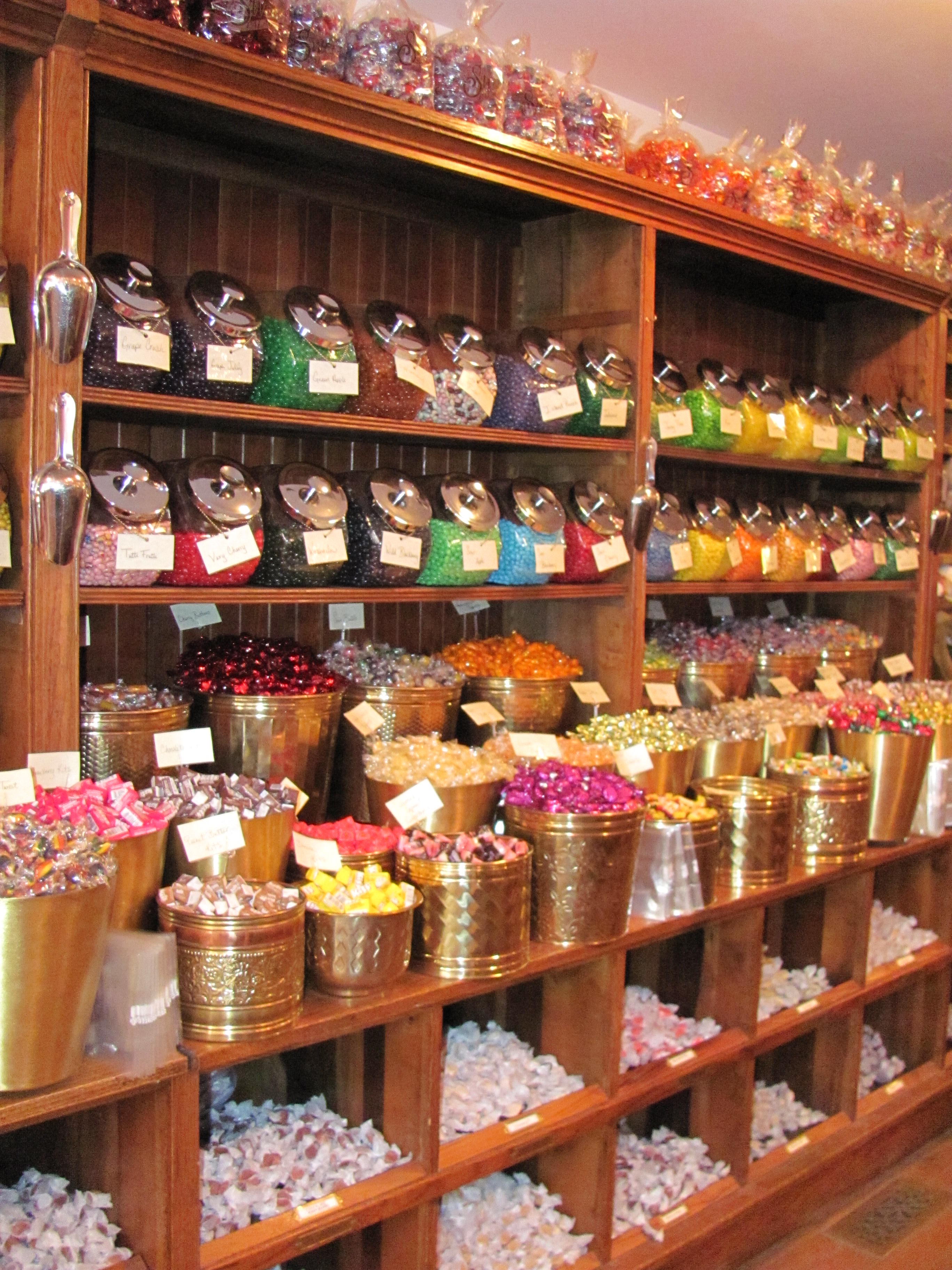
IMG_0270This time I lingered over a two-stone necklace of sapphires like sun drops set beautifully in gold.  Reluctantly I passed on purchasing it, as my bank account wasn’t quite up to the task.  Next, I moved down Main Street to the Sweet Palace, where they make taffy and fudge and hand-dipped truffles.  Hard candy, imported from all over the world, is displayed in glass jars on shelves that reach to the ceiling.  Soon, my pockets were stuffed with sour lemon drops.  This too was a treasure; along with sapphires and 19th century charm, Philipsburg provided tasty treats to savor on my ride home.

Backtracking a few miles, I headed west to complete the loop ride over Skalkaho Pass.  Breezy winds blew out of the west, and a few cumulus clouds built up to the south.  But it was refreshingly cool up high, green and lush and infused with the sweet smell of ponderosa pine and a laughing rushing creek alongside the road.  IMG_0274

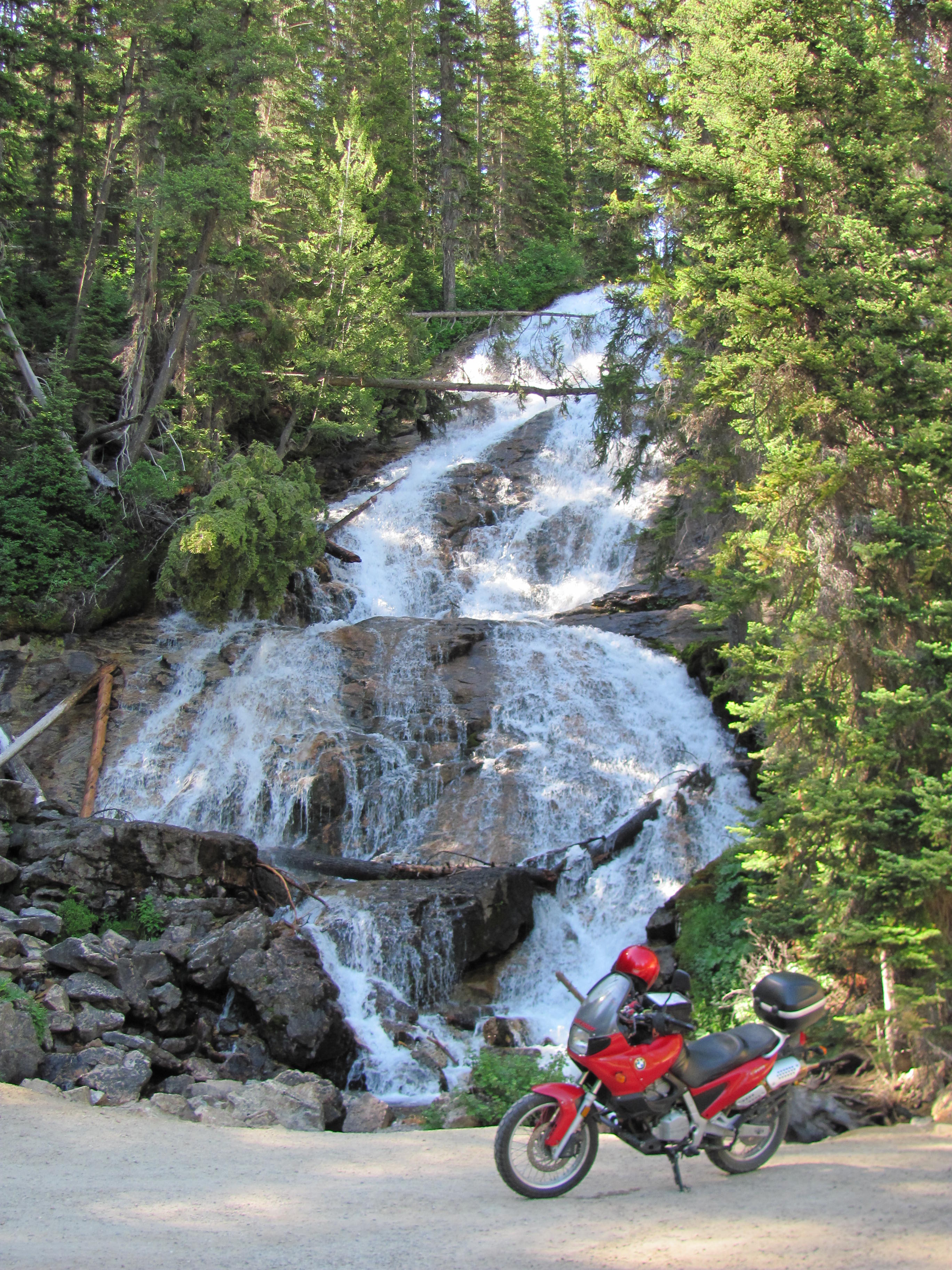
Finally, a surprise, a delight awaited me.  Around a corner on the hard-packed dirt road, with no warning, Skalkaho Falls appeared.  The thundering waterfall plunged several hundred feet down from origins high in the Sapphire Mountains.  I parked on the road’s shoulder and enjoyed the spray of cool mist from the roaring cascade.

Descending to the valley floor, the temperature sizzled close to three digits.  As I rode home northward through the Bitterroot Valley, it came to me that I had been granted all of my wishes, for wisdom, opportunity and treasure.  The bonus gift of Skalkaho Falls created a lovely coda to this scenic and interesting 300 mile ride through the mountains and historical towns of western Montana.

The Daylight Season

© 1986 by Kathleen Kemsley, published in We Alaskans magazine, June 1986.

They say there are only two times when the salmon fishing is good: when it’s raining and when it isn’t.  The other requirement is that it be light enough to see where rocks lie hidden just beneath the surface of the river.  During the endless light hours of summer, each day slides into the next with no further notice than a slight dimming of illumination, a pause to take a breath before the next day rushes in. fish_on

I joined the throngs of salmon-crazed anglers several evenings ago and went up to the Kenai River to try for a monster king.  It rained and it didn’t rain; I ate chicken salad and chocolate chip cookies with my fishing partners and sang songs to pass the time.  We motored up through the current and drifted back over a hole countless times, jerking our poles expectantly at every little tug of flowing water on the lines.

We had the river almost to ourselves that evening.  We shared the fishing hole with terns and herring gulls that were busy dive-bombing the water for hooligan and insects.  Clouds parted briefly to reveal a sky of blazing azure.  Without fanfare a rainbow sliced through the air and disappeared into the silty green water upriver.  Daylight hung like backlit curtains around the boat.  Over the sound of water slurping past the sides of the boat, the plink of raindrops on my hip boots was almost unnoticeable.

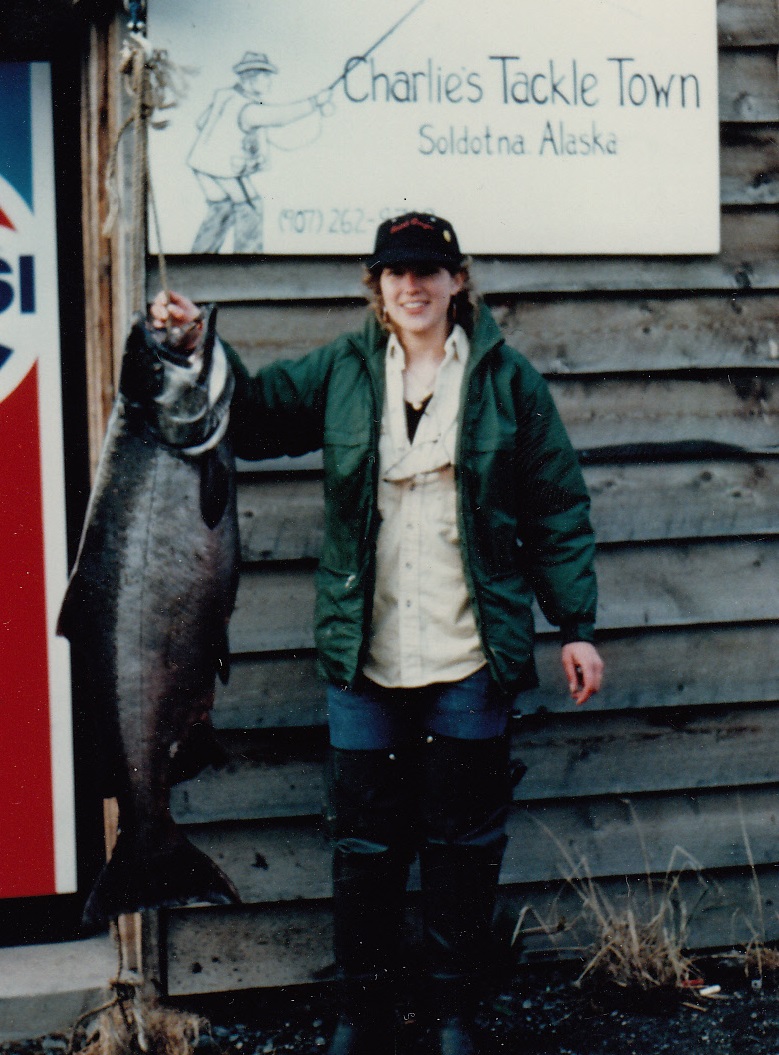
A bite on the hook brought us all to attention.  My shout of “fish on!” was redundant, as my pole wavered wildly above the current.  Ten minutes later I landed a 48-pound king salmon.  I could not take my eyes off of her as she slid around on the bottom of the boat.  I had never seen a fish so big.

Shortly before midnight we reluctantly pulled the boat out of the water and snapped some pictures before I started for home.  Six times along the 50 mile drive, I slammed on the brakes of my truck to allow the crossing of a moose with one or more calves in tow.  The newborn calves’ wobbly stick legs refused to observe the rules of right-of-way, so I waited patiently for them all to move safely off the highway.

That was how, at one o’clock in the morning, I came to be kneeling on the cabin porch filleting a salmon in the twilight of an Alaska summer night.  My thoughts wandered forward to the coming weeks, when sandwiched between work shifts I would be entertaining visitors from Outside, attending meetings in town, going on emergency ambulance runs with the local fire department, taking the dog for walks in the woods, and riding my mountain bike down dirt roads in search of rainbow trout streams.  There was salmon to smoke and berries to pick, oil to change and wood to haul.  Somehow, too, the dishes would have to be washed and the floor of the cabin swept.

What happened to the time I spent sleeping late last winter?  It seemed to have disappeared with the last ice on the lake.  Lately the days have melted together in a blur of daylight.  In a moment of clarity, I looked beyond my arms, immersed to the elbows in fish eggs, to the season looming ahead.  I had to accept, and in fact embrace, the exhausting days to come.  There would be plenty of time for rest later, I knew, once the season turned again and long winter arrived.  But for now, I would burn with the midnight sun.

Tripping Along La Ruta Maya

© 2015 by Kathleen Kemsley, from journals kept during a 2007 overland camping trip to Guatemala.  The first day of our journey on La Ruta Maya was nearly a disaster.  Leading up to the route’s start, my husband Brian and I had spent a day wandering through the mysterious Teotihuacán pyramids, watched dancers perform at El Tajin in Veracruz, and strolled past the giant black basalt Olmec heads in Tabasco state.  So we were primed for our first Mayan ruin, not expecting a negative experience.

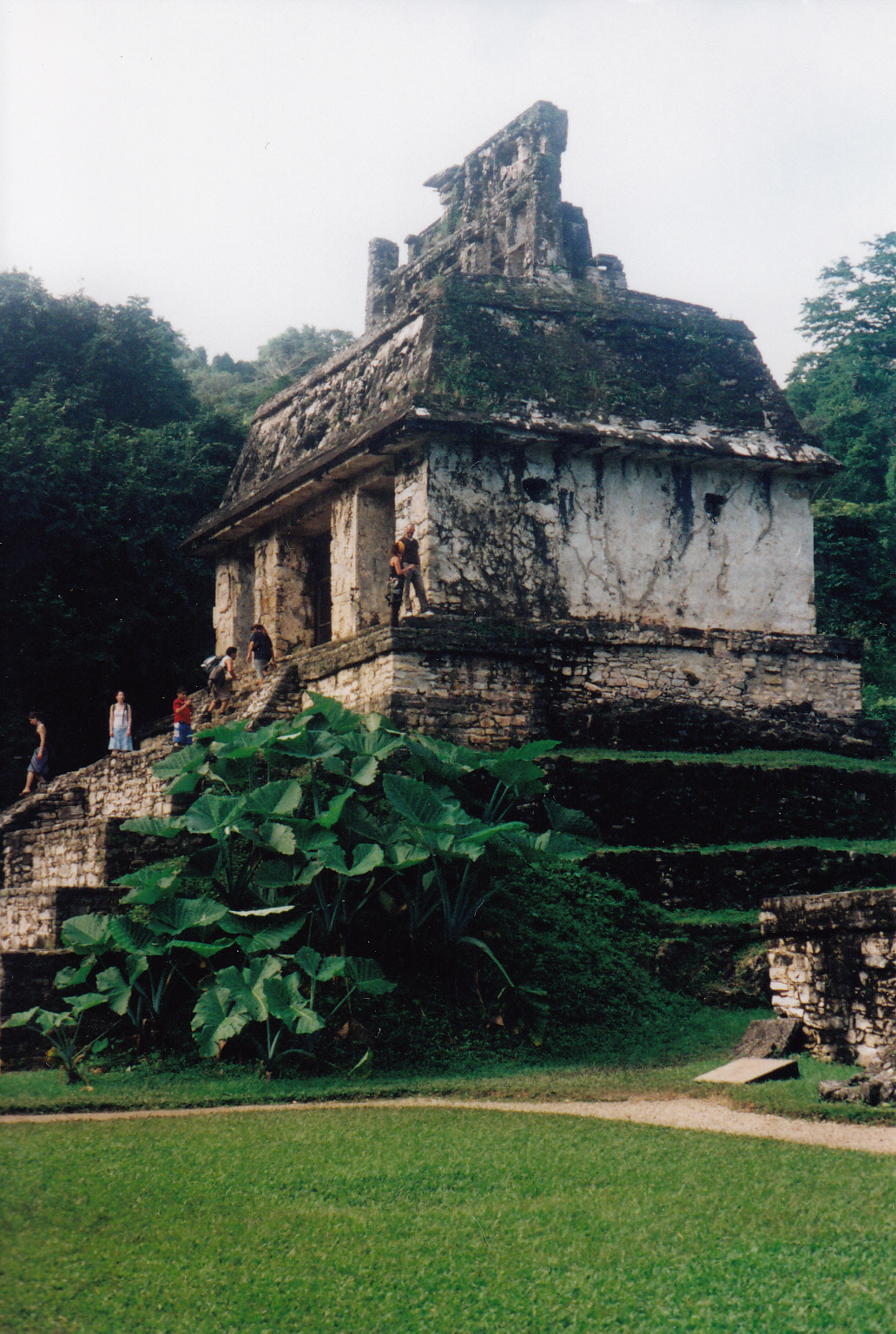
But it was undeniable – Palenque had bad vibes.  We were late getting in to the park and out of sorts – simply a function of too many days in a row together in a tiny cab-over camper.  So we agreed to disagree, and stayed separate for the rest of the day.  Walking alone, Brian set his camera down on a wall and forgot it.  When he returned a half hour later, of course, the camera had been stolen.

In a different part of the complex, I read interpretive signs describing the blood sacrifices madeRuta_maya_0001 by the Mayan elite and felt my stomach turn.  I pictured severed heads rolling down the steps.  Blood running like a river in front of the palace.  The violence of the place could still be felt a thousand years later.  Most of the ruin had been rebuilt, but the new pieces looked like guesswork to me.  The lower parts, small outlying villages of the main city, looked more natural with trees growing out of the middle and moss-covered jungle overtaking the civilization.  I sensed turmoil in the quiet.
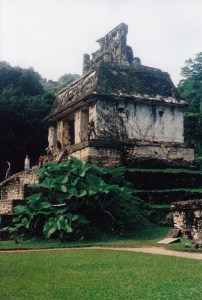
One of our Theories Of Camping is that when faced with overwhelming landscapes (i.e., the Grand Canyon or a huge Mayan ruin), people tend to make lots of noise because the place they’re visiting seems too vast.  At the Maya Bell Campground just outside the park, this seemed to be the case.  All the other campers were in the bar – except for one asshole from Colorado who cranked Johnny Cash up to top volume from his van, competing with the bar music.  Everyone was drinking heavily.

Distressed, I left the campground and walked down the road until I couldn’t hear anything besides the natural world.  Flocks of parakeets passed over.  A howler monkey called out, the sound reminding me of the flush of an airplane toilet at 35,000 feet high.

Crossing from the jungle environment of Palenque to the Yucatan Peninsula meant moving into a more open, brushy and drier environment.  We escaped the noisy crowds the next day, moving north to the next cluster of Mayan ruins.  There we re-established equilibrium and the pleasure of discovery returned.

Edzna, a nice little ruin just outside of Campeche, provided us with a tidy introduction to the Ruta Maya proper, before, as the guidebook warned, we would be spoiled by Uxmal. We camped that night at Sacbe (the name referencing the paved elevated roads between Mayan cities).  It was cheap enough, 50 pesos including nice hot water showers, but of course there was no toilet paper and no locks on the doors.  The clouds misted and sprinkled on the bright red dirt which got tracked into the camper, making a big mess.

At the Chac-Mool Lodge while eating pibil (tender pork cooked in banana leaves), we learned that Chac-Mool is the Mayan god of rain.  You pray to him for rain in the dry season because there is noRuta_maya_0004 natural water anywhere in the Yucatan.  No rivers, lakes, or springs.  The bedrock below the surface is porous limestone and rain soaks in like a sponge.  So the people built these huge underground cisterns and caught rain water during the wet summer to use all winter.  A small opening in the roof kept the water from evaporating.  Very clever.
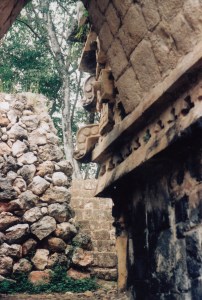
But I wondered: was there more to the story?  The Chac-Mool stylized figure which is ubiquitous on Mayan buildings has this weird hook nose-looking protrusion.  Now tell me that doesn’t look like a rain gutter holder?  Seems like the Mayans, who mastered writing and numerology and astronomy, would have been morons not to have figured out how to catch run-off from the palace roofs with rain gutters.

Mayans approached the world differently than we do, though.  So perhaps, hard as it might be to believe, they didn’t think of rain gutters.  Logical, rational left-brain thinking was not their strong point.  Dualities such as time and space, mind and body, science and religion were meaningless to them.  The world was seen as magical and encompassing of all these things.

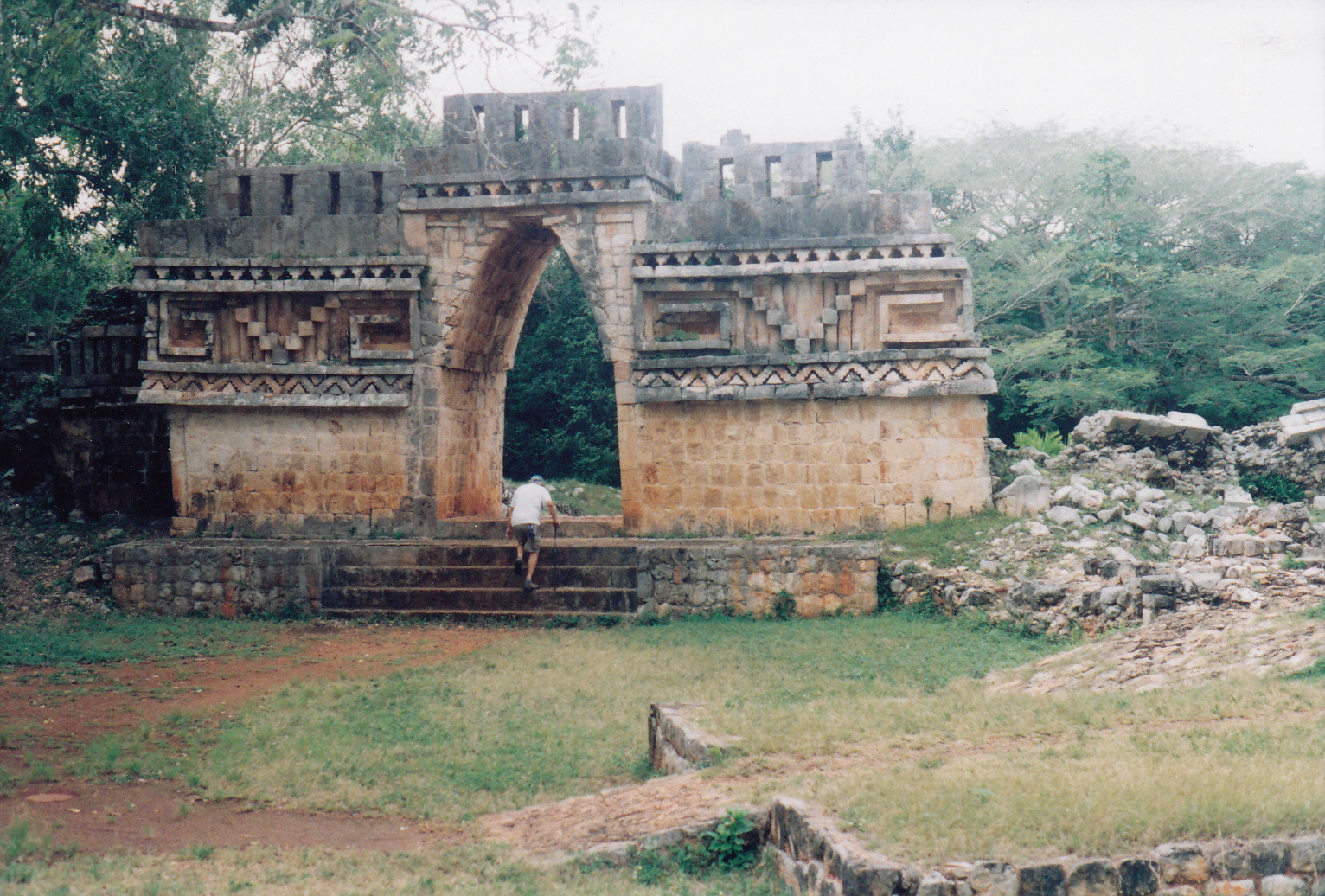
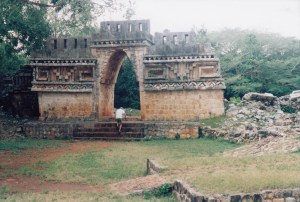
In Maya Land the brush and tangled woods and jungle beckoned.  We explored Kabah, a small ruin near the Sacbe campground one day.  On the west side the palace and buildings had been Ruta_maya_0005excavated and neatly reconstructed.  The front desk guy told us only an arch was visible across the street.  But in the jumble of brush beyond, the forms of two pyramids emerged, one huge, the other smaller.  They were covered with vegetation, cactus as tall as me, trees and rocks tumbling down.  I was drawn toward them, but couldn’t get close without a machete.  Then off to the east, a path lead through the woods and I came upon a site in the midst of excavation.  I could see where workers had been camped recently, though there was no one there now.  I was drawn in, back a little farther, a little farther – what else is here?  I felt myself tugged ever-deeper into the jungle, by the mischievous magical spirits of the Mayans.
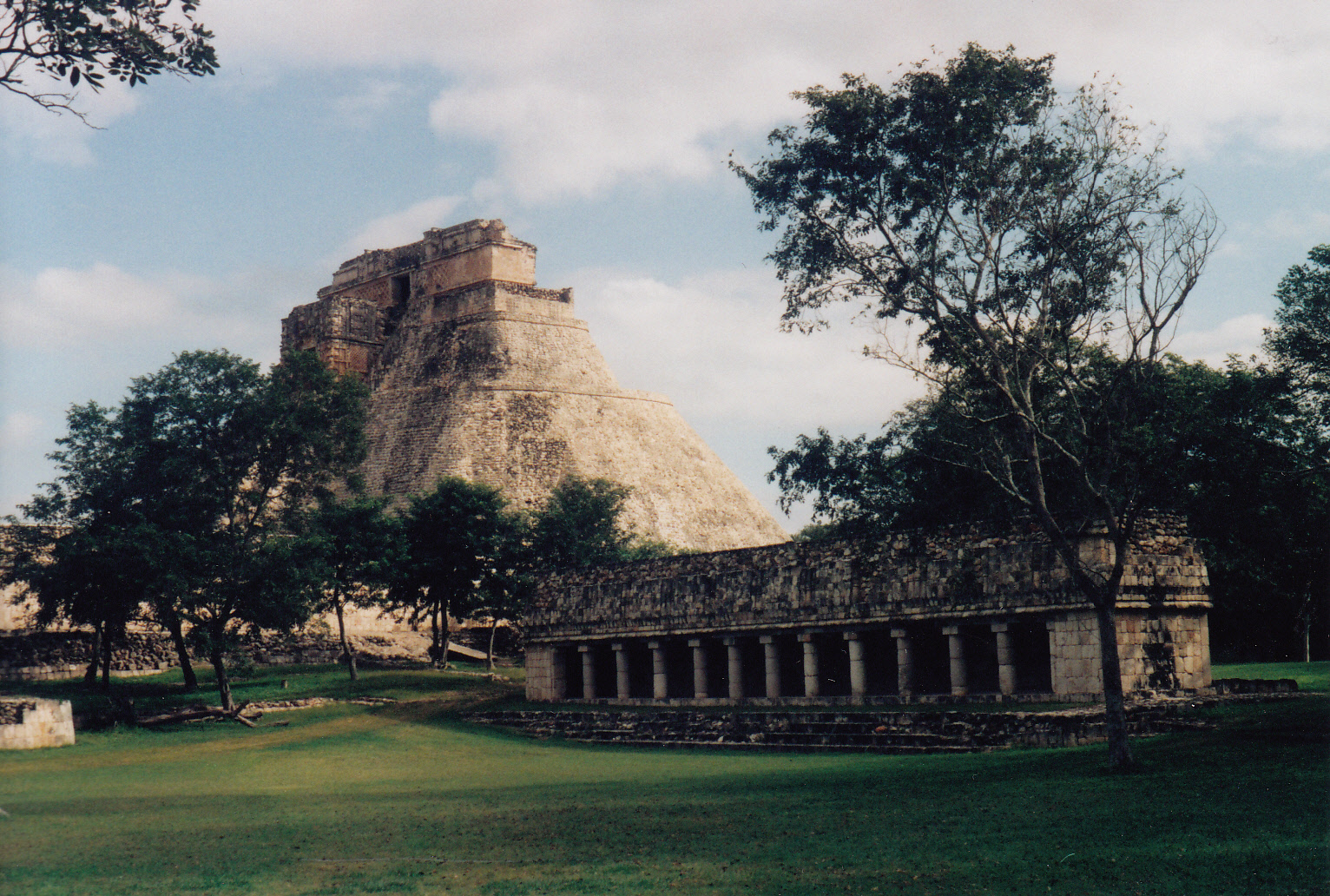
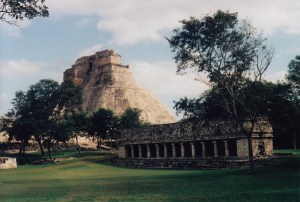
The city of ruins at Uxmal was graceful, welcoming, and peaceful.  There had been no human Ruta_maya_0002sacrifices here, unlike Palenque – just genteel life and perhaps higher learning.  From atop the Grand (north) Pyramid I could see across the whole complex.  We came back at night for an eerie light show and retelling of Mayan legends concerning four gods of four directions and four colors.
The resemblance to Zuni mythology was a bit unnerving.  The two cultures flourished during the same time frames, but they were separated by thousands of miles at a time of no mass communication.  At least none that we know of.  But I wondered: the similarities  strain the bounds of coincidence.  The Mayans facially resembled Mongolians; built pyramids like Egyptians; worshiped the same three creatures as the Incas; used symbols comparable to the ancient people of Teotihuacan.  The only relevant question was, what part of their culture was NOT related to other civilizations?  The Mayans had the equinox and solstice figured out, a calendar, hieroglyphics.  Farming. Irrigation.  And yet – they only had stone tools?  No wheels?  No beasts of burden, no metal, nothing but stone and their own hands and backs?  It’s hard to believe.
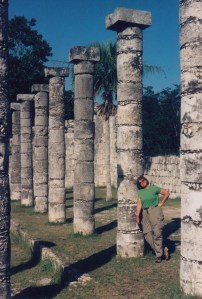
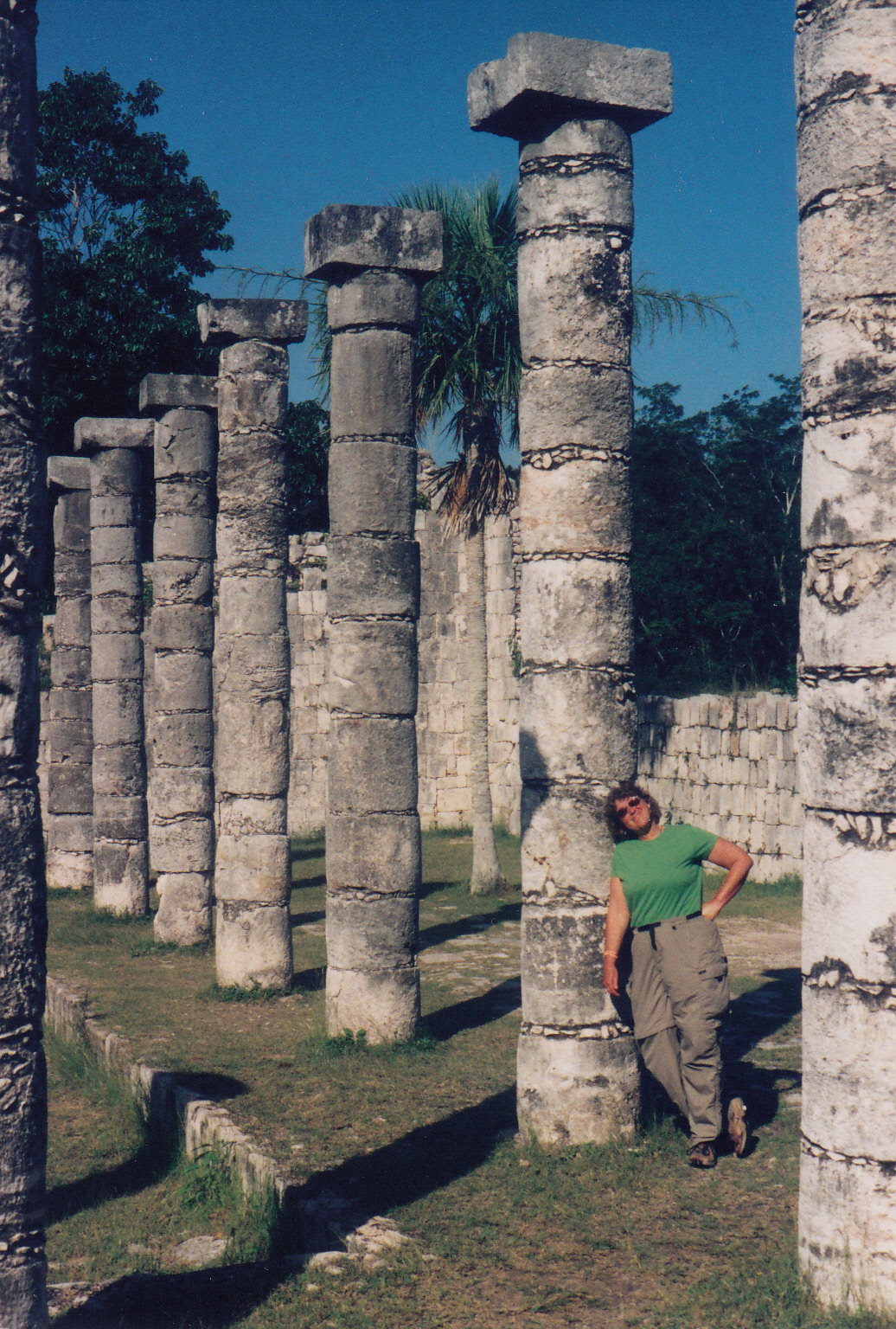
Ruta_maya_0006We blew through Chichen Itza fairly quickly.  Unlike some of the smaller ruins, it seemed overrun with tourists and the central pyramid was closed for repairs.  We put in the requisite footsteps just to make sure we didn’t miss anything.  But by now I actively avoided bi-lingual men who approached offering to “interpret” the ruins.  Their every sentence was preceded with “They might have…”  In other words, no one really knew.  I preferred my own observations and imagination to their “educated” guesses.

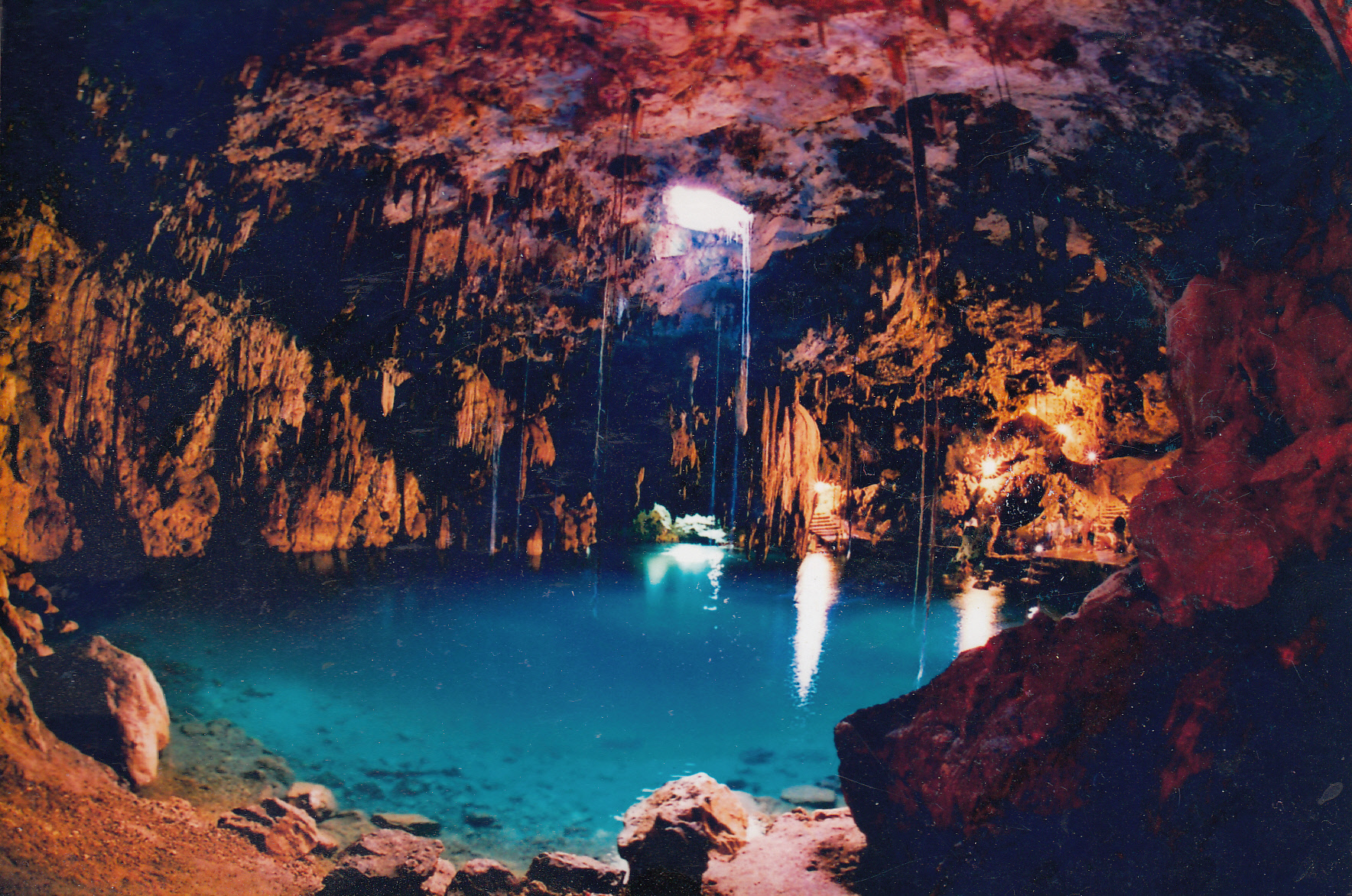
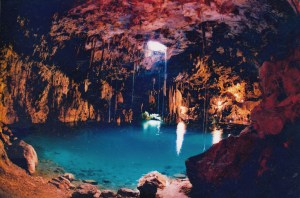
A highlight for me was a visit to the nearby Dzipnuk Cenote.  Cenotes are natural caves beneath the surface of the limestone.  In the Mayan world, cenotes were considered sacred places.  The Mayan people often threw statues, valuable stones, jewelry, and even the bones of sacrificed humans to the murky bottom. I was the only person in the Dzipnuk Cenote at nine o’clock in the morning.  Stalagtites rippled down like drapes from the cave’s ceiling and disappeared into the water.  Bats flew around upRuta_maya_0008 high.  Catfish swam in the water.  How did they get there?  I was confounded and frankly a little creeped out when they brushed past my legs.  High overhead, an opening maybe 2 meters across provided the only illumination from the outside world.  Clear blue water filled the cave, but you couldn’t see to the bottom.  Greenery spread out across vertical cave walls, ferns and moss and roots of trees hanging from a domed ceiling.
Closer to the Caribbean coast, we ventured to Cobá, a giant ruin which is not very well known, despite containing the tallest pyramid in the Yucatan.  Supposedly you could see the top of Chichen Itza from its peak, though they had the back half access blocked off so I couldn’t go check it out myself.  At Cobá we walked for nearly five miles down several Sacbes – white stone highways – of which there were said to be more than 40.  Coba was the largest city in Maya Land at one time.  Now tell me, if they didn’t have wheels – why in the world would they have paved highways twelve or more feet wide?

We camped for free in the ruin parking lot and left early the next morning, reaching Tulum by nine o’clock to beat the crowd.  Only two busses were parked there when we arrived; that number had multiplied to more than 30 by the time we left a couple hours later.  Tulum Ruin was perched on a sea cliff, next to an azure sea picture-postcard perfect.  Except for all those pesky tourists who walked in front of my camera just as the lens clicked.  All my pictures of Tulum had modern humans in them.  But as we exited, a sea of incoming thronged through the archway.  I mean hundreds.  Thousands.  Guides babbling in four languages, theorizing about what “they might have” done in Tulum.  Ugh.
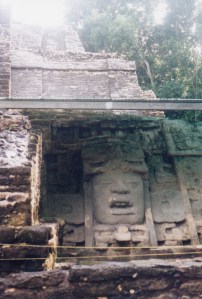
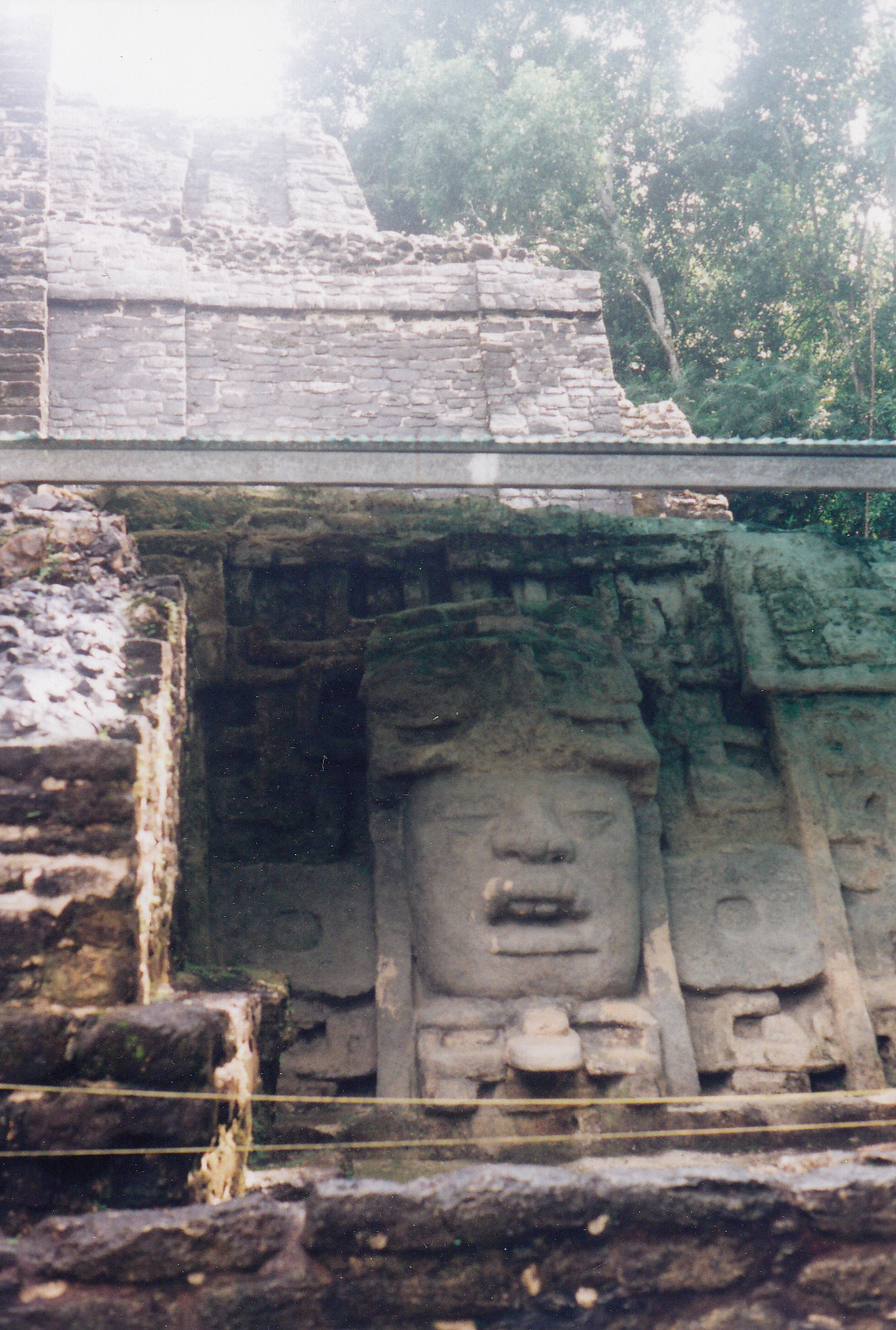
Ruta_maya_0009Next crossing into Belize, we camped in the back yard of a small hotel in Orange Walk.  The Queen Bee (Sonia, the proprietor’s wife) gave us a recommendation to catch a boat with these brothers on a jungle river float to the Lamanai Ruin.  They departed from a bridge and floated us down past crocodiles, green herons, kingfishers, egrets, storks, and what they called “Jesus Christ Birds” because they walked on the water.  Two hours later we beached the boats and hiked up to a smallish ruin hidden in the jungle.  An intricate mask graced the front of one of the pyramids.  We climbed it and from there took in a view of the river, the forest above the canopy, and miles of flat-ass swampland.  It was a stunning vantage point.

We had no trouble getting across the border from Belize to Guatemala, contrary to the horror stories we had been told, and we drove to Tikal before noon.  Despite having “ruin fatigue” after touring 14 other Mayan ruins, we were impressed with Tikal.  It was easy to imagine it a millennium ago.  I got that same “woo-woo” feeling at Tikal as I had at Teotihuacan.  The power of both places was tangible.  Then I read that the two were the most powerful cities in Mesoamerica in 400 a.d. and that they forged a strong alliance.

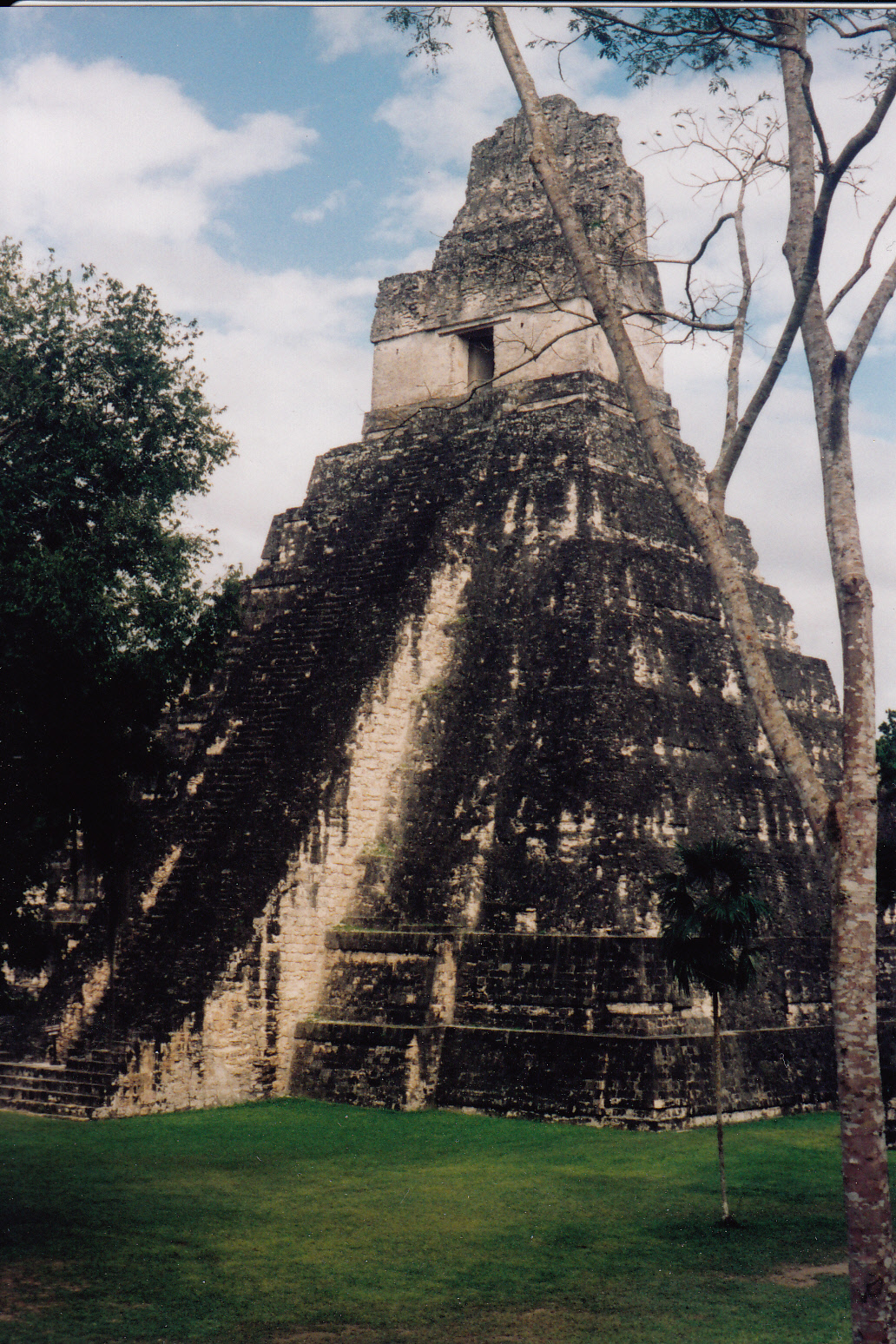
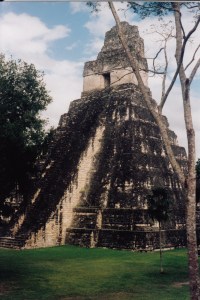
Tikal was also special because it was located deep in the jungle: steamy, hot, sun and puffy clouds passing overhead.  Spider monkeys swung from treetops, and I could hear howlers in the distance along with parrots and other strange birds calling.  I climbed Mundo Perdido (Hidden World) Pyramid, where the tops of four other pyramids appeared above the canopy.  The JaguarRuta_maya_0011 Temple stood tall, slim, and regal. Tikal was set on a hill so that the tops of the structures gave a commanding view of the whole countryside.  How did they learn to build up?  And how did they move all that stone? Who was the architect?  Great mysteries, few answers.  And for me, the fun was to be mystified, intrigued, instead of being told by someone who may or may not know, what the current theory of answers is.
We spent a night outside of Tikal, then decided to move on the next morning.  Mostly we were motivated by a desire to avoid this 18-vehicle caravan of RV’s which were on their way to Panama and back.  The big rigs traveled in a pack and they took up a lot of space!  We had camped with the same group in Belize a few days earlier.  Twice was more than enough.  They were nice enough folks, but the gaggle of them was pretty overwhelming.

So off we drove toward what we called “good filters,” rough dirt roads where the big rigs could not follow.  Deep into the rural highlands of Guatemala we ventured, for an amazing journey which I will chronicle in another story soon.
The Moral To The Story

© 2005 By Kathleen Kemsley, first published in BMW Owners News, August 2005

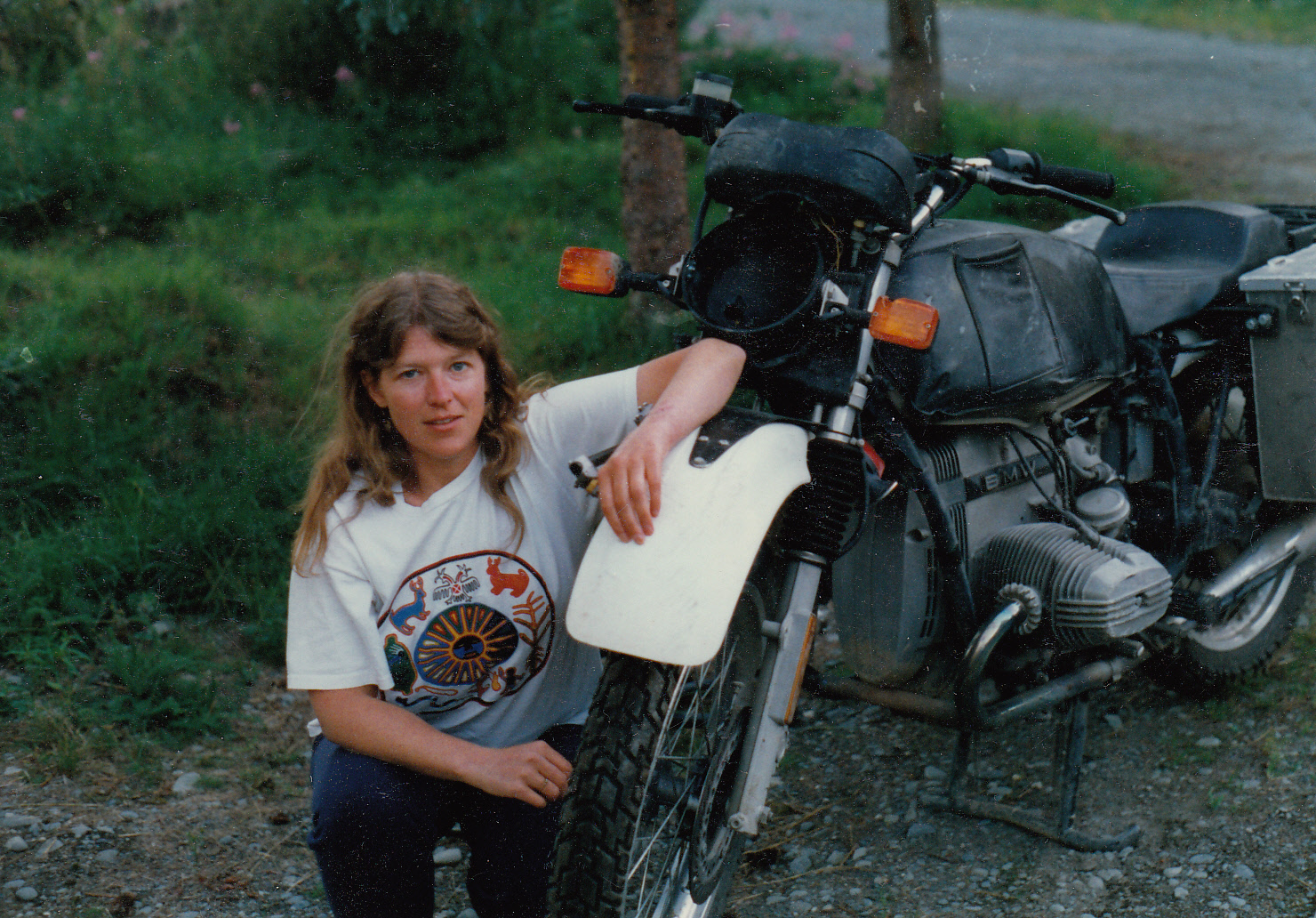
North of Fairbanks, Alaska, in the summer of 1997, a mechanical problem bmwcaused my BMW R65 to go into a tank-slapper at 50 miles per hour.  I ended up face down on the Haul Road with a compound fracture of my left wrist.  “Cookie crumbs,” was how the emergency room surgeon described my forearm bones.  In the months that followed, I was asked many times about the casts and scars on my arm.

Naively, I wanted to talk about my crash with the idea that I could help others avoid a similar accident.  In telling the story, however, I noticed an odd quirk of human behavior: most people don’t ask a question in order to listen for your answer.  They hear what they want to hear and walk away with fears and preconceived notions securely intact.

Here are some of the most common ways people reacted to my story.

1.  Motorcycles are dangerous. “My son wants me to get him a motorcycle,” a woman confided in the copy shop.  “But there’s no way I will do it.  They are so dangerous.  Just look at you!”

Politely, I suggested that buying her son a small dirt bike, with a helmet and protective clothing, would be wise.  “Then he could learn how to ride and how to fall safely,” I said.  “I’m certain that my experience riding dirt bikes and my helmet prevented a worse injury.”

But her eyes had already glazed over.  “No way,” she muttered.  How surprised she will be, I thought, when she finds out that her son has been riding the neighbor’s dirt bike on the sly.  Forbidding it because it is dangerous is the surest way to guarantee that the kid will try it.

2.  It was someone else’s fault. The “other driver” theory survived my numerous denials of plausibility.  Some people turned into ranting maniacs at the sight of my broken arm, going on and on about irresponsible, inattentive, stupid motorists.  When I could shush them long enough to say that no other vehicle was anywhere near me when the accident happened, these blamers inevitably started in about inadequately graded roads or the oppressive weather (rain, cold, sun in your eyes, whatever) in Alaska.

3.  It was your own fault. The most blatant proponent of this theory was the owner of a certain motorcycle shop whose term, “rider effect,” translated to mean that I didn’t know how to handle a motorcycle.  Insulting?  Yes.  True?  With all humility, I don’t think so.  While riding street and dirt bikes for the previous five years, including a tour of the back roads of Costa Rica on a Honda XR200, I had become a very proficient rider.

I tried to take these accusations with a grain of salt.  Apparently a “blame the victim” attitude is so commonplace that Ph.D. candidates in Psychology have written theses about this mindset.  I knew in my heart that I was not drunk when the accident happened.  I was not incompetent.  I was not wearing a halter top.  I knew even if they didn’t, that I was doing everything right.

If there was any blame to put on myself, it would have been for unwillingness to give up on a ride that had been planned for months.  I should have refused to go any farther until my bike was repaired properly.  But my pride didn’t allow me to be the girl rider who couldn’t keep up with the guys.  So instead, I gritted my teeth and continued on with a high speed front wheel wobble.  Seven hundred miles later, the result was disaster.

4.  A woman’s place is on the back. This comment, surprisingly, most often came out of the mouths of women. “You just can’t control one of those things,” one young woman advised.  “You should have let him do the driving.”
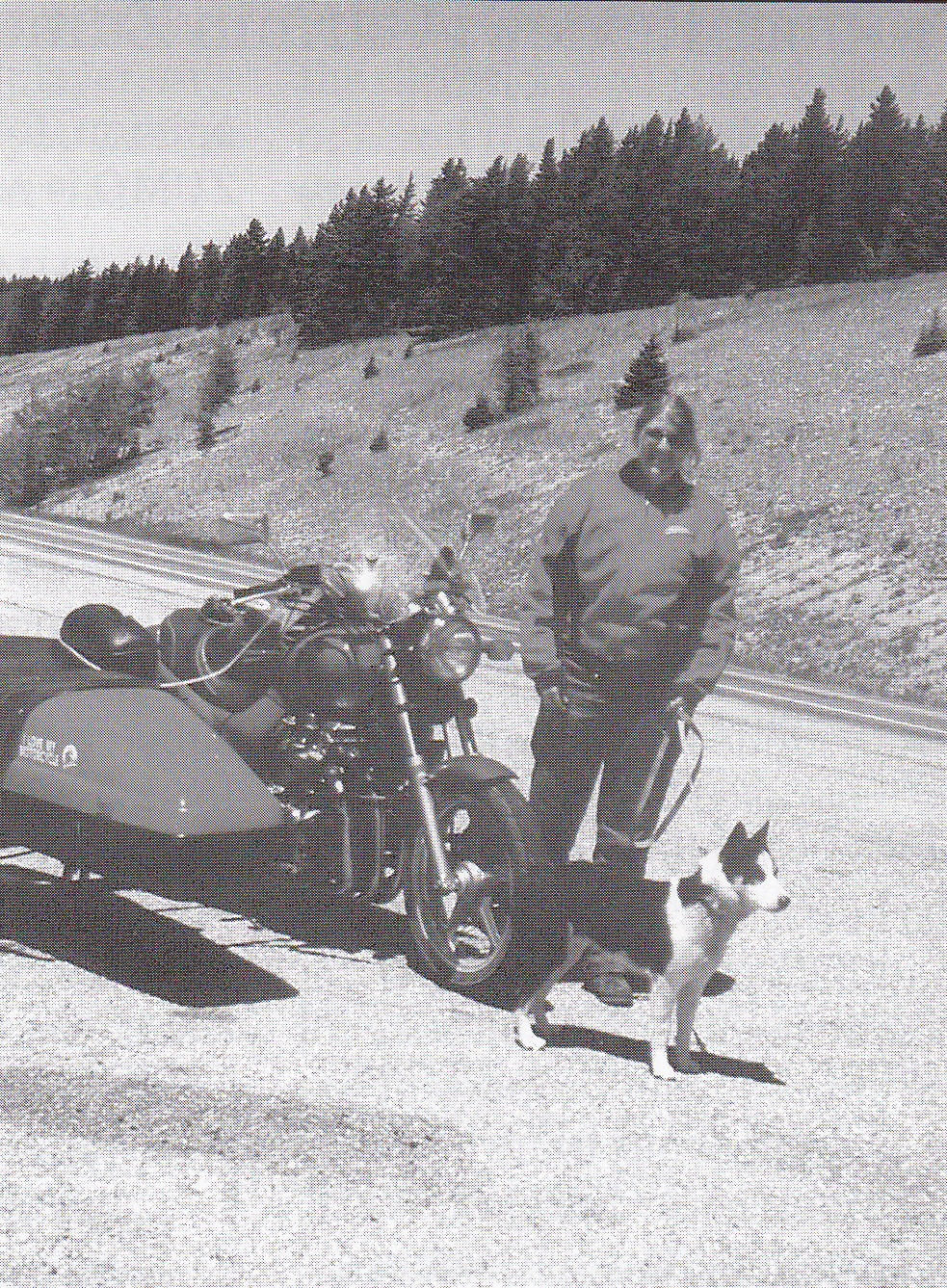
Yes, and then I could have spent the rest of my life cursing him for mangling my arm.  (See “It was someone else’s fault, above.)  I’m not against riding double.  In fact, for three years after the accident, until my arm was completely healed, all of my riding was as a passenger behind my husband.  There is nothing wrong with riding pillion.

But a lot of effort and practice went into the acquisition of the motorcycle endorsement on my license.  Berating me for the achievement of learning how to ride felt like a step back into the 1950s for woman riders everywhere.

5.  God is trying to tell you something. People who appointed themselves as God’s messengers were so tiresome.  Where did they get off claiming that they knew what God’s will was for me?  Yet these people – and there were a lot of them – did not hesitate to jump in and interpret: “God doesn’t want you to ride a motorcycle.  God doesn’t want you to travel.  God wants you to stay home with the door locked, where it’s quiet, boring, and safe.”

Well, I understood that people held differing views on God.  But I had to go with my own spiritual beliefs, which did not include a God who caused wrecks or broken arms.  The way I saw it, the crash had nothing to do with God and everything to do with a mechanical malfunction of my motorcycle.

Of all the people who asked about the crash, there was only one who actually heard the moral of the story.  After listening to my tale, the guy went home and inspected his own bike.  He discovered that his tires were weather-checked and the rear brake needed replacement.

“I ran out and got the work done right away,” he told me later.  “Your story made me realize how important it is to maintain my motorcycle in perfect condition.  If it’s not running right, I’m not going to ride it.”

So I didn’t despair.  Once in a while, someone did listen without prejudice or fear.  Sharing my story with that guy might have truly done some good.

As for everyone else?  I tried not to think about them too much as I sat on my motorcycle (which was parked in the living room), making mouth noises and practicing to work the clutch with my mangled left hand.

It took three years, four surgeries, two bone grafts, and many months of physical therapy to repair the damage to my arm.  Once all that was finally past me, I quit talking to anyone about the crash.  Leaving the opinions where they fell, I climbed onto my motorcycle and rode away.

Letter From Valdez

© 1989 by Kathleen Kemsley, first published in Arete Magazine, July 1989

In April, my work sent me to Valdez, Alaska to establish a communications center to support the clean-up of the largest oil spill in United States history.  But I quickly discovered that Valdez was not ready for emergency dispatchers.  The radio lines were not connected, the repeaters were not Valdez_0001installed, and nothing was operable yet.

The town was a madhouse of bureaucratic red tape.  Every agency present (including Exxon, the Coast Guard, the state Department of Environmental Conservation, the Office of Emergency Service, the Alaska State Troopers, and the Alaska Pipeline Company) had its own headquarters.  No one was eager to cooperate.

Valdez was overrun with Alaskans and people from the Lower 48, all looking for work.  Many of those working were being paid to do nothing but go to meetings and order new equipment.  It was said in town that Exxon was spending $7 million per day – loose change for a company that makes $1 billion every quarter.  Exxon had resolved to throw money at the problem, and there were plenty of eager hands reaching out to grab it.

The streets of Valdez teemed with people.  Motor homes were parked on every available inch of open pavement, and people were living in their cars.  There were stabbings at night in the bars; I was propositioned on the street.  Everyone said it was just like the pipeline days of the 1970s.  But there was a strange silence among people in Valdez regarding criticism of Exxon.  I had expected the people to be outraged about the destruction of their beautiful sound.  But the atmosphere of the town was more like, “Yahoo!  Happy days are here again!”

I explored Valdez to see the clean-up efforts firsthand.  I began by making a heartbreaking visitValdez_0004 to the bird rescue center.  First stop was an entire trailer full of dead bird.  The few birds that had been cleaned were still trying to preen and remove oil from their feathers, ingesting the lethal substance in the process.  I saw loons, murres, cormorants, even a bald eagle struggling to survive being poisoned.  Most of the birds were never even pulled from the water; immersed in the oil slick of Prince William Sound, they sank like stones to the bottom of the sea.  The atmosphere at the bird rescue center was desperate, for the workers (the only people in town who were volunteering) seemed to sense the futility of their task.

I attended a “town meeting” staged by an Anchorage television station in the Valdez Civic Center.  A panel of representatives from the Coast Guard, the Department of Environmental Conservation, Veco (the company contracted by Exxon for doing the clean-up) and the mayors of Valdez and Cordova fielded questions, live and on camera, from a studio audience.  Most of the questions centered on money: How can I get a job?  How do I file my fisherman’s claims?

At one point, someone in the audience asked whether they honestly thought the spill could be cleaned up.  The answer from the DEC man was the most honest statement I had yet heard in Valdez: “We probably will never get it cleaned up.  Mother Nature will do that, but it will take years.  What we really need to do is take steps so that this type of disaster never happens again.”

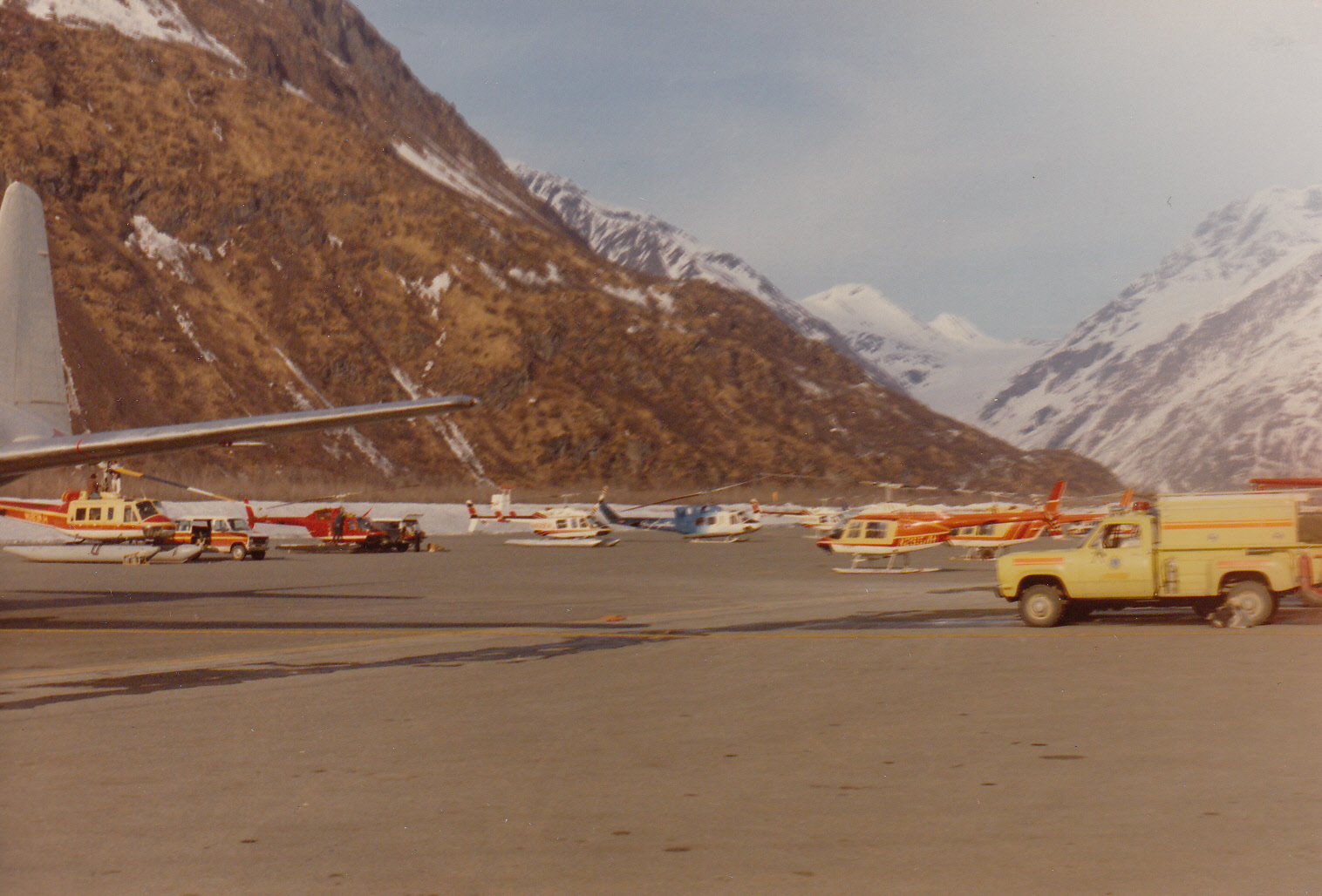
Valdez_0002On Thursday, two other dispatchers and I were told to go out to the airport and board a helicopter for a flyover of the oil spill.  Normally, the Valdez airport has three or four flights departing per day.  But since the spill, that number had risen to 500.  The helicopters were lined up like cars in a shopping mall parking lot the week before Christmas.

When we found our helicopter, the co-pilot harassed us about taking the flight.  “Admit it,” he said, “you women have absolutely no reason to go out there except to sightsee.”

Our assurances that “they” told us we needed an orientation flight did nothing to sway him.  Finally I said, “Look, lighten up.  How many days in a row have you been working?”

He cracked a smile and sighed wearily.  “You’re right.  It’s been a lot of long days in a row.  Get in.”

Our helicopter left Valdez, and we flew along the narrows which lead out to Prince William Sound.  Up-current from the spill, where no oil had reached, I saw huge flocks of seagulls, many bald eagles and sea birds floating on the gentle swells.  Otters and sea lions dove into the turquoise water, and the herring roe glowed milky white just beneath the surface.

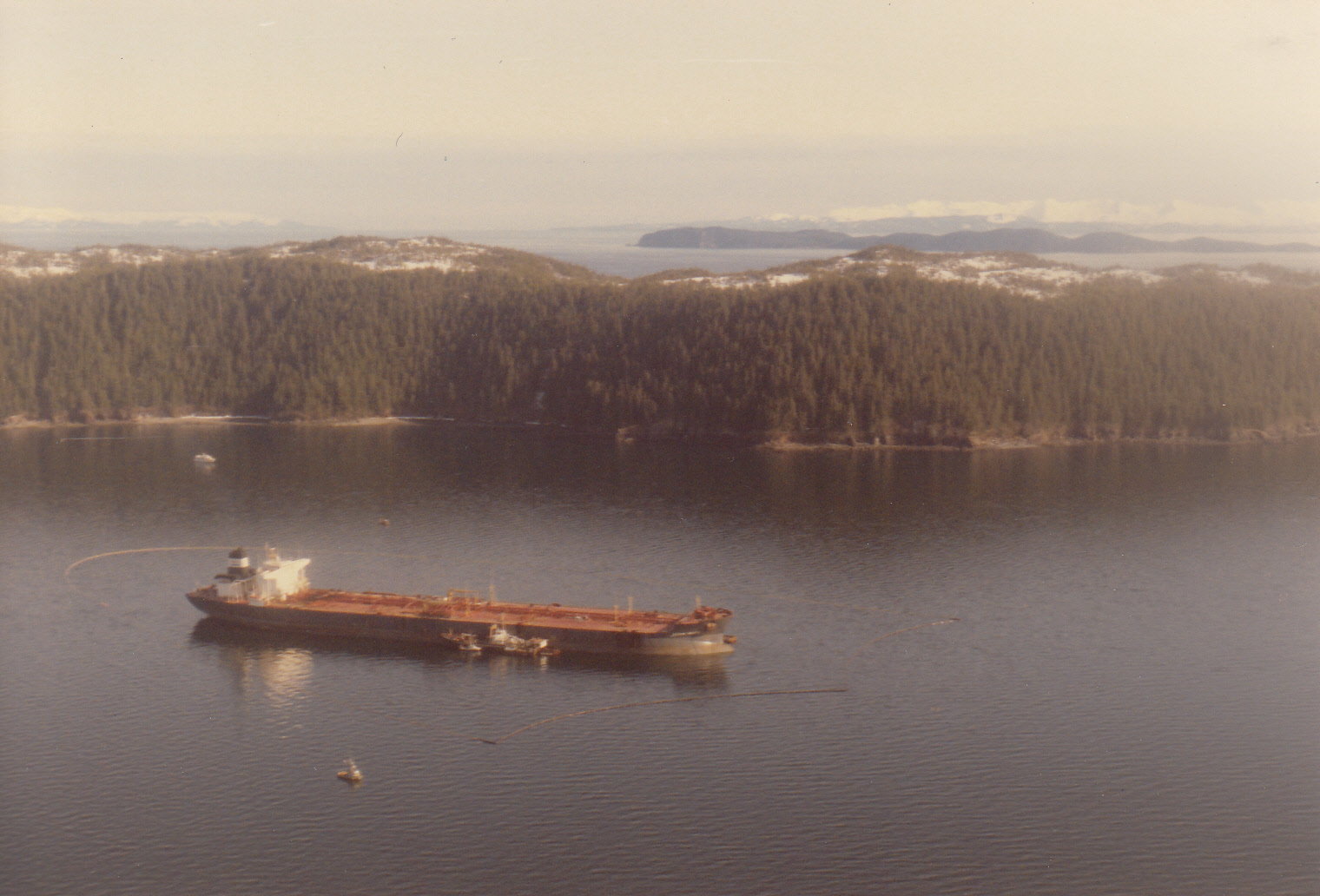
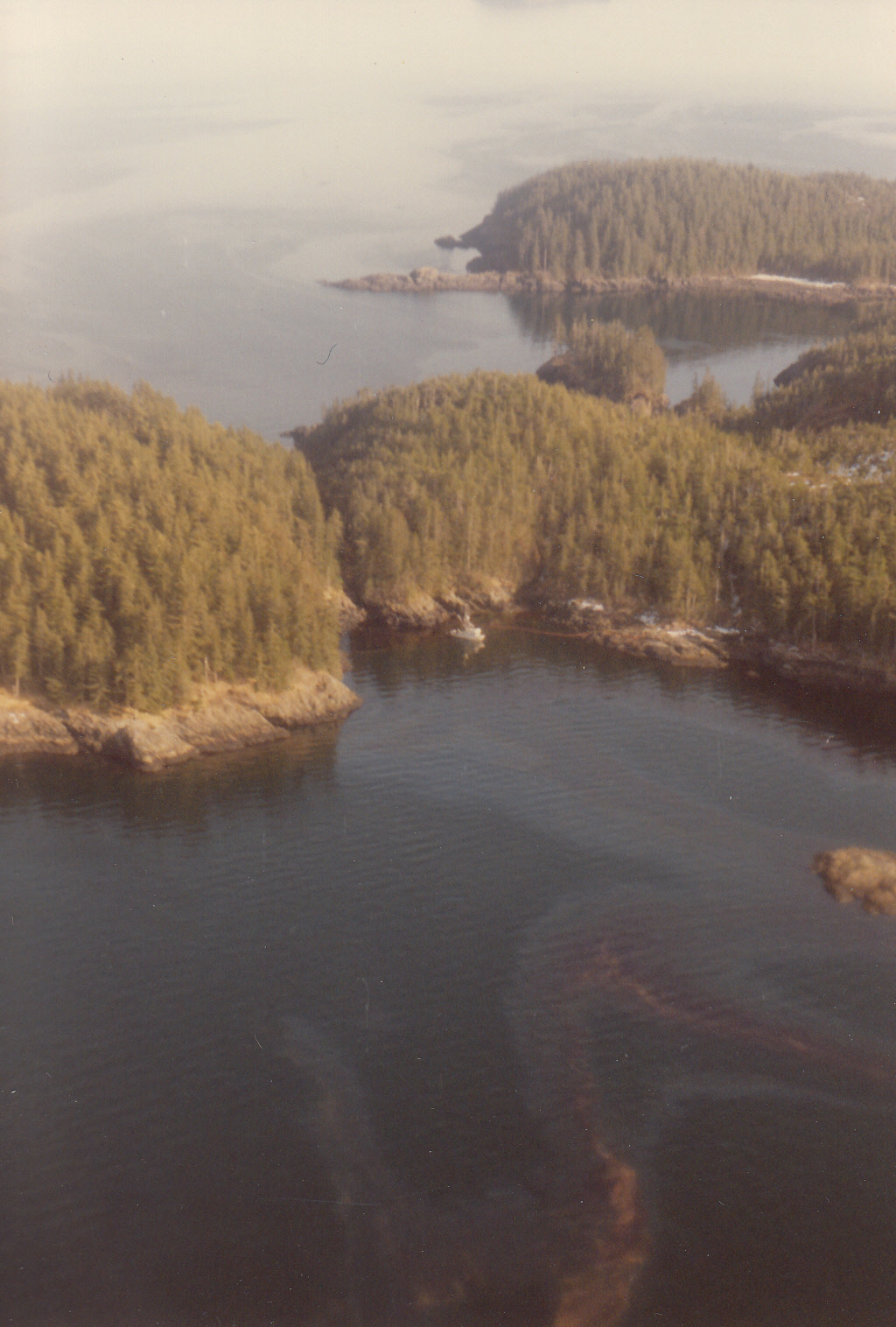
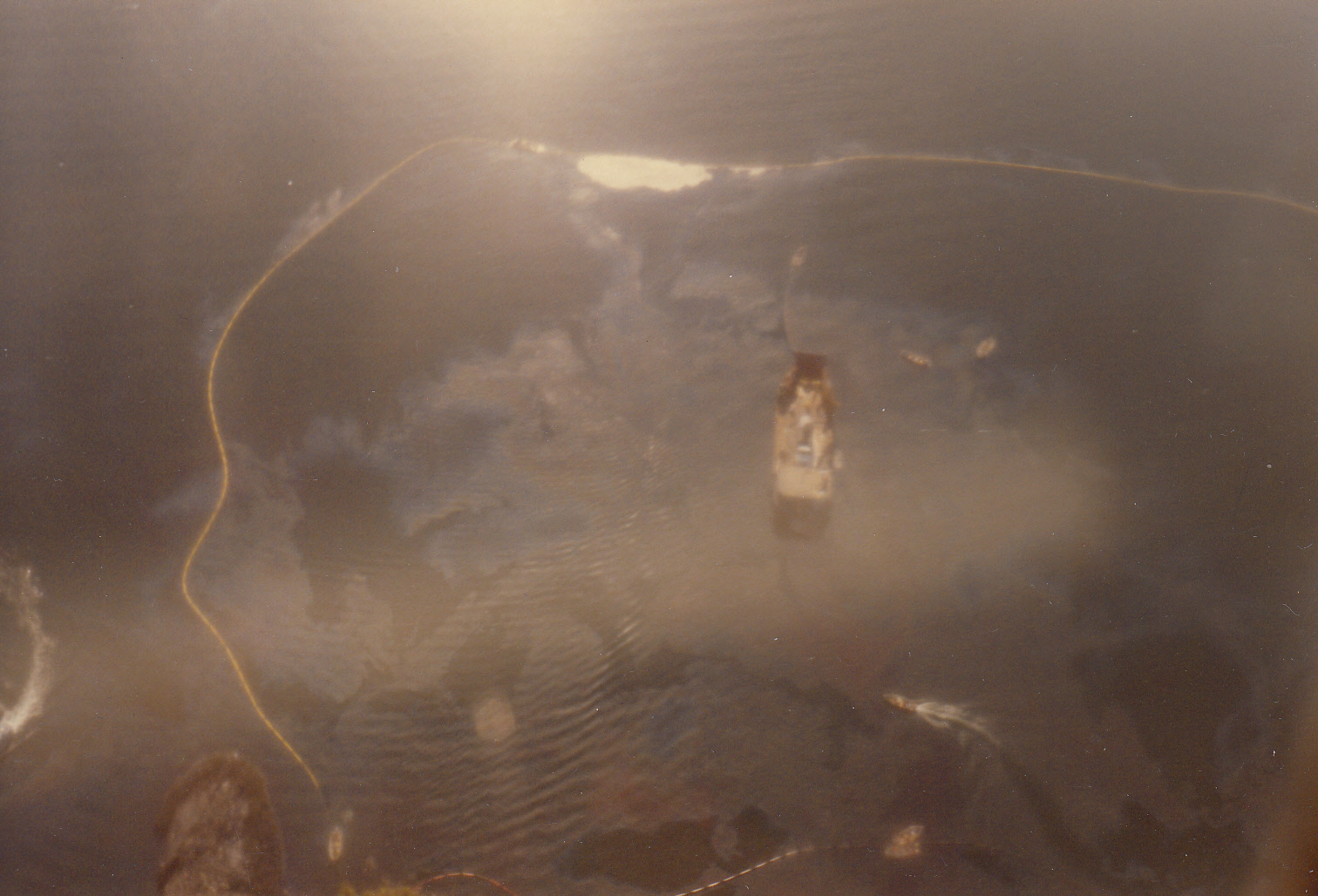
Then we came to Bligh Reef, where the tanker Exxon Valdez ran aground on March 24, spillingValdez_0003 ten million gallons of North Slope crude oil into the pristine waters.  From there south, the water was streaked black, brown, green, red, and blue, topped by an iridescent sheen of oil.  Beneath the ocean surface I could see huge globules of oil; for ten fathoms down, the crude was as thick as molasses.

We saw boats frantically trying to lay booms across a back bay to prevent the oil from reaching the salmon streams.  The boats and the boom lines looked tiny against the expanse of oily ocean.  There would be no way to hold back the mess.  Ten million gallons of crude oil had, in three weeks, slimed its way into every corner of the sound.  It would never be the same.

The smell of oil and death was everywhere.  Nothing moved, nothing lived in Prince William Sound.  Beaches were black to the high-water mark.  Workers went out at low tide to scrub individual rocks, while photographers’ cameras clicked.  After they returned to town, the tide came in to redeposit the oil.  The work was useless.

The next day, one of the chiefs came into our communications center to tell us that it would be the middle of next week, at least, before any of the radios worked.  He cut us loose for the weekend and told us to come back Monday.  I said I was going home and they could get a different dispatcher from Soldotna to take my place.  If there had been something to do, I would have stayed.  But it was way too late for me to be of any help at all, to the birds, or the fish, or the beaches.

I had always been an advocate for the preservation of wilderness and wildlife and letting natural things be, but since moving to Alaska I had become complacent.  I read about smog and dead rivers and barges dumping toxic waste into the sea, but I never gave it more than a passing thought because it wasn’t happening in Alaska.  Only now, it is.

Driving home from Valdez, I stopped on the highway to let six caribou cross.  Two whistler swans flew past my truck, bound for the Kenai River.  Stands of willow next to the glacier were shot with crimson, in anticipation of the coming warm season and the new growth of spring.  The first shrill call of a varied thrush, harbinger of summer, echoed across the empty land.

Spring in Alaska is a time of rebirth, of the cycles of life beginning anew.  This year, the swans somehow made it past the oil slick to return to their summer nesting grounds.  As the sky glowed orange, I made a silent promise to those swans.  I resolved to make a better effort to tread lightly on the land that we share, so there will still be a safe place for them to nest when they return next year to paradise in the land of the midnight sun.

Arkansas Heat Stroke Ride

 (c) 2006 by Kathleen Kemsley, published in Sidecarist magazine, May 2007.

Summer in the South: always oppressive, always miserable.  I don’t know what I was thinking, agreeing to attend the national sidecar rally in Arkansas last July.  The journey took us eastward into record-breaking heat, wilting humidity, and muggy nights – along with campgrounds populated by thieving raccoons, burrowing armadillos, and shrieking worms.  It was, shall we say, an entertaining trip.

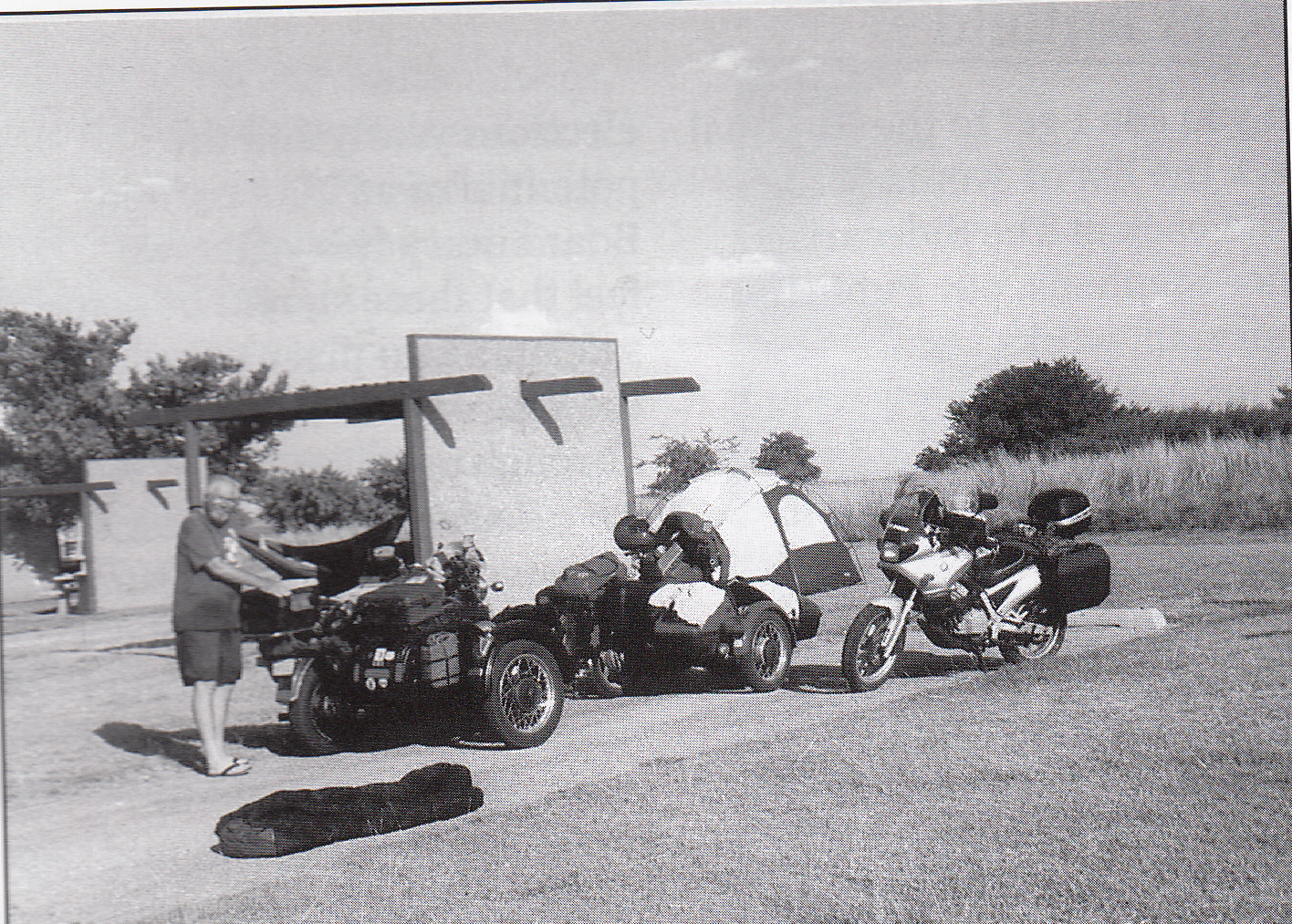
Arkansas_0003Brian and I, along with Dina the Dog, launched from southwest New Mexico riding our two sidecar rigs in searing heat.  But, as we desert rats are fond of saying, “It’s a DRY heat.”  By the time we reached Sumner Lake I felt like a fried egg on the sidewalk; so I leapt off my bike and jumped into the cool water of the reservoir.  Desperately diving into any available cold water source was to prove the theme of the weeklong trip.

Somewhere in the Texas Panhandle, we crossed over the hundredth meridian – the invisible line that divides the arid west from the humid east.  The mercury stood at 100 degrees outside the Texas BBQ restaurant in Dalhart, where we stopped for lunch.  Peeling off sweaty riding pants and sprawling in a wooden chair beneath the air conditioner, I revived myself with ice water and barbequed pork.

Oklahoma surprised me with its green treed creek beds and fields of crops.  I had the idea (probably from reading Grapes of Wrath) that Oklahoma’s was a landscape of dust.  A 400 mile day landed us in Boiling Springs, a state park whose springs, boiling or not, had long ago been plowed under, piped away, or otherwise diverted.  All they had was some cold showers, but those would have to do.  I ran into them fully clothed, thinking I could do laundry and cool off at the same time.  The next morning, I discovered that wet clothes don’t necessarily dry out overnight in humid climates.

A strange noise coming from the leaves around trees in the campground caught Brian’s attention.  Moving closer, he discovered the source.  I never would have believed it if I hadn’t poked it with my own fingers.  For on the ground was a fat, bright green worm.  Little more than an inch long, it appeared to have no eyes, no feet, no way to propel itself.  But when prodded, the worm emitted an ear-splitting metallic buzzing noise and squirmed around in the dead leaves.  Very strange was this creature of the heartland.

The next day it was on with the eastern trudge… more heat, more ice water.  I eyed clouds floating across the horizon, wishing one of them would move up to cover the sun for a few minutes of relief.  The next night’s campground in eastern Oklahoma sat on a heavily treed knoll next to a public swimming pool, which we gladly paid an extra four dollars to use.

Returning to camp after the evening swim, Brian hit the brake when he noticed a shuffling movement off to the left.  At the edge of the woods near the road, an armadillo rooted boldly through some dead leaf litter.  Laughing, I leaped from the sidecar with my camera.  The shy creature saw me coming and burrowed under.  In the half mile from the pool back to the campsite, we spotted three more armadillos.  “Will they try to get into our tent?” I wondered aloud.  Living in New Mexico, I had experience with lizards, scorpions, and rattlesnakes, but no clue about the behavior of armadillos.

As it turned out, armadillos weren’t the creatures we needed to worry about.  At dawn we arose to find Brian’s tonneau cover ripped to shreds.  Food from one soft-sided ice chest was strewn all over the floor of his sidecar.  Raccoons!  Missing were a loaf of bread, some nuts, a bag of cereal, and – horror of horrors – the Zenny Butt Muffins.

We always carry some of Brian’s special bran muffins when we travel to keep everything, uh, regular.  I was sorry to see them disappear.  When I thought about how much sorrier the raccoons were going to be, though, I cheered up.  Once, when we were traveling in Mexico, Dina the Dog got into a batch of Zenny Butt Muffins set to cool on a low counter.  A couple hours later, she made a poop that looked like a baguette – well formed, cylindrical, and nearly two feet long.  The raccoons are probably still talking about their trips to the bathroom that day.

When we reached the rally in Beaver, Arkansas, I entered a short version of the raccoon story inArkansas_0001 the “hard luck” contest.  Someone else had a story more worthy of the prize, but I did manage to win second place.  I also won an award for longest distance woman rider.  Actually I think it was an award for stupidity.  Women in their right minds had stayed in the comfort of their air-conditioned vehicles for the trip, trailering their rigs and showing up cucumber-cool.  But not me.  I draped the award medals around my neck and clanked through the campground, sweating and showing off my helmet hair.

Sidecar games beneath the blazing sun were a challenge.  Someone turned on a lawn sprinkler, where we gathered, panting, while we awaited our turns trying to riding our sidecar rigs blindfolded.  In one of the games, Brian sat behind me on my bike, circling my waist with his arms and grasping a pie pan full of water above my lap.  The object was to traverse a few ruts and two-by-fours without spilling.  Truly that was one of those games, like the song says about Waterloo, that “I feel like I win when I lose.”  At that point, I was willing to take cold water any way I could get it.

Temperatures all week long had set new records in Arkansas.  Humidity saturated the air.  Returning to the campground, I encountered Jim Krautz, a friend from Colorado who was also suffering from too much heat.  Even though he hadn’t brought a bathing suit, I talked him into going swimming in his jeans.  We waded into Beaver Lake and languished in water up to our necks, ducking heads under periodically for a refresh.

Two other men came over and joined our conversation.  We discovered that, with 21 years of marriage, I was the newlywed of the group.   I was impressed.  What was the common denominator that would explain each person’s ability to stay married?  Were we all just old-fashioned?  Possessed of high morals?  Not likely.   Perhaps it was just that folks with sidecars seem to have more patience with complications and more tolerance of the quirky – both desirable qualities for long-term marital harmony.

Arkansas_0002On the return trip home, we stayed at a “high elevation” campground on the Oklahoma- Arkansas state line.  Now, in New Mexico we wouldn’t have even called it a hill, but the campground was near the highest point in the state of Oklahoma: 2,558 feet.  An actual cool breeze blew through the holler that evening.

We descended from the campground the next day into a wall of heat.  Bob and Cheryl Elder, fellow sidecarists from New Mexico, had warned us at the rally that they saw the mercury hit 110 degrees in Wichita Falls.  Lunch was a plunge into Lake Texoma.  Even Dina the Dog, who hates water, had to be thrown in to keep from overheating.  Riding westward with the sun in my eyes, I lead us into Ardmore, got lost, and forgot to refill my water jug.  An hour later, when we stopped for gas, I was so hot and dehydrated that I burst into tears in a C-store.

Faced with a hysterical woman, Brian did the sensible thing: he asked for directions to the nearest water.  Fortunately it wasn’t far away.  A ten minute ride later, we reached a tidy campground on the shore of a sparkling lake.  Once again, I did the Oklahoma shuffle: leap off the rig, shed the clothes, sprint to the water, plunge.  Hooray for the Corps of Engineers.

Some time the next afternoon, we celebrated re-crossing the Hundredth Meridian with an ice cream cone at Dairy Queen in Earth, Texas.  Moving westward into a stiff wind like a blast furnace, we finally reached Sumner Lake.  After the standard swim in the reservoir, I sat with Brian on a sandstone ledge, watching the zigzag flight of a kingfisher patrolling the lake as the sun went down.

“If you ever again see me heading east in the summertime, hit me,” I instructed Brian.  “I’m serious.  No more summer riding in the South.”

We did enjoy the national sidecar rally, of course, and we might consider riding to it again next year.  That is, if they hold it in a place with a climate more temperate.  Somewhere, for example, like Fairbanks, Alaska.  In January.  At night.